
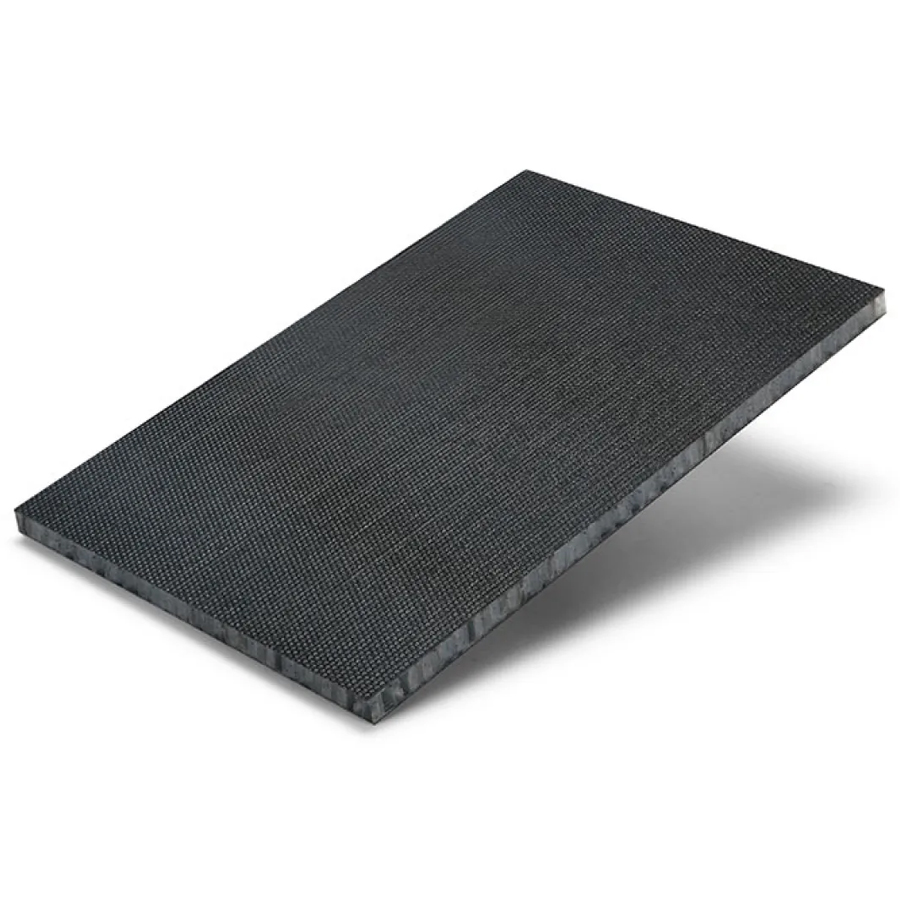
1. Introduction: Why FRP Sandwich Panel Structure Matters
FRP sandwich panels are widely used in truck bodies, trailers, recreational vehicles, marine interiors, industrial equipment and lightweight construction. Their structural advantage comes from combining different materials into a single engineered panel.
A typical FRP sandwich panel consists of three main components:
- Two outer fiberglass-reinforced plastic skins
- A lightweight core material
- Bonding interfaces connecting the skins and core
Although this structure appears simple, each layer performs a different function. The fiberglass skins contribute to tensile and compressive strength, the core maintains separation between the skins and transfers shear forces, while the bonding interface enables the different materials to work together.
For composite panel manufacturers, selecting the right combination of skin, core and adhesive is more important than evaluating any individual material in isolation.
This article explains the structure of FRP sandwich panels, the functions of each layer, common core configurations and the technical factors that influence finished panel performance.
2. Basic Structure of an FRP Sandwich Panel
An FRP sandwich panel generally consists of two face sheets bonded to a lightweight structural core.
A simplified cross-section can be represented as:
Outer FRP Skin → Bonding Interface → Core Material → Bonding Interface → Inner FRP Skin
Each layer contributes to the overall performance of the finished panel.
2.1 Outer FRP Skin
The FRP skin is the outer structural and protective layer of the sandwich panel.
It is usually manufactured by combining fiberglass reinforcement with a polymer resin system.
Common fiberglass reinforcement materials include:
- Chopped strand mat
- Woven roving
- Continuous strand mat
- Fiberglass fabric
Common resin systems include:
- Polyester resin
- Vinyl ester resin
- Epoxy resin
The selection depends on mechanical requirements, chemical exposure, operating temperature, manufacturing process and project budget.
The FRP skin performs several functions:
- Carries tensile and compressive stresses during panel bending.
- Provides surface protection against environmental exposure.
- Contributes to the overall bending stiffness of the panel.
- Provides the required surface appearance and finish.
- Protects the core from direct contact with the operating environment.
Skin thickness alone does not determine the quality of an FRP sandwich panel. Fiber orientation, reinforcement type, resin content, laminate consolidation and surface defects must also be considered.
2.2 Core Material
The core is positioned between the two FRP skins.
Its main structural purpose is to maintain the distance between the face sheets while transferring shear loads through the sandwich structure.
The core can also influence:
- Panel weight
- Compression resistance
- Shear performance
- Thermal insulation
- Impact response
- Manufacturing efficiency
Common core materials used in FRP sandwich panels include PP honeycomb, PVC foam, PET foam, XPS foam, PU foam and aluminum honeycomb.
The most suitable material depends on the intended application and the required panel performance.
2.3 Bonding Interface
The bonding interface connects the core to the FRP skins.
This is one of the most important parts of the sandwich structure because poor bonding can prevent the skins and core from transferring loads effectively.
Depending on the production process, bonding may involve:
- Structural adhesives
- Resin-based bonding systems
- Surface-treated core materials
- Nonwoven-faced core materials
- Other application-specific interface configurations
The bonding process must be compatible with the core surface, FRP skin, adhesive or resin chemistry, curing conditions and production equipment.
A strong FRP skin and a suitable core cannot compensate for an unreliable bonding interface.
3. How the Three Layers Work Together
The main engineering advantage of sandwich construction is the separation of the two outer skins.
When a sandwich panel is subjected to bending, one skin is generally placed in tension while the opposite skin is placed in compression.
The core helps maintain the distance between the skins and transfers shear loads.
This configuration can provide high bending stiffness relative to panel weight when the materials and geometry are properly designed.
3.1 Role of the FRP Skins in Bending
During bending:
- The tensile skin resists tensile stress.
- The compressive skin resists compressive stress.
- The core maintains the separation between the skins.
Increasing the distance between the skins can improve bending stiffness, but the actual improvement depends on core shear properties, skin properties, bonding quality and panel geometry.
3.2 Role of the Core in Shear Transfer
The core is not simply a filler material.
It must transfer shear between the outer skins and support the structural separation of the face sheets.
If the core has insufficient shear resistance, excessive deformation or shear failure may occur.
Different core materials have different mechanical responses because their structures are different.
For example:
- Foam cores have a cellular foam structure.
- PP honeycomb cores have a thermoplastic cellular structure.
- Aluminum honeycomb cores have a metallic cellular structure.
These differences affect the way each core responds to compression, shear and impact loading.
3.3 Role of the Bonding Interface
The bonding interface transfers loads between the core and skins.
If the interface is weak, the panel may experience skin-to-core separation even when the individual materials have acceptable mechanical properties.
Therefore, finished panel performance depends on the complete structural system rather than the core or skin alone.
4. Common Core Materials Used in FRP Sandwich Panels
4.1 PP Honeycomb Core
PP honeycomb core is a lightweight thermoplastic cellular material.
Its honeycomb structure can provide an efficient core configuration for panels where weight reduction and structural stiffness are important.
Common configurations include:
- Bare PP Honeycomb Core
- Nonwoven Faced PP Honeycomb Core
- Customized PP Honeycomb Sheets
Potential applications include:
- Truck body panels
- Trailer wall panels
- RV panels
- Industrial composite panels
- Lightweight transportation structures
One important consideration is bonding compatibility. Polypropylene has relatively low surface energy, so conventional adhesives and resins may not bond reliably to untreated PP surfaces.
Depending on the selected manufacturing process, surface treatment, nonwoven facing or a specifically qualified bonding system may be necessary.
The complete interface should be validated through testing.
4.2 PVC Foam Core
PVC foam core is widely used in structural composite applications.
It is available in different densities and structural configurations, including rigid closed-cell foam grades.
Typical applications include:
- Marine sandwich panels
- Boat hulls and decks
- Wind energy components
- Industrial composite structures
PVC foam core selection should consider density, thickness, compression properties, shear properties, resin compatibility and processing conditions.
4.3 PET Foam Core
PET foam core is a thermoplastic foam material used in various lightweight composite structures.
It can be considered for:
- Transportation panels
- Wind energy composites
- Industrial sandwich structures
- Building composite panels
Its suitability depends on the specific PET grade, density, temperature conditions, bonding system and mechanical requirements.
4.4 XPS Foam Core
XPS, or extruded polystyrene foam, is a closed-cell insulation material.
It is commonly used where thermal insulation and lightweight construction are important.
Potential applications include:
- Insulated building panels
- Lightweight wall panels
- Certain composite backing structures
However, not every XPS grade is suitable for structural sandwich applications. Its mechanical performance, surface compatibility and resin resistance should be evaluated for the intended process.
4.5 PU Foam Core
Polyurethane foam core is used in applications that require thermal insulation and lightweight panel construction.
Typical applications include:
- Refrigerated truck bodies
- Cold storage panels
- Insulated industrial enclosures
- Building insulation panels
The appropriate PU formulation and density depend on thermal and structural requirements.
4.6 Aluminum Honeycomb Core
Aluminum honeycomb core consists of thin aluminum foil formed into a cellular structure.
It is used in applications where high stiffness-to-weight performance is important.
Potential applications include:
- Rail transportation
- Aerospace-related structures
- Architectural panels
- Marine interior panels
- Industrial composite panels
The design must consider foil thickness, cell size, core thickness, corrosion protection, skin compatibility and bonding quality.
5. Comparison of Core Materials for FRP Sandwich Panels
The following table provides a general material-selection overview. Actual properties vary by grade, density, geometry and manufacturing process.
| Core Material | Structural Form | Main Selection Considerations | Typical Applications |
|---|---|---|---|
| PP Honeycomb | Thermoplastic cellular core | Low weight, cell geometry, surface treatment and bonding | Truck bodies, trailers, RV panels |
| PVC Foam | Rigid polymer foam | Density, compression, shear and resin compatibility | Marine, boats, wind energy |
| PET Foam | Thermoplastic foam | Density, temperature, mechanical performance and bonding | Transportation, wind energy |
| XPS Foam | Closed-cell insulation foam | Thermal insulation, compression and resin compatibility | Building panels, insulated structures |
| PU Foam | Polyurethane foam | Thermal conductivity, density and structural requirements | Refrigerated vehicles, cold storage |
| Aluminum Honeycomb | Metallic cellular core | Stiffness, foil thickness, corrosion protection and bonding | Rail, marine and architectural panels |
There is no universally best core material.
For example, a truck body manufacturer may prioritize weight and panel stiffness, while a refrigerated vehicle manufacturer may prioritize insulation performance.
Core selection should therefore be based on the complete panel design and its intended operating conditions.
6. Factors That Affect FRP Skin-to-Core Bonding
Bonding quality is critical to the structural integrity of FRP sandwich panels.
Several factors should be evaluated during product development and manufacturing.
6.1 Core Surface Characteristics
Different core materials have different surface properties.
Foam cores, metallic honeycomb and thermoplastic honeycomb do not necessarily respond to the same adhesive or resin system.
PP honeycomb requires particular attention because its low surface energy can make direct bonding difficult.
6.2 Adhesive and Resin Compatibility
The adhesive or resin must be compatible with both the core surface and the FRP skin.
Important considerations include:
- Chemical compatibility
- Wetting characteristics
- Curing temperature
- Open time and working time
- Bond-line thickness
- Environmental resistance
A bonding system that works with one core material should not automatically be assumed suitable for another.
6.3 Surface Treatment
Surface treatment can improve bonding compatibility for certain materials.
Possible approaches include:
- Plasma treatment
- Corona treatment
- Flame treatment
- Mechanical surface preparation
- Compatible facing materials
The appropriate method depends on the core material and production process.
For PP honeycomb core, treatment effectiveness should be confirmed through appropriate surface evaluation and actual bonding tests.
6.4 Pressure and Curing Conditions
During lamination, pressure and curing conditions influence bond-line formation and panel quality.
Insufficient pressure may result in incomplete contact, while excessive pressure can deform certain lightweight cores.
Curing temperature and time must also be suitable for the selected resin, adhesive, skin and core combination.
6.5 Quality Inspection
A suitable quality-control program may include:
- Visual inspection
- Dimensional inspection
- Thickness measurement
- Bonding-interface inspection
- Flatwise tensile testing
- Core shear testing
- Finished sandwich panel bending tests
The test method should match the actual product structure and application requirements.
7. Common Failure Modes in FRP Sandwich Panels
Understanding potential failure modes helps manufacturers improve panel design and process control.
| Failure Mode | Possible Cause | Evaluation Focus |
|---|---|---|
| Skin-to-Core Delamination | Poor bonding or incompatible adhesive | Interface strength and surface preparation |
| Core Crushing | Excessive compressive loading | Core compression properties |
| Core Shear Failure | Insufficient shear capacity | Core shear properties and panel design |
| FRP Skin Cracking | Excessive stress or insufficient laminate strength | Skin reinforcement and laminate design |
| Uneven Bonding | Inconsistent adhesive distribution or pressure | Bond-line uniformity and process control |
| Panel Warping | Uneven curing, temperature or residual stress | Curing conditions and dimensional stability |
| Moisture Ingress | Damaged skins, joints or unsealed edges | Edge sealing and environmental protection |
A finished panel should be evaluated using relevant tests rather than relying only on the supplier’s core material data.
8. How to Choose the Right FRP Sandwich Panel Structure
When developing a new FRP sandwich panel, manufacturers should start with the end-use requirements.
The following process provides a practical selection framework.
Step 1: Define the Application
Identify whether the panel will be used for:
- Truck body construction
- Trailer manufacturing
- RV and caravan production
- Marine interiors
- Boat structures
- Refrigerated vehicles
- Industrial equipment
Each application has different loading, environmental and manufacturing conditions.
Step 2: Define the Required Panel Performance
Identify the target requirements for:
- Total panel weight
- Bending stiffness
- Compression resistance
- Core shear performance
- Impact resistance
- Thermal insulation
- Water resistance
- Fire performance
Step 3: Select the Core Material
Compare PP honeycomb, PVC foam, PET foam, XPS foam, PU foam and aluminum honeycomb according to the required performance.
Step 4: Define the FRP Skin Configuration
Specify fiberglass reinforcement, resin type, skin thickness, surface finish and other relevant laminate details.
Step 5: Validate the Bonding System
Confirm that the adhesive or resin system is suitable for the core and FRP skin.
For PP honeycomb core, evaluate whether surface treatment or nonwoven facing is necessary.
Step 6: Test the Complete Sandwich Panel
A prototype should be tested under representative conditions before mass production.
The test program may include compression, shear, bending, flatwise tensile, impact, water absorption or environmental conditioning, depending on the application.
9. What Should Buyers Include in an FRP Sandwich Panel RFQ?
When purchasing core materials or developing a complete FRP sandwich panel, buyers should provide enough information for suppliers to evaluate the technical requirements.
| RFQ Item | Information to Provide |
|---|---|
| Application | Truck body, trailer, RV, marine, construction or industrial |
| Core Material | PP honeycomb, PVC foam, PET foam, XPS, PU or aluminum honeycomb |
| Core Thickness | Required nominal thickness |
| Density | Target density or acceptable range |
| Cell Size | Required honeycomb cell size, if applicable |
| Core Facing | Bare, nonwoven faced or other configuration |
| FRP Skin | Fiberglass type, resin system and thickness |
| Panel Dimensions | Length, width and thickness |
| Bonding Process | Adhesive bonding, resin bonding or other lamination method |
| Performance Requirements | Compression, shear, bending, insulation and other requirements |
| Order Quantity | Prototype quantity and expected production volume |
For buyers developing FRP panels with PP honeycomb core, sharing the intended adhesive system and lamination process can help suppliers assess material compatibility more accurately.
10. ONEBOND Composite Core Materials for FRP Sandwich Panel Manufacturers
ONEBOND provides composite core materials for manufacturers developing lightweight FRP sandwich panels and industrial composite structures.
Our product range includes:
- PP Honeycomb Core
- Nonwoven Faced PP Honeycomb Core
- PVC Foam Core
- PET Foam Core
- XPS Foam Core
- PU Foam Core
- Customized composite core configurations
These materials can be evaluated for truck body panels, trailer structures, RV panels, marine applications and other industrial composite products.
We understand that core material selection is only one part of sandwich panel engineering. Thickness, density, cell size, facing configuration, adhesive compatibility and manufacturing conditions all influence the final result.
ONEBOND supports discussions on customized core configurations based on confirmed product requirements and manufacturing capabilities.
Contact ONEBOND to discuss your FRP sandwich panel structure and core material requirements.
11. Frequently Asked Questions
Q1: What are the three main layers of an FRP sandwich panel?
The three main components are the outer FRP skins, the lightweight core material and the bonding interfaces connecting them.
Q2: What is the function of the core in an FRP sandwich panel?
The core maintains the separation between the two skins, transfers shear forces and contributes to the panel’s structural efficiency.
Q3: Which core materials are commonly used in FRP sandwich panels?
Common options include PP honeycomb, PVC foam, PET foam, XPS foam, PU foam and aluminum honeycomb.
Q4: Why is bonding important in FRP sandwich panel manufacturing?
Bonding transfers loads between the skins and core. Poor bonding can cause delamination and reduce the structural performance of the finished panel.
Q5: Can PP honeycomb core be bonded directly to FRP skins?
Direct bonding depends on the PP surface condition, adhesive or resin system and manufacturing process. Surface treatment or nonwoven facing may be required, and the complete bonding system should be tested.
Q6: Is a thicker core always better?
No. A thicker core can increase the separation between the skins and potentially improve bending stiffness, but core shear performance, stability, panel weight and application requirements must also be considered.
Q7: How can manufacturers evaluate FRP sandwich panel quality?
Evaluation may include dimensional inspection, flatwise tensile testing, compression testing, core shear testing and finished-panel bending tests.
Q8: Can different core materials be used in the same FRP panel design?
Different core materials can be evaluated for different panel designs, but changing the core may require adjustments to skin configuration, bonding system and manufacturing parameters.
Conclusion
FRP sandwich panel performance depends on the coordinated design of the fiberglass skins, core material and bonding interfaces.
The outer skins contribute to bending resistance, the core maintains structural separation and transfers shear, and the bonding interface connects the materials into a functional composite structure.
For manufacturers, the best solution is not necessarily the core with the lowest density or the highest individual strength. It is the material configuration that meets the complete panel’s performance, manufacturing and cost requirements.
ONEBOND offers PP honeycomb core and multiple foam core materials for industrial manufacturers developing customized FRP sandwich panel solutions.
