
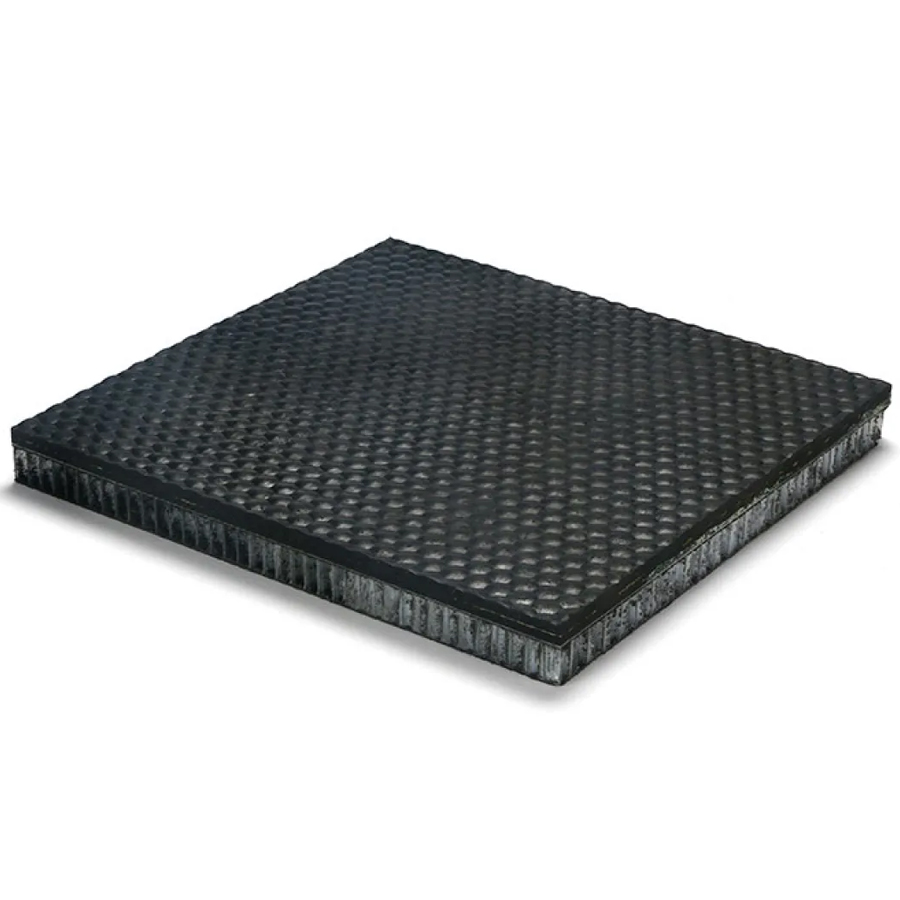
FRP Composite Panel Manufacturing Process Explained: Materials, Lamination and Quality Control
1. Introduction: How Are FRP Composite Panels Manufactured?
FRP composite panels are widely used in truck bodies, trailers, recreational vehicles, marine structures, industrial equipment and lightweight building systems.
Their performance depends not only on the quality of the fiberglass skins and core materials but also on the manufacturing process used to combine these materials into a complete panel.
A typical FRP sandwich panel consists of two FRP skins bonded to a lightweight core. The manufacturing process must ensure proper material compatibility, uniform bonding, dimensional accuracy and consistent panel quality.
For composite panel manufacturers, a well-controlled production process helps reduce delamination, uneven bonding, panel deformation and material waste.
Although manufacturing methods vary according to the panel structure and production equipment, the main production stages generally include:
- Raw material preparation
- FRP skin preparation
- Core material cutting and processing
- Surface treatment and adhesive preparation
- Skin-to-core lamination
- Pressing and curing
- Trimming and edge processing
- Quality inspection and packaging
This guide explains these stages and highlights the technical factors that influence finished FRP composite panel quality.
2. Raw Material Preparation
Material preparation is the first step in FRP sandwich panel manufacturing.
The manufacturer must confirm that all selected materials meet the requirements of the intended panel design.
2.1 FRP Skin Materials
FRP skins are commonly produced using fiberglass reinforcement and polymer resin.
Typical reinforcement materials include:
- Fiberglass chopped strand mat
- Woven roving
- Continuous strand mat
- Fiberglass fabric
Common resin systems include:
- Polyester resin
- Vinyl ester resin
- Epoxy resin
The selection depends on mechanical requirements, chemical resistance, temperature conditions, surface finish and manufacturing method.
Before lamination, the FRP skin should be checked for:
- Surface contamination
- Scratches and cracks
- Thickness consistency
- Surface flatness
- Dimensional accuracy
- Visible manufacturing defects
2.2 Core Material Selection
The core material is selected according to the required panel weight, mechanical performance, thermal properties and manufacturing process.
Common options include:
| Core Material | Structural Type | Typical Applications |
|---|---|---|
| PP Honeycomb Core | Thermoplastic cellular structure | Truck bodies, trailers, RV panels |
| PVC Foam Core | Rigid polymer foam | Marine, boats, wind energy |
| PET Foam Core | Thermoplastic foam | Transportation and industrial composites |
| XPS Foam Core | Closed-cell extruded foam | Insulated and building panels |
| PU Foam Core | Polyurethane foam | Refrigerated vehicles and insulation panels |
| Aluminum Honeycomb Core | Metallic cellular structure | Architectural, rail and industrial panels |
The core should be compatible with the selected adhesive, resin, FRP skin and processing conditions.
A material that performs well in one sandwich panel design may not be suitable for another production process without additional evaluation.
2.3 Adhesive and Resin Preparation
The bonding material is another critical component.
Depending on the production process, manufacturers may use structural adhesives, resin-based bonding systems or other qualified bonding materials.
The selected system should be evaluated for:
- Adhesion to the FRP skin
- Compatibility with the core surface
- Viscosity and application behavior
- Working time
- Curing conditions
- Environmental durability
For PP honeycomb core, bonding requires special attention because untreated polypropylene has relatively low surface energy. Surface treatment, nonwoven facing or a specifically qualified adhesive system may be necessary.
3. FRP Skin Preparation
Before bonding the skins to the core, the FRP surfaces must be prepared.
The objective is to achieve a clean and suitable bonding surface.
Typical preparation steps may include:
3.1 Surface Cleaning
Dust, oil, release agents and other contaminants can interfere with adhesive wetting and bonding.
Cleaning methods should be selected according to the FRP resin system and adhesive manufacturer’s recommendations.
3.2 Surface Inspection
Inspect the FRP skin for:
- Uneven thickness
- Surface bubbles
- Cracks
- Scratches
- Resin-rich or resin-deficient areas
- Surface contamination
Defective skins should be identified before they enter the lamination process.
3.3 Surface Preparation
Some bonding systems require additional surface preparation to improve adhesion.
The appropriate method depends on the FRP surface condition and adhesive chemistry.
Surface preparation should not be treated as a universal process. Different resin systems and surface finishes may require different procedures.
4. Core Material Cutting and Processing
Core processing is essential for achieving accurate panel dimensions and consistent structural performance.
The cutting method depends on the core material, panel design and required production tolerance.
4.1 Core Thickness and Dimension Control
The core should be checked for:
- Thickness
- Length and width
- Flatness
- Density or areal weight
- Cell size, where applicable
- Surface condition
Incorrect core thickness can affect the final panel thickness and bonding pressure.
Dimensional variations may also cause uneven contact between the core and FRP skins.
4.2 PP Honeycomb Core Processing
PP honeycomb core is available in different cell sizes, thicknesses and facing configurations.
Before lamination, manufacturers may need to perform:
- Sheet cutting
- Dimensional trimming
- Surface preparation
- Facing inspection
- Edge preparation
For nonwoven-faced PP honeycomb core, the condition and uniformity of the facing layer should also be checked.
The facing must be compatible with the selected adhesive or resin system.
4.3 Foam Core Processing
Foam cores such as PVC, PET, XPS and PU can be cut into required dimensions and thicknesses.
Depending on the product design, additional processing may include:
- Sanding
- Grooving
- Perforation
- Contour cutting
- Edge shaping
These operations may be used to improve fit, support specific panel geometries or accommodate manufacturing requirements.
However, the selected processing method must not compromise the core’s required mechanical properties.
5. Surface Treatment and Bonding Preparation
The bonding interface is one of the most important factors in FRP sandwich panel manufacturing.
Different core materials have different surface characteristics, so the same bonding method cannot automatically be used for every core.
5.1 Bonding PP Honeycomb Core
Polypropylene is a non-polar thermoplastic with relatively low surface energy.
As a result, many conventional adhesives and resins may have difficulty forming reliable bonds with untreated PP surfaces.
Depending on the material configuration and manufacturing process, possible approaches include:
- Plasma treatment
- Corona treatment
- Flame treatment
- Compatible nonwoven facing
- Qualified adhesive systems
The appropriate approach should be confirmed through actual bonding trials.
For nonwoven-faced PP honeycomb core, two interfaces require evaluation:
- PP core-to-nonwoven facing
- Nonwoven facing-to-FRP skin
The presence of a nonwoven layer does not automatically guarantee sufficient bonding strength.
5.2 Bonding Foam Core
Foam core bonding depends on the foam chemistry, surface condition and adhesive or resin system.
Important considerations include:
- Adhesive compatibility
- Surface cleanliness
- Adhesive application amount
- Core surface condition
- Curing temperature
- Pressure during lamination
Some foam materials may be sensitive to particular solvents, resins or elevated temperatures. Compatibility should be verified before mass production.
5.3 Bonding Aluminum Honeycomb Core
Aluminum honeycomb core requires a bonding system compatible with its metallic surface and the selected FRP skin.
Surface cleanliness, corrosion protection, adhesive distribution and curing conditions should be controlled.
The manufacturer should also consider potential differences in thermal expansion between metallic and composite materials.
6. FRP Sandwich Panel Lamination Process
Lamination combines the FRP skins, core material and bonding system into one composite structure.
The exact process depends on the panel design, materials and production equipment.
6.1 Adhesive or Resin Application
The adhesive or resin is applied to the appropriate bonding surface.
The application method may include:
- Manual application
- Roller coating
- Metered adhesive application
- Other automated coating systems
The objective is to achieve suitable and consistent adhesive coverage.
Too little adhesive may result in incomplete bonding, while excessive adhesive may increase panel weight, create uneven bond lines or affect processing.
The correct application amount should be determined through process development and adhesive specifications.
6.2 Core Positioning
The prepared core is placed between the two FRP skins.
The manufacturer must ensure:
- Correct panel orientation
- Accurate alignment
- Uniform contact
- Proper edge positioning
- No unnecessary gaps or overlaps
For honeycomb cores, cell structure and orientation may influence certain mechanical properties and processing behavior.
6.3 Skin-to-Core Assembly
The upper and lower FRP skins are assembled with the core according to the designed panel structure.
The assembly should be handled carefully to prevent contamination, displacement or premature adhesive curing.
6.4 Pressing and Consolidation
The assembled materials are subjected to the required pressure during bonding or curing.
The purpose is to establish consistent contact between the skins, adhesive and core.
Important process parameters include:
- Pressing pressure
- Pressure distribution
- Temperature
- Curing time
- Panel flatness
- Core deformation
Excessive pressure can crush or deform certain lightweight cores, while insufficient pressure may result in poor contact and incomplete bonding.
Pressing conditions must be established according to the material system and panel design.
7. Curing and Panel Stabilization
Curing allows the selected adhesive or resin system to develop its required bonding properties.
The curing process may take place at room temperature or under controlled heating, depending on the adhesive and production method.
Key factors include:
- Curing temperature
- Curing time
- Temperature uniformity
- Moisture conditions, where relevant
- Pressure maintenance
- Material compatibility
Premature handling may damage the bonding interface before sufficient strength develops.
After curing, the panel should be allowed to stabilize before final machining and inspection.
8. Trimming, Edge Processing and Finishing
After lamination and curing, the panel may require additional processing.
Typical operations include:
- Edge trimming
- Length and width cutting
- Surface finishing
- Drilling
- Machining
- Edge sealing
- Protective film application
For transportation and marine applications, edge sealing is particularly important where moisture exposure or environmental contamination is possible.
Finished dimensions should be checked against the approved drawings and product specifications.
9. Quality Control in FRP Composite Panel Manufacturing
Quality control should cover raw materials, production processes and finished panels.
Checking only the final appearance is not sufficient to evaluate the structural reliability of a sandwich panel.
9.1 Incoming Material Inspection
Incoming inspection may include:
| Material | Inspection Items |
|---|---|
| FRP Skin | Thickness, surface condition, dimensions, visible defects |
| PP Honeycomb Core | Thickness, cell size, facing condition, dimensions |
| Foam Core | Density, thickness, dimensions, surface condition |
| Aluminum Honeycomb | Cell size, foil configuration, thickness, surface condition |
| Adhesive | Shelf life, batch information, mixing ratio and storage condition |
Inspection criteria should be established according to approved material specifications.
9.2 In-Process Inspection
During production, manufacturers should monitor:
- Adhesive application uniformity
- Surface cleanliness
- Core positioning
- Panel alignment
- Pressing pressure
- Curing temperature
- Curing time
- Finished thickness
Process records can help identify variations and support production traceability.
9.3 Finished Panel Inspection
Finished FRP sandwich panels can be evaluated through several inspection and testing methods.
| Inspection or Test | Purpose |
|---|---|
| Visual Inspection | Identify cracks, bubbles, surface defects and visible delamination |
| Dimensional Inspection | Verify length, width and thickness |
| Flatwise Tensile Test | Evaluate tensile behavior through the sandwich thickness |
| Core Compression Test | Evaluate the core’s resistance to compression |
| Core Shear Test | Evaluate core shear properties |
| Sandwich Beam Flexure Test | Evaluate the response of the complete sandwich structure |
| Water Absorption Test | Evaluate water absorption behavior where relevant |
| Environmental Conditioning | Assess performance after selected environmental exposure |
Potential ASTM references include:
- ASTM C271/C271M for density of sandwich core materials
- ASTM C365/C365M for flatwise compressive properties of sandwich cores
- ASTM C273/C273M for shear properties of sandwich core materials
- ASTM C297/C297M for flatwise tensile strength of sandwich constructions
- ASTM C393/C393M for core shear properties of sandwich constructions
- ASTM C272/C272M for water absorption of core materials
The applicable standard edition and test scope should be confirmed before testing. Not every test is necessary for every panel design.
Most importantly, core-level test results should not be treated as proof of complete sandwich panel performance.
10. Common Manufacturing Problems and Their Solutions
FRP sandwich panel manufacturers may encounter several production problems.
| Manufacturing Problem | Possible Cause | Recommended Control |
|---|---|---|
| Skin-to-Core Delamination | Poor bonding, contamination or incompatible adhesive | Review surface preparation and bonding compatibility |
| Uneven Adhesive Distribution | Inconsistent application | Control coating method and application quantity |
| Core Deformation | Excessive pressure or unsuitable temperature | Optimize pressing conditions |
| Panel Warping | Uneven curing or residual stress | Control temperature and curing uniformity |
| Surface Bubbles | Air entrapment or material defects | Improve assembly and consolidation |
| Incorrect Panel Thickness | Core variation or uneven pressing | Control core thickness and press parameters |
| Edge Separation | Inadequate edge bonding or processing | Improve edge preparation and sealing |
| Inconsistent Mechanical Performance | Material variation or unstable processing | Strengthen incoming inspection and process records |
Manufacturing problems should be investigated through root-cause analysis rather than addressed only through final product sorting.
11. How to Improve FRP Composite Panel Production Efficiency
For industrial manufacturers, production efficiency is closely related to material consistency, process stability and equipment utilization.
Several improvements can help.
11.1 Standardize Material Specifications
Use clearly defined specifications for FRP skins, core materials and adhesives.
Material consistency reduces unnecessary adjustments during production.
11.2 Establish Standard Operating Procedures
Document critical operations, including:
- Material preparation
- Surface treatment
- Adhesive application
- Core positioning
- Pressing
- Curing
- Trimming
- Quality inspection
Standardized procedures make production more repeatable.
11.3 Optimize the Bonding Process
The bonding process should be developed around the actual combination of core, skin and adhesive.
Avoid applying one universal bonding procedure to different core materials without validation.
11.4 Improve Production Traceability
Record material batches, adhesive batches, process conditions and inspection results.
Traceability makes it easier to identify the cause of quality problems and improve future production.
11.5 Work with Reliable Core Material Suppliers
Core material consistency has a direct influence on downstream composite panel production.
A qualified supplier should provide clear specifications, stable product quality and technical communication during material evaluation.
12. ONEBOND Core Materials for FRP Composite Panel Manufacturers
ONEBOND supplies composite core materials for manufacturers developing lightweight sandwich panels and industrial composite products.
Our product range includes:
- PP Honeycomb Core
- Nonwoven Faced PP Honeycomb Core
- PVC Foam Core
- PET Foam Core
- XPS Foam Core
- PU Foam Core
- Customized composite core materials
These products can be evaluated for FRP sandwich panel manufacturing, truck body panels, trailer structures, RV panels, marine applications and other industrial uses.
We understand that core selection must match the customer’s skin material, bonding system and production process.
For PP honeycomb core applications, particular attention should be given to surface characteristics, facing configuration and bonding compatibility.
ONEBOND supports technical discussions and customized material configurations according to confirmed product requirements and manufacturing capabilities.
Contact ONEBOND to discuss your FRP composite panel production requirements and core material selection.
13. Frequently Asked Questions
Q1: What are the main steps in FRP composite panel manufacturing?
The main steps include material preparation, FRP skin preparation, core cutting, surface treatment, adhesive application, lamination, pressing, curing, trimming and quality inspection.
Q2: What materials are used to manufacture FRP sandwich panels?
Common materials include fiberglass-reinforced plastic skins, PP honeycomb core, PVC foam, PET foam, XPS foam, PU foam and aluminum honeycomb.
Q3: What is the most important factor in FRP sandwich panel bonding?
The compatibility between the core surface, FRP skin and adhesive system is essential. Surface preparation, adhesive application and curing conditions also influence bonding quality.
Q4: Can PP honeycomb core be used in FRP panel manufacturing?
Yes. PP honeycomb core can be used in FRP sandwich panels, but its low surface energy means that bonding compatibility must be carefully evaluated. Surface treatment or nonwoven facing may be required.
Q5: Why does an FRP sandwich panel delaminate?
Delamination may result from poor surface preparation, incompatible adhesives, insufficient bonding pressure, incomplete curing, contamination or unsuitable material combinations.
Q6: What tests are used for FRP sandwich panel quality control?
Depending on the design, testing may include dimensional inspection, core compression, core shear, flatwise tensile, sandwich beam flexure and water absorption testing.
Q7: Does a higher pressing pressure always improve bonding?
No. Excessive pressure can deform lightweight cores or cause uneven bond-line conditions. Pressing parameters should be optimized for the selected materials.
Q8: How can manufacturers improve FRP panel production consistency?
They can standardize material specifications, control adhesive application, document curing conditions, inspect critical dimensions and establish production traceability.
Q9: What is the difference between core testing and finished panel testing?
Core testing evaluates an individual core material, while finished panel testing evaluates the interaction of skins, core and bonding interfaces in the complete sandwich structure.
Q10: Can FRP sandwich panels be customized for truck body manufacturing?
Yes. Panel dimensions, skin configurations, core materials, thicknesses and other structural details can be developed according to the vehicle design and manufacturing requirements.
Conclusion
FRP composite panel manufacturing involves more than combining two fiberglass skins with a lightweight core.
Every stage, from raw material preparation to bonding, pressing, curing and final inspection, influences the quality of the finished sandwich panel.
For manufacturers, consistent material specifications, compatible bonding systems and controlled production parameters are essential to producing reliable FRP composite panels.
ONEBOND provides PP honeycomb core and multiple foam core materials for industrial manufacturers developing customized FRP sandwich panel solutions.
