

In the realm of advanced composite materials, sandwich structures have revolutionized design and engineering by offering exceptional strength-to-weight and stiffness-to-weight ratios. At the heart of many high-performance sandwich panels lies a remarkable natural material: balsa wood. Industrial balsa core board, specifically engineered for use with Fiber Reinforced Polymer (FRP) and Glass Fiber Reinforced Polymer (GFRP)…
In the realm of advanced composite materials, sandwich structures have revolutionized design and engineering by offering exceptional strength-to-weight and stiffness-to-weight ratios. At the heart of many high-performance sandwich panels lies a remarkable natural material: balsa wood. Industrial balsa core board, specifically engineered for use with Fiber Reinforced Polymer (FRP) and Glass Fiber Reinforced Polymer (GFRP) skins, represents a premier core solution, seamlessly blending natural cellular efficiency with modern manufacturing precision. This article delves into the unique properties of balsa wood, its sophisticated production into engineered core boards, its pivotal role in application processes, and its diverse fields of application, underscoring why it remains a material of choice for demanding structural applications.
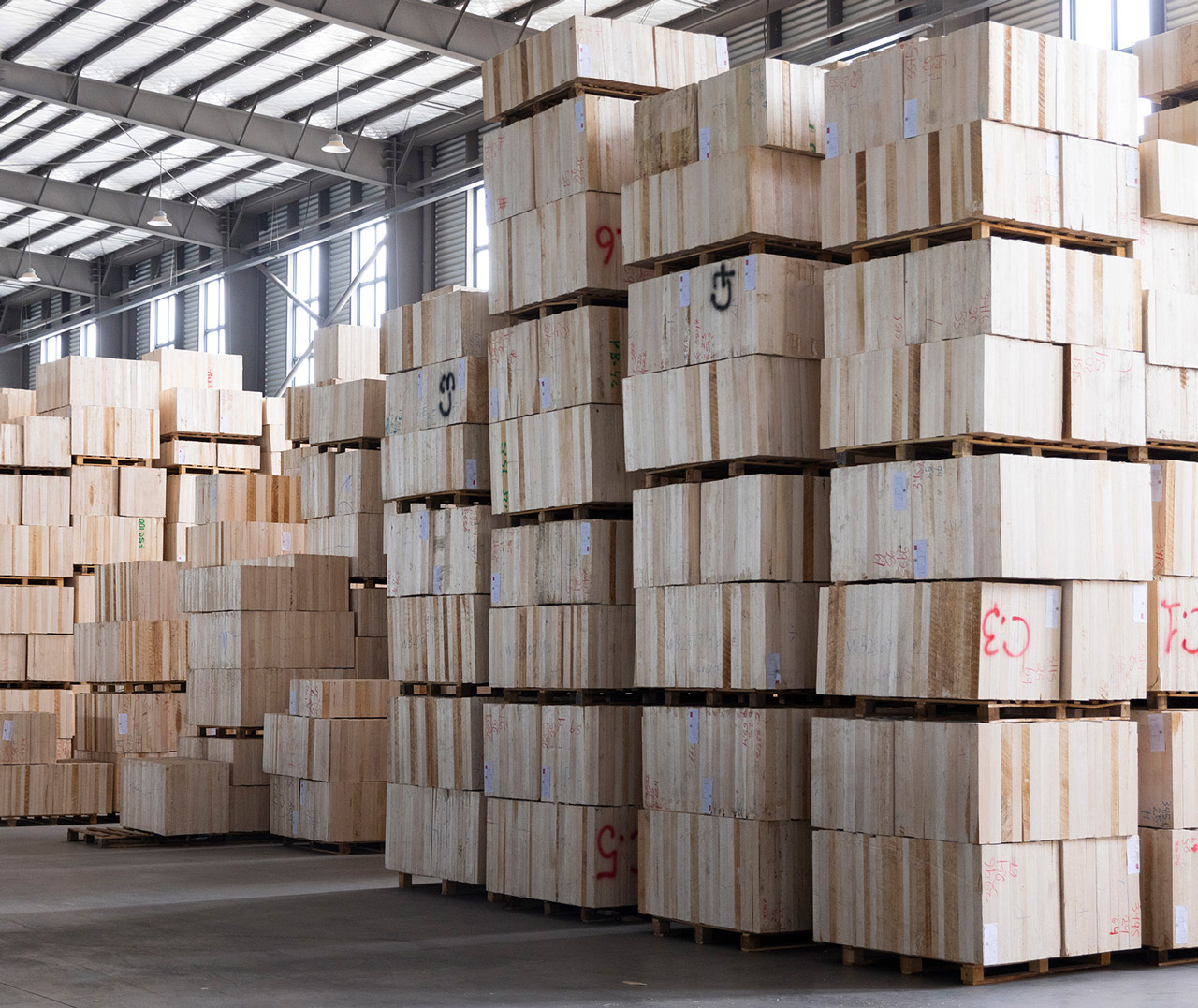
The Unique Timber: Nature’s Engineering Marvel
Balsa wood (Ochroma pyramidale) is not a typical timber. Hailing from fast-growing trees in equatorial regions like Ecuador, it is renowned for its incredibly low density coupled with reasonable mechanical properties. This unique combination stems from its distinctive cellular structure—a high proportion of large, thin-walled cells filled with air, resulting in a material that is approximately 90% air by volume. Despite its lightness, the cellulose-lignin structure of the cell walls provides substantial intrinsic strength.
For industrial use, the key characteristics of balsa wood include:
- Exceptionally Low Density: Typically ranging from 100 to 180 kg/m³ (6 to 11 lb/ft³), far lower than any other structural core material of comparable strength.
- High Specific Strength and Stiffness: Its strength-to-weight ratio outperforms many synthetic foams.
- Excellent Fatigue Resistance: It withstands cyclic loading exceptionally well.
- Superior Thermal and Acoustic Insulation Properties: A natural benefit of its cellular, air-filled structure.
- Renewable and Sustainable: Balsa trees mature rapidly, and responsible forestry practices ensure a sustainable supply with a minimal carbon footprint compared to synthetic alternatives.
Production and Processing: From Log to Precision Engineered Core
Transforming raw balsa logs into consistent, high-performance industrial core boards is a highly technical process. This ensures the core material meets the rigorous demands of modern composite fabrication.
- Selection and Conditioning: Logs are carefully selected and kiln-dried to a precise moisture content (typically 8-12%), stabilizing the wood and preventing future shrinkage or distortion.
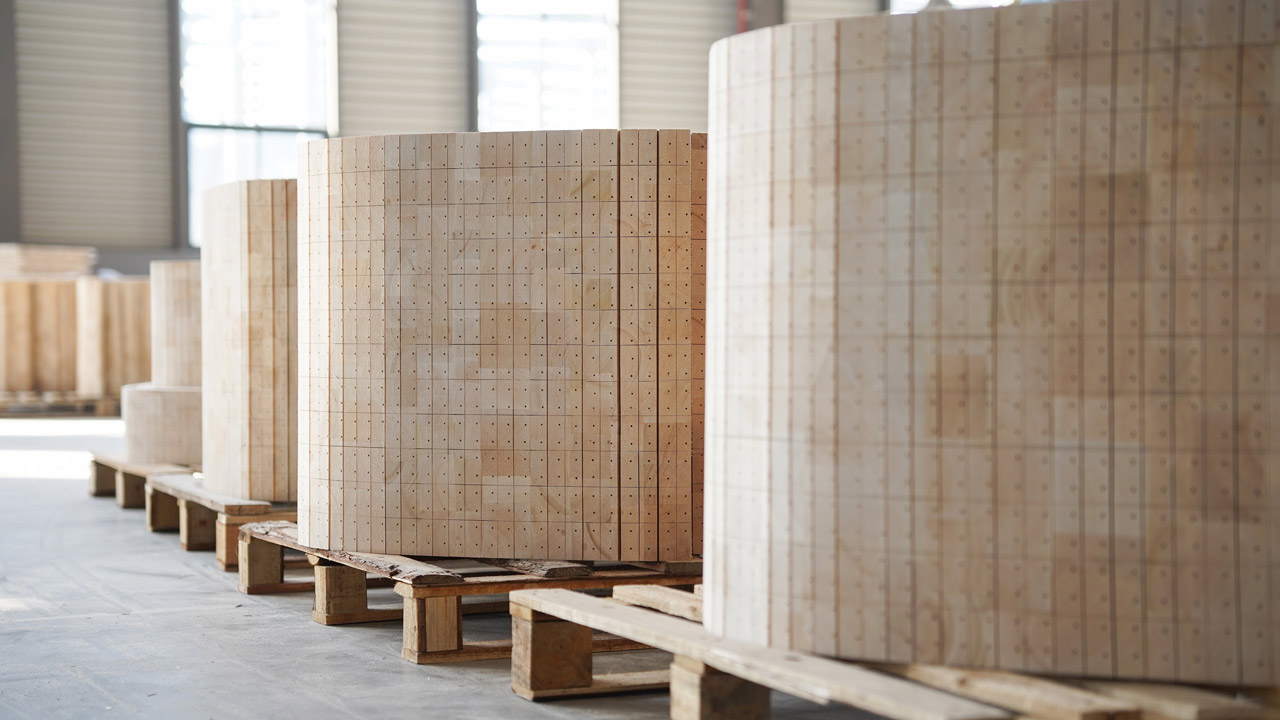
- End-Grain Lamination – The Critical Step: This is the defining process for structural balsa cores. The dried balsa is cut into small blocks or strips. These blocks are then laminated together with a specialized adhesive, aligning the wood’s grain direction perpendicular to the plane of the panel. This “end-grain” orientation is crucial, as it:
- Maximizes compressive strength and shear strength parallel to the skins—the primary loading direction in a sandwich panel.
- Provides superior resistance to crushing under localized loads.
- Creates a uniform surface for optimal bonding with FRP/GFRP skins.
- Allows resin to capillary into the open end-grain during infusion, creating a mechanical “root system” that enhances the skin-to-core bond.
- Panel Formation and Finishing: The laminated blocks are pressed into large panels of consistent thickness. These panels are then precision-sanded and can be supplied in various forms:
- Full-Density Boards: Uniform density throughout.
- Contoured or Scored Boards: Flexible sheets with partial-depth cuts on one side, allowing them to conform to complex curvatures (single or double curvature).
- Beveled and Tapered Edges: For smooth transitions and joint detailing.
Application in Production: Integration with FRP/GFRP
The integration of balsa core board into FRP/GFRP sandwich structures is versatile, compatible with almost all composite manufacturing processes.
- Wet Lay-up: The core is placed onto a wet laminate or into a mold, with subsequent layers applied on top. The end-grain structure absorbs excess resin, improving bond and reducing voids.
- Vacuum Bagging (Pre-Preg or Wet Lay-up): Balsa core performs excellently under vacuum pressure, which consolidates the laminate and ensures intimate skin-to-core contact.
- Resin Infusion (RTM, VARTM): This is where balsa core truly excels. The open end-grain structure acts as a natural, low-resistance flow channel for the resin, facilitating rapid, complete, and uniform wet-out of the entire laminate, minimizing dry spots. The resulting composite is a monolithic, high-integrity structure.
A critical design parameter is the shear strength of the core, which governs panel deflection and overall stability. Balsa core offers superior shear properties compared to many lightweight foams.
Table 1: Comparative Properties of Common Sandwich Core Materials
| Property | End-Grain Balsa (150 kg/m³) | PVC Foam (130 kg/m³) | PET Foam (200 kg/m³) |
|---|---|---|---|
| Density (kg/m³) | 150 | 130 | 200 |
| Compressive Strength (MPa) | ~14 | ~2.5 | ~6.0 |
| Shear Strength (MPa) | ~3.2 | ~1.4 | ~2.8 |
| Specific Stiffness (E/ρ) | High | Moderate | Moderate |
| Max. Service Temp. (°C) | 120-150 | 80-120 | 100-130 |
| Moisture Absorption | Low (if properly sealed) | None | Very Low |
| Sustainability | Renewable, Biobased | Petrochemical | Partially Recycled Content |
Fields of Application: Where Performance is Paramount
The outstanding properties of balsa-cored sandwich structures make them indispensable across multiple high-performance industries.
- Marine & Shipbuilding: The quintessential application. Used in hulls, decks, bulkheads, and superstructures of high-end yachts, workboats, and naval vessels. Its high shear strength resists slamming loads, its stiffness prevents oil-canning, and its excellent buoyancy and impact resistance are critical for safety. The natural insulation contributes to thermal and acoustic comfort.
- Wind Energy: A dominant material for wind turbine blades, especially in the challenging root and trailing edge sections. Its high fatigue resistance, damage tolerance, and ability to withstand long-term static (flapwise) and dynamic loads are unparalleled. Its robustness during handling and assembly is also a key advantage.
- Transportation: Employed in the floors, walls, roofs, and doors of high-speed trains, light rail cars, and specialty truck trailers. It reduces weight (improving fuel efficiency) while providing structural rigidity, impact resistance, and fire/smoke/toxicity (FST) performance when combined with appropriate resins.
- Construction & Infrastructure: Used in architectural cladding, translucent roofing panels, bridge decks, and modular building units. It offers a combination of lightness for easy installation, thermal efficiency, and the durability to withstand environmental loading.
- Aerospace (Secondary Structures): Found in aircraft interior panels, galleys, flooring, and even in small unmanned aerial vehicles (UAVs) or prototype sections, where its specific stiffness and ease of machining are highly valued.
Conclusion
Industrial balsa core board is far more than just lightweight wood; it is a sophisticated, engineered material born from nature’s ingenuity and refined by modern technology. Its unique end-grain structure, born from precise processing, delivers a combination of mechanical performance, process compatibility, and sustainable credentials that synthetic alternatives often struggle to match comprehensively. From the towering blades harvesting wind energy to the sleek hulls slicing through ocean waves, balsa-cored FRP and GFRP sandwich structures continue to enable engineers to push the boundaries of lightweight, efficient, and reliable design. As industries increasingly prioritize performance and sustainability, the role of industrial balsa core remains both vital and enduring.
FAQ
- What are the key advantages of balsa core compared to PVC foam?
Balsa core offers higher specific strength and stiffness, better fatigue resistance, superior impact and creep performance, excellent compatibility with resin infusion processes, and is a renewable, bio-based material. - Why is the “end-grain” orientation essential in balsa core boards?
The end-grain orientation aligns the wood’s cellular structure perpendicular to the panel, enabling it to withstand compressive loads like a dense honeycomb and significantly enhancing shear strength—key to the sandwich panel’s stability and load-bearing capacity. - How is balsa core treated for use in humid or marine environments?
Industrial balsa core is kiln-dried and, during composite manufacturing, fully impregnated and encapsulated with resin, creating a moisture-resistant barrier. Properly sealed panel edges further prevent water ingress. - Can balsa core be used for curved or complex shapes?
Yes. Specially manufactured “scored” or “contoured” balsa core sheets are flexible and can conform to single- or double-curvature molds, making them ideal for curved structures like boat hulls and wind turbine blades. - How sustainable is balsa wood as a core material?
Balsa is a fast-growing, renewable resource. Its production has a lower carbon footprint than most synthetic foams, and it is biodegradable. Responsible forestry practices ensure a sustainable supply chain, aligning with green design principles.
