
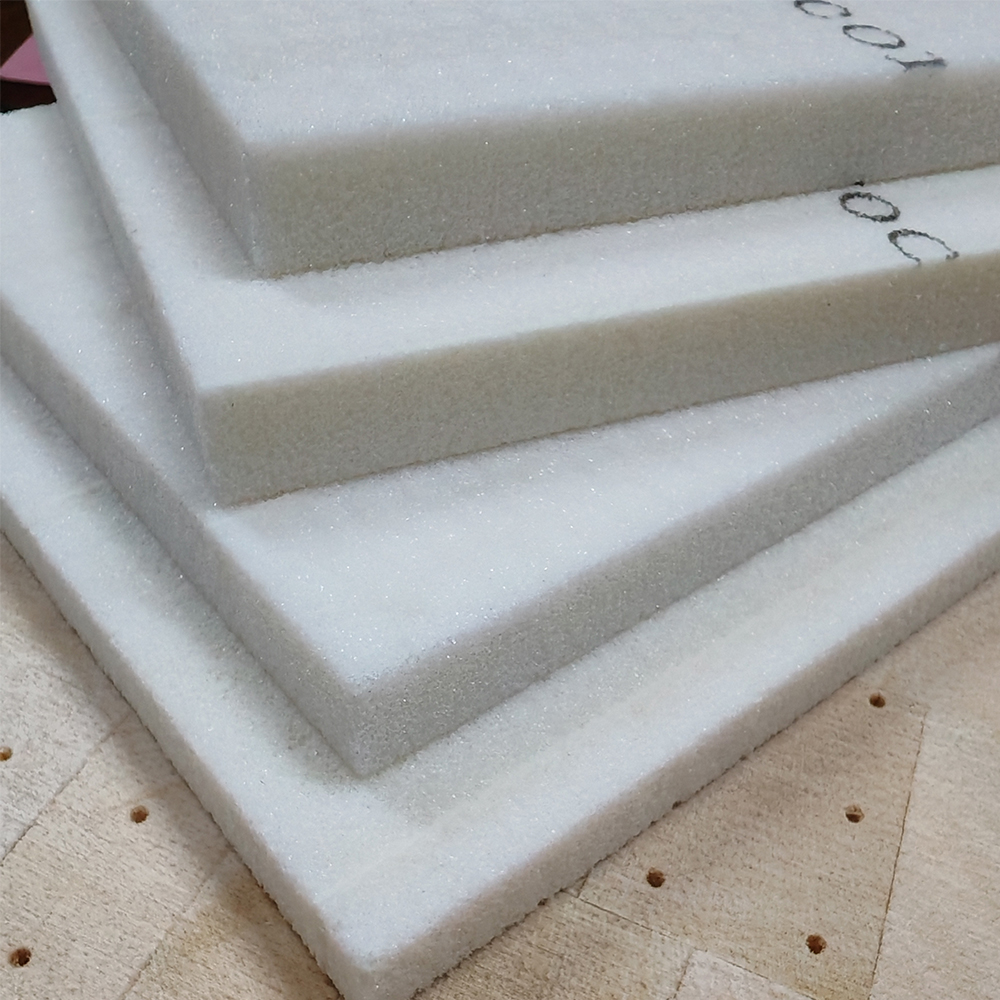
Lightweight composite materials are increasingly replacing traditional solid materials in construction, transportation, marine engineering, wind energy, industrial equipment, and prefabricated manufacturing. Instead of relying only on thick metal sheets, solid wood, or dense plastic boards, engineers are using low-density structural materials to create sandwich structures with improved stiffness-to-weight ratios.
Within this material system, PET, XPS board, XPS boards, XPS foam board, foam board, foam sheet, and polypropylene represent different branches of lightweight core material technology.
Although these keywords are often used independently in commercial markets, they are closely connected through the broader concept of engineered lightweight structures.
A foam-based or cellular core can perform several functions simultaneously:
- Reduce total weight
- Increase panel thickness
- Improve thermal insulation
- Support compressive loads
- Improve bending stiffness
- Reduce material consumption
- Provide moisture resistance
- Create a stable base for composite skins
ONEBOND’s real business is focused on composite materials and lightweight core solutions. The company manufactures and supplies products including PET Foam, XPS Foam, PU Foam, PVC Foam, PMI Foam, and PP Honeycomb Core. These materials are designed for different industries and structural requirements, including construction, transportation, marine applications, wind energy, and industrial composite manufacturing.
The development of these materials demonstrates an important principle in composite engineering: lightweight performance is not achieved simply by using less material. It is achieved by designing the correct internal structure.
This article examines the material characteristics, structural behavior, manufacturing logic, and application scenarios of PET, XPS board, XPS boards, XPS foam board, foam board, foam sheet, and polypropylene.
1. The Scientific Role of Lightweight Core Materials
A lightweight core material is generally positioned between two structural skins.
The skins may consist of:
- Aluminum
- Fiberglass
- Carbon fiber
- Thermoplastic sheets
- Wood veneer
- Steel
- Decorative laminates
The internal core creates distance between the skins.
This structural separation allows the panel to achieve greater stiffness without requiring the entire panel to be made from dense material.
The engineering logic can be illustrated as:
Face Sheet + Lightweight Core + Face Sheet = Sandwich Structure
Different core materials create different performance profiles.
For example:
- PET may provide a recyclable foam-based solution.
- XPS materials may emphasize thermal insulation and water resistance.
- PVC Foam can provide structural performance in composite applications.
- PMI Foam can support demanding high-performance composite structures.
- Polypropylene can be manufactured into lightweight honeycomb or cellular structures.
The correct material must therefore be selected according to the final application rather than price alone.
2. PET as a Lightweight Composite Core Material
PET is increasingly important in the composite materials industry because it can be developed into lightweight foam core structures and can support sustainability-oriented manufacturing strategies.
PET-based foam materials can provide:
- Low density
- Lightweight construction
- Moisture resistance
- Compatibility with composite manufacturing
- Structural support
- Potential use of recycled material streams
ONEBOND manufactures PET Foam as part of its lightweight composite material product range.
In a sandwich structure, PET Foam can be positioned between fiberglass, carbon fiber, thermoplastic sheets, or other surface materials.
The final mechanical performance depends on:
- Foam density
- Cell structure
- Skin material
- Adhesive system
- Manufacturing process
Typical PET Foam Parameters
| Parameter | Typical Range |
|---|---|
| Density | Application dependent |
| Thickness | Customized |
| Structure | Closed-cell or engineered cellular structure |
| Processing | Cutting, machining, bonding |
| Application | Composite panels and structural products |
Real Application Scenario
A manufacturer producing lightweight transportation components needs to reduce the overall weight of large interior panels. By combining fiberglass skins with a PET foam core, the manufacturer can create a lightweight sandwich structure instead of using a solid plastic sheet. The PET core contributes thickness while minimizing unnecessary material weight.
3. XPS Board and the Development of Closed-Cell Foam Structures
An XPS board is generally associated with extruded polystyrene foam technology.
The material is produced with a closed-cell structure, which contributes to:
- Low water absorption
- Thermal insulation
- Lightweight construction
- Compressive strength
The internal cellular structure distinguishes an XPS board from many conventional solid plastic sheets.
Because of its insulation properties, the material is widely associated with construction applications.
However, XPS materials can also be processed into engineered boards for specialized uses.
ONEBOND’s business includes XPS Foam products designed for lightweight and construction-related applications.
Typical XPS Board Parameters
| Parameter | Typical Range |
| Density | Approximately 25–45 kg/m³ |
| Thickness | 5–120 mm |
| Thermal Conductivity | Approximately 0.028–0.035 W/m·K |
| Water Resistance | High |
| Structure | Closed-cell |
Actual values depend on density, formulation, and product design.
Real Application Scenario
A prefabricated building manufacturer needs lightweight insulation materials for wall and roof components. An XPS board can provide thermal insulation while remaining easier to transport and install than many traditional mineral-based materials.
4. XPS Boards in Construction and Industrial Applications
The plural term XPS boards often refers to multiple product formats designed for different installation environments.
Different XPS boards may vary according to:
- Density
- Thickness
- Surface treatment
- Compressive strength
- Edge design
- Lamination
For example, an XPS product designed for floor insulation may require higher compressive strength than a board used in a lightweight wall system.
This demonstrates an important material engineering principle: the base polymer does not determine the complete product performance.
Structural design is equally important.
Manufacturers can modify XPS boards through:
- Higher density formulations
- Surface reinforcement
- Cement coatings
- Fiberglass facings
- Polymer skins
- Customized cutting
Real Application Scenario
A building contractor is constructing multiple bathroom units in a modular building project. Instead of preparing traditional cement-based wall surfaces on site, the contractor uses moisture-resistant XPS boards as part of a prefabricated installation system, reducing wet construction time.
5. XPS Foam Board and Multi-Functional Construction Materials
The term XPS foam board emphasizes the material’s cellular foam structure.
An XPS foam board can provide several functions simultaneously:
- Thermal insulation
- Moisture resistance
- Lightweight handling
- Dimensional stability
- Structural support at selected densities
ONEBOND’s XPS Foam products are part of its broader lightweight material portfolio.
From a manufacturing perspective, the quality of an XPS foam board depends on:
- Raw material formulation
- Extrusion conditions
- Cell structure
- Density consistency
- Thickness tolerance
A consistent closed-cell structure is important for long-term performance.
Typical XPS Foam Board Specification Example
| Specification | Example |
| Material | XPS |
| Density | 30–40 kg/m³ |
| Thickness | 20–100 mm |
| Width | Customized |
| Length | Customized |
| Cell Structure | Closed-cell |
| Application | Construction and insulation systems |
Real Application Scenario
A cold-storage equipment manufacturer needs lightweight insulation panels with controlled thickness and good resistance to moisture. An XPS foam board can be incorporated into a panel system where the foam provides insulation while the outer skins provide surface protection.
6. Foam Board: A Broad Category of Engineered Materials
The term foam board covers a wide range of products.
Depending on the material system, a foam board may be manufactured from:
- XPS
- PVC
- PET
- PU
- PMI
- Other polymer foams
The performance differences between these materials can be significant.
For example:
| Foam Board Type | Main Advantage | Typical Application |
| XPS Foam Board | Thermal insulation | Construction |
| PVC Foam Board | Structural performance | Marine and composites |
| PET Foam Board | Lightweight and recyclable options | Transportation and composites |
| PU Foam Board | Insulation | Refrigeration and buildings |
| PMI Foam Board | High-performance composite structures | Advanced engineering |
ONEBOND’s product range covers several of these categories, allowing customers to select materials according to structural and processing requirements.
Real Application Scenario
A composite equipment manufacturer needs a material for producing lightweight covers. Instead of purchasing one generic foam board, the engineering team compares PET Foam, PVC Foam, and PU Foam according to weight, strength, processing method, and environmental conditions.
7. Foam Sheet and Surface-Oriented Lightweight Applications
A foam sheet may refer to a thinner foam product used for insulation, cushioning, lamination, protective structures, or composite manufacturing.
Compared with a thick structural foam core, a foam sheet may focus more on:
- Surface protection
- Lightweight filling
- Thermal insulation
- Cushioning
- Lamination
However, material type remains important.
A PVC foam sheet may have very different mechanical characteristics from a polyethylene or XPS foam product.
Manufacturers should therefore define:
- Polymer type
- Density
- Thickness
- Cell structure
- Surface condition
- Processing requirements
Real Application Scenario
A manufacturer of industrial equipment requires a lightweight internal layer to reduce vibration and protect sensitive components during transportation. A customized foam sheet can be designed according to the required thickness and density before being laminated into the final structure.
8. Polypropylene and Lightweight Cellular Structures
polypropylene is an important thermoplastic material used across multiple industries.
In lightweight composite engineering, polypropylene can be processed into:
- Sheets
- Foam structures
- Honeycomb cores
- Thermoplastic composite components
ONEBOND’s product range includes PP Honeycomb Core, which uses polypropylene-based material to create a lightweight cellular structure.
The advantages of polypropylene can include:
- Low density
- Moisture resistance
- Chemical resistance
- Thermoplastic processing capability
- Lightweight performance
When processed into a honeycomb structure, polypropylene can provide additional structural efficiency.
Polypropylene Honeycomb Parameters
| Parameter | Typical Characteristic |
| Material | Polypropylene |
| Structure | Honeycomb |
| Weight | Low |
| Moisture Resistance | High |
| Customization | Thickness and cell structure |
| Application | Transportation and composite panels |
Real Application Scenario
A recreational vehicle manufacturer needs lightweight floor and partition structures. A polypropylene honeycomb core can be combined with fiberglass skins to create panels that are lighter than many solid alternatives while maintaining structural integrity.
9. ONEBOND’s Multi-Material Core Strategy
ONEBOND does not focus on only one foam technology.
Its actual business includes:
- PET Foam
- XPS Foam
- PU Foam
- PVC Foam
- PMI Foam
- PP Honeycomb Core
This product structure is important because different industries require different material solutions.
For example:
Construction
XPS materials may be selected for insulation and moisture resistance.
Marine Applications
PVC Foam and other structural cores can be used in composite structures.
Transportation
PET Foam and PP Honeycomb Core can contribute to lightweight design.
Advanced Composite Manufacturing
PMI Foam can support more demanding performance requirements.
This multi-material approach allows ONEBOND to participate in different segments of the composite material industry rather than depending on a single product category.
Real Application Scenario
A customer develops three different products: a construction insulation panel, a marine composite component, and a lightweight transportation structure. Instead of applying one core material to every product, ONEBOND can evaluate different options such as XPS Foam, PVC Foam, PET Foam, or PP Honeycomb Core according to the engineering requirements of each application.
10. Material Comparison Between PET, XPS and Polypropylene Structures
The following comparison illustrates the differences between these materials.
| Material | Density | Water Resistance | Thermal Insulation | Structural Potential | Typical Use |
| PET Foam | Low | High | Medium | High | Composite panels |
| XPS | Very Low | High | High | Medium | Construction insulation |
| Polypropylene Honeycomb | Very Low | High | Medium | Medium to High | Transportation panels |
| PVC Foam | Low | High | Medium | High | Marine composites |
| PMI Foam | Very Low | Application dependent | Medium | Very High | Advanced composites |
The purpose of this comparison is not to identify one universally superior material.
Each material has a different engineering role.
A product requiring thermal insulation may prioritize XPS.
A lightweight structural composite may require PET or PVC Foam.
A transportation panel may benefit from polypropylene honeycomb structures.
11. Processing and Composite Manufacturing
Lightweight core materials must also be evaluated according to manufacturing compatibility.
Different materials may be processed using:
- Vacuum infusion
- Adhesive bonding
- Lamination
- CNC machining
- Thermoforming
- Press molding
For example, a foam board used in a fiberglass composite may need sufficient compatibility with resin and bonding processes.
A foam sheet may need accurate thickness control for lamination.
A polypropylene core may require appropriate surface treatment to improve bonding with selected skins.
This manufacturing compatibility is critical.
A technically advanced material may still fail to perform well if the processing method is unsuitable.
12. Future Development of Foam Core Materials
The future development of lightweight core materials will likely focus on several areas.
Recycled Material Technology
Recycled PET can contribute to the development of more sustainable foam products.
Improved Mechanical Performance
Manufacturers continue to optimize density and cell structures to improve stiffness and compressive strength.
Hybrid Core Structures
Future composite panels may combine foam materials with honeycomb structures.
Automated Manufacturing
Automation can improve thickness consistency and reduce production variation.
Application-Specific Design
Instead of producing one universal foam board, manufacturers are increasingly developing products for specific industries.
For ONEBOND, this direction aligns with its portfolio of PET Foam, XPS Foam, PU Foam, PVC Foam, PMI Foam, and PP Honeycomb Core.
Conclusion
The development of lightweight composite materials depends on understanding the relationship between material composition, cellular structure, density, and final application.
PET provides an important option for lightweight composite structures and sustainable material development.
An XPS board is strongly associated with closed-cell insulation performance and moisture resistance.
Different XPS boards can be engineered according to structural and installation requirements.
An XPS foam board combines lightweight construction with thermal insulation and water resistance.
The term foam board represents a broad material category that includes XPS, PET, PVC, PU, and PMI-based products.
A foam sheet may provide thinner lightweight solutions for lamination, protection, insulation, and specialized applications.
Finally, polypropylene plays an important role in lightweight thermoplastic and honeycomb structures, particularly in transportation and composite panel manufacturing.
ONEBOND’s actual business covering PET Foam, XPS Foam, PU Foam, PVC Foam, PMI Foam, and PP Honeycomb Core demonstrates that modern composite engineering requires multiple material options.
There is no universal core material for every application.
The most effective material selection begins with the real engineering environment: required weight, strength, thickness, insulation performance, moisture exposure, manufacturing process, and final product lifecycle.
As construction, transportation, marine engineering, and industrial manufacturing continue to demand lighter and more efficient structures, foam cores and cellular materials will remain central to the next generation of composite engineering.
