
Introduction
The development of modern architectural materials has increasingly moved toward lightweight structures, multifunctional surfaces, and engineered composite systems. Traditional solid metal sheets can provide strength and durability, but they also increase structural weight, transportation costs, and installation requirements. As a result, engineered materials such as aluminum composite panel, ACP sheet, aluminum panel, aluminum honeycomb panel, honeycomb panel, and honeycomb core have become important research and manufacturing categories in architecture, transportation, marine construction, industrial equipment, and interior decoration.
These materials are not simply different names for the same product. Their internal structures, mechanical behavior, manufacturing methods, cost structures, and application logic are fundamentally different.
From a materials science perspective, the most important question is how to achieve a higher strength-to-weight ratio while maintaining surface flatness, bonding reliability, durability, and processing flexibility. Composite structures address this challenge by combining different materials into a single engineered panel.
ONEBOND is engaged in the manufacturing and development of composite materials and lightweight core materials. Its business covers products including PET Foam, XPS Foam, PU Foam, PVC Foam, PMI Foam, PP Honeycomb Core, and other lightweight core material solutions. These materials are used as structural cores or functional components in composite structures for applications such as transportation, marine products, wind energy, construction, and industrial manufacturing.
For ONEBOND, lightweight material development is not limited to producing individual sheets or boards. The more important technical direction is understanding how different skins, adhesives, and core materials interact to create a complete composite structure.
This article examines the material logic behind aluminum-based composite panels and honeycomb structures, including aluminum composite panel, ACP sheet, aluminum panel, aluminum honeycomb panel, honeycomb panel, and honeycomb core.
1. The Material Logic Behind Lightweight Composite Panels
A composite panel generally consists of three functional components:
- Face sheet
- Core material
- Adhesive or bonding interface
The face sheet provides surface properties and contributes significantly to bending resistance. The core material separates the two face sheets and creates structural thickness without adding excessive weight.
This structural principle explains why lightweight panels can sometimes provide much greater stiffness than a single thin sheet.
In a typical composite structure, the outer skins may be aluminum, fiberglass, steel, or other materials. The internal structure may use foam, polymer cores, or honeycomb core materials.
The final product can therefore be designed according to different performance targets:
- Low weight
- High stiffness
- Flatness
- Thermal insulation
- Impact resistance
- Acoustic performance
- Moisture resistance
- Decorative appearance
This material architecture has created several major product categories.
2. Aluminum Composite Panel: A Multi-Layer Material System
An aluminum composite panel generally consists of aluminum surface layers bonded to a non-aluminum core.
The core can be designed according to the required application and may include mineral-filled materials, polymer materials, or other engineered structures.
The main purpose of the aluminum layers is to provide:
- Surface flatness
- Decorative capability
- Weather resistance
- Processing capability
- Mechanical protection
The internal layer contributes to the overall thickness and structural behavior.
From a material research perspective, an aluminum composite panel is interesting because it combines the metallic characteristics of aluminum with the functional advantages of a lightweight core.
Typical Aluminum Composite Panel Structure
| Layer | Main Function |
|---|---|
| Surface Coating | Decoration and environmental protection |
| Aluminum Skin | Surface strength and flatness |
| Adhesive Layer | Bonding interface |
| Core Material | Thickness and structural support |
| Adhesive Layer | Structural bonding |
| Aluminum Skin | Backing and stability |
The performance of an aluminum composite panel depends heavily on the compatibility between the aluminum surface and the core material.
Poor bonding can lead to:
- Delamination
- Surface deformation
- Reduced impact resistance
- Long-term durability problems
Real Application Scenario
A commercial building renovation project may require a lightweight exterior decorative material that can be fabricated into large panels and installed on an existing structure without significantly increasing structural load. In this scenario, an aluminum composite panel can provide a flat metallic appearance while keeping the total façade system relatively lightweight.
3. ACP Sheet and the Relationship Between Surface Material and Core Design
The term ACP sheet is commonly used to describe aluminum composite products supplied in sheet form.
However, from a technical perspective, an ACP sheet should not be evaluated only according to thickness.
Two products with the same nominal thickness can perform differently because of variations in:
- Aluminum skin thickness
- Core density
- Core composition
- Adhesive system
- Surface coating
- Manufacturing accuracy
Typical ACP Sheet Parameters
| Parameter | Typical Range |
| Total Thickness | 3–6 mm |
| Aluminum Skin Thickness | 0.1–0.5 mm |
| Panel Width | 1220–2000 mm |
| Panel Length | Customized |
| Surface Finish | PVDF, PE, powder coating, decorative coating |
| Core Type | Polymer or mineral-filled structure |
Actual specifications depend on application requirements and local building regulations.
The engineering challenge of an ACP sheet is maintaining stable bonding between different materials that have different thermal expansion characteristics.
Aluminum expands and contracts differently from polymer-based materials. Manufacturers therefore need to control bonding conditions and material compatibility.
Real Application Scenario
A signage manufacturer requires sheets that can be CNC processed, folded, cut, and finished with printed graphics. An ACP sheet can provide a relatively smooth surface while remaining easier to handle than a thick solid metal plate.
4. Aluminum Panel: From Solid Sheets to Engineered Structures
The term aluminum panel covers a much broader material category.
An aluminum panel can include:
- Solid aluminum sheet
- Aluminum composite structures
- Aluminum honeycomb structures
- Corrugated aluminum panels
- Perforated aluminum panels
- Decorative aluminum systems
The main difference between a conventional solid aluminum panel and a composite panel is the internal structure.
A solid aluminum sheet relies primarily on the thickness and mechanical properties of aluminum.
A composite panel distributes material differently. Instead of increasing the thickness of solid metal, the structure separates two skins using a lightweight core.
This can improve bending stiffness without proportionally increasing material consumption.
Real Application Scenario
An interior architectural project requires large-format metallic wall elements. Using a thick solid aluminum panel could increase weight and material cost. An engineered lightweight structure may allow larger panel dimensions while simplifying transportation and installation.
5. Aluminum Honeycomb Panel and Structural Efficiency
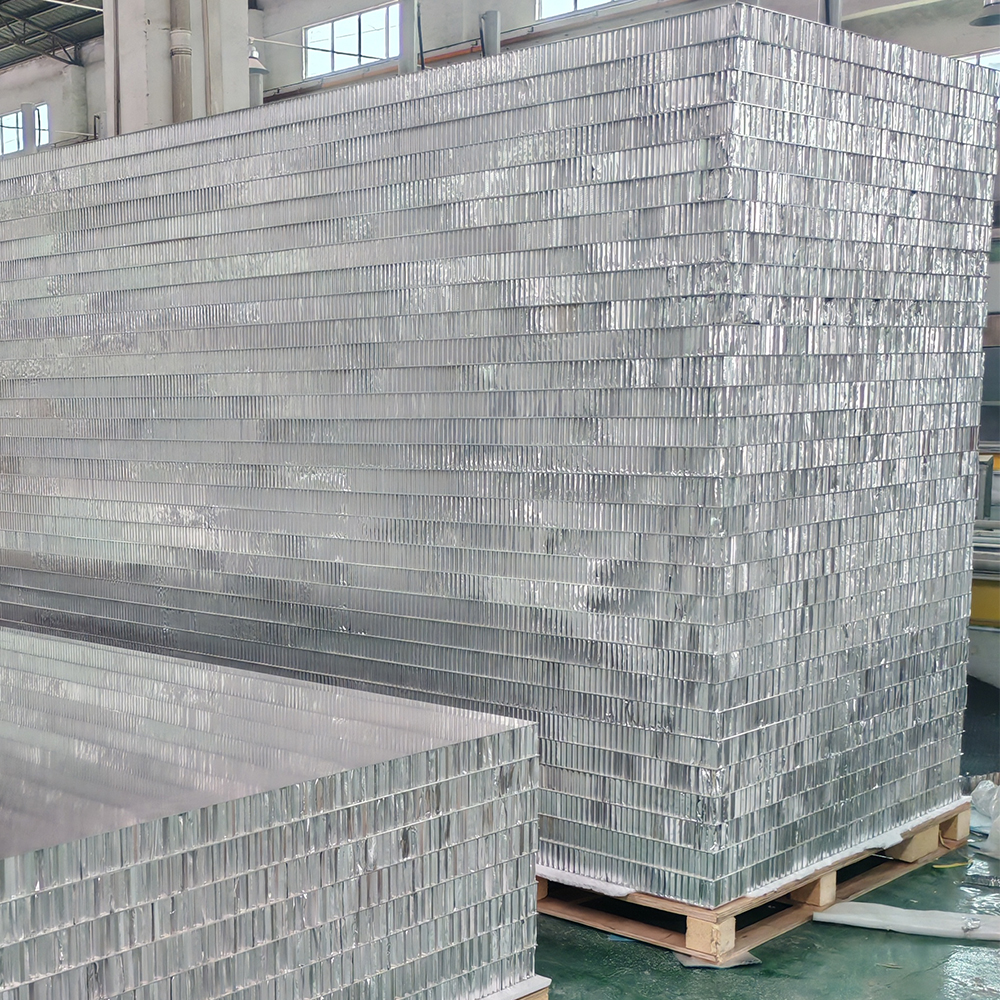
An aluminum honeycomb panel represents a more structurally engineered approach to lightweight design.
The product generally consists of:
- Aluminum face sheet
- Adhesive layer
- Aluminum honeycomb structure
- Adhesive layer
- Aluminum back sheet
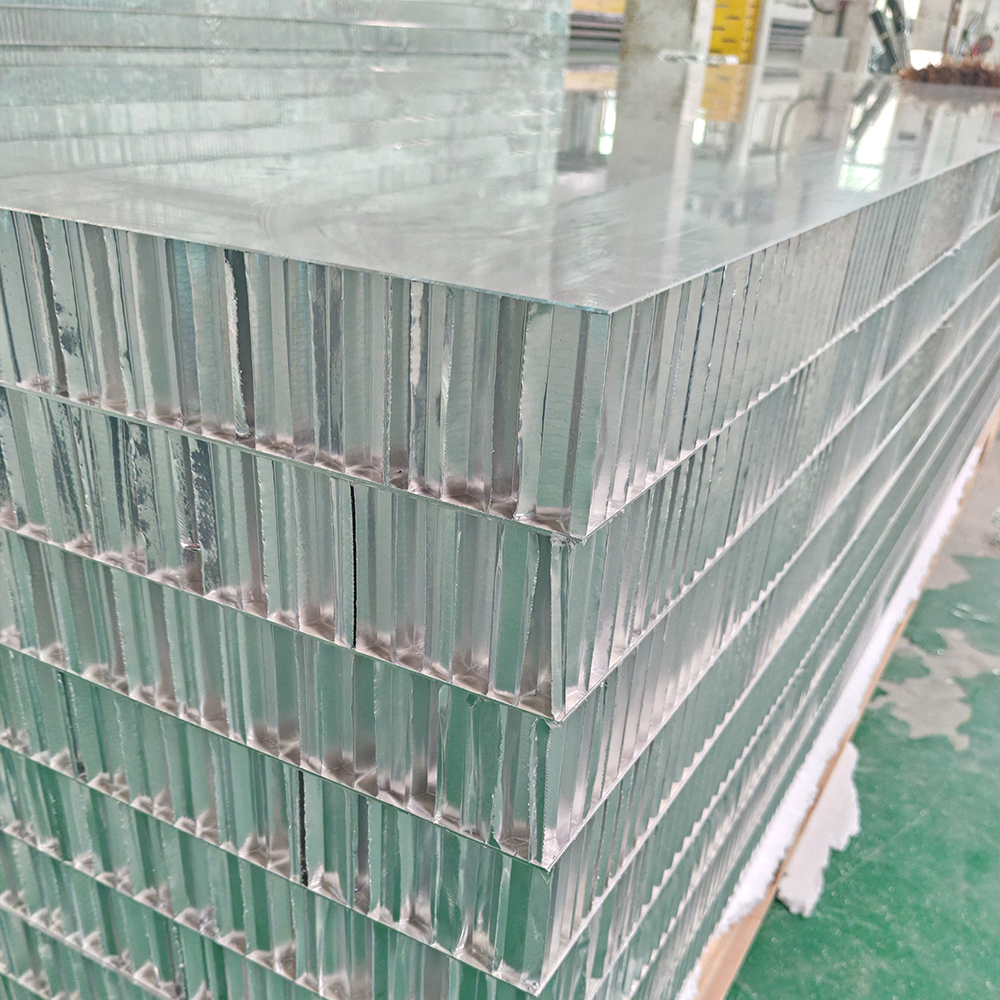
The internal honeycomb geometry creates thickness while minimizing material usage.
The most important advantage of an aluminum honeycomb panel is its ability to combine:
- Low weight
- High bending stiffness
- Excellent flatness
- Large panel capability
- Good dimensional stability
The material is particularly suitable for applications where panel size and weight are critical.
Typical Aluminum Honeycomb Panel Parameters
| Parameter | Typical Range |
| Total Thickness | 5–100 mm |
| Aluminum Skin | 0.3–2.0 mm |
| Honeycomb Cell Size | Customized |
| Panel Width | Customized |
| Panel Length | Customized |
| Core Material | Aluminum honeycomb |
| Surface Finish | Mill finish, PVDF, PE, powder coating, decorative film |
These values are application-dependent and should be confirmed during product development.
Real Application Scenario
A transportation equipment manufacturer needs lightweight interior wall structures that must remain flat over large areas. An aluminum honeycomb panel can reduce total system weight while providing sufficient rigidity for interior partitions and decorative surfaces.
6. Honeycomb Panel as a General Composite Structure
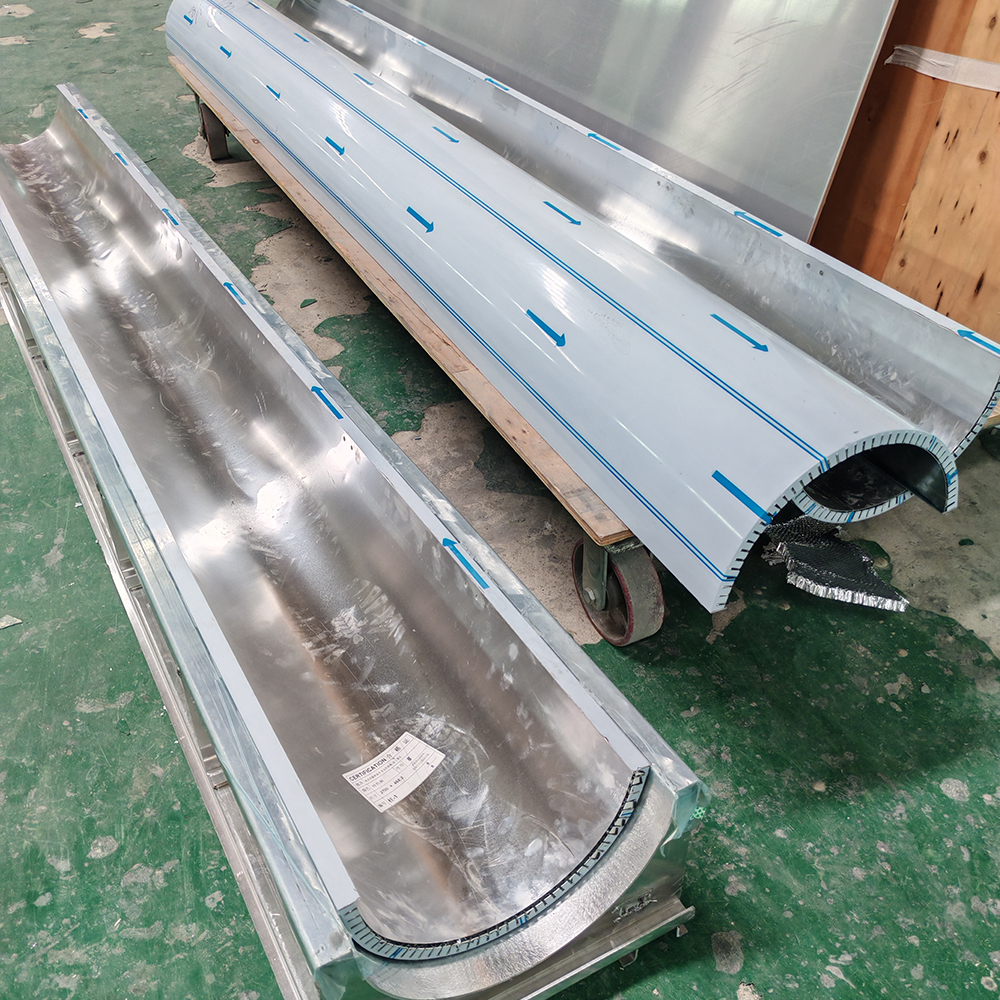
The term honeycomb panel is broader than aluminum honeycomb products.
A honeycomb panel may combine different surface materials with different core materials.
For example:
- Aluminum skin + aluminum honeycomb
- FRP skin + PP honeycomb
- Wood veneer + honeycomb core
- Thermoplastic skin + polymer honeycomb
The main engineering principle remains the same: use a lightweight cellular structure to create thickness and structural separation between face sheets.
ONEBOND’s composite material business includes lightweight core material solutions such as PP Honeycomb Core. These materials can be combined with fiberglass reinforced plastics, thermoplastic sheets, and other skins depending on the final product requirements.
Compared with a conventional solid board, a honeycomb panel can significantly reduce weight.
Real Application Scenario
A camper manufacturer needs wall and furniture components that are lightweight enough to reduce vehicle weight but still rigid enough to support interior use. A honeycomb panel using suitable skins and a lightweight core can provide a practical balance between weight and structural performance.
7. Honeycomb Core: The Internal Structure That Determines Panel Behavior
The honeycomb core is one of the most important components in lightweight sandwich construction.
Its primary functions include:
- Maintaining separation between skins
- Supporting compressive loads
- Improving bending stiffness
- Reducing total material weight
- Stabilizing the panel structure
Different honeycomb core materials can provide different performance characteristics.
Common options include:
- Aluminum honeycomb
- Polypropylene honeycomb
- Paper honeycomb
- Thermoplastic honeycomb
ONEBOND manufactures lightweight core material products including PP Honeycomb Core, which can be used in composite panel structures where lightweight design and moisture resistance are important.
The selection of a honeycomb core depends on the application environment.
Honeycomb Core Comparison
| Core Type | Weight | Moisture Resistance | Structural Strength | Typical Application |
| Aluminum Honeycomb | Low | High | High | Architecture, transportation |
| PP Honeycomb | Very Low | High | Medium to High | Vehicles, packaging, composite panels |
| Paper Honeycomb | Very Low | Low | Medium | Furniture and interior products |
| Thermoplastic Honeycomb | Low | High | Medium | Industrial applications |
Real Application Scenario
A logistics equipment manufacturer requires lightweight protective panels for reusable equipment. A polymer-based honeycomb core can reduce weight while maintaining enough structure to support repeated handling.
8. Material Interfaces and Bonding Performance
The performance of a composite structure does not depend only on the surface material and core.
The bonding interface is equally important.
For an aluminum composite panel, ACP sheet, aluminum honeycomb panel, or other honeycomb panel, adhesive performance affects the entire structural system.
Important factors include:
- Adhesive strength
- Curing temperature
- Surface cleanliness
- Surface energy
- Material compatibility
- Environmental durability
In practical manufacturing, even a high-performance honeycomb core cannot compensate for poor bonding.
Manufacturers must therefore control:
- Surface preparation
- Adhesive application
- Lamination pressure
- Temperature
- Curing time
- Final inspection
This is particularly important for large-format panels.
9. ONEBOND and the Development of Lightweight Core Materials
ONEBOND’s actual business focuses on composite materials and lightweight structural cores.
The company’s product range includes:
- PET Foam
- XPS Foam
- PU Foam
- PVC Foam
- PMI Foam
- PP Honeycomb Core
These materials are designed for different composite manufacturing requirements.
For example:
PET Foam can be used in lightweight composite structures where recycled material solutions and structural performance are important.
PVC Foam is widely used in composite applications requiring low weight and good mechanical properties.
PMI Foam can be applied in advanced composite manufacturing where high-performance structural requirements are more demanding.
PP Honeycomb Core provides a lightweight cellular structure that can be combined with different surface materials.
These core materials demonstrate an important development direction in composite engineering: the face material and the core material should be selected as a complete system.
A manufacturer producing an aluminum panel may require different core properties from a manufacturer producing a transportation honeycomb panel.
Real Application Scenario
A composite product manufacturer is developing lightweight equipment housings. Rather than selecting only an aluminum skin or fiberglass surface, the engineering team evaluates the complete sandwich structure and chooses a suitable foam or PP Honeycomb Core based on target weight, stiffness, processing method, and environmental requirements. This type of material selection reflects the practical application logic behind ONEBOND’s core material business.
10. Comparing Aluminum Composite Panel and Aluminum Honeycomb Panel
Although both products use aluminum surfaces, their internal structures are different.
| Performance Factor | Aluminum Composite Panel | Aluminum Honeycomb Panel |
| Core Structure | Polymer or mineral-filled | Aluminum honeycomb |
| Typical Thickness | 3–6 mm | 5–100 mm |
| Weight | Low | Low |
| Large Panel Capability | High | Very High |
| Bending Stiffness | Medium | High |
| Flatness | High | Very High |
| Processing | Good | Application dependent |
| Typical Use | Cladding and decoration | Architecture and transportation |
An aluminum composite panel may be suitable when surface appearance and cost efficiency are major priorities.
An aluminum honeycomb panel may be more suitable when lightweight structural performance, large panel dimensions, and stiffness are required.
However, final material selection should always be based on actual engineering requirements.
11. Application Research: Construction, Transportation and Industrial Manufacturing
The same material can perform differently depending on the application environment.
Construction
In architecture, ACP sheet, aluminum composite panel, and aluminum honeycomb panel products can be used for:
- Wall decoration
- Façade systems
- Interior partitions
- Ceiling systems
- Decorative columns
Real Application Scenario
A commercial property renovation requires a new façade appearance without major modification to the existing structure. Lightweight aluminum-based composite materials can reduce installation load compared with thicker solid materials.
Transportation
Weight reduction is especially important in:
- Recreational vehicles
- Buses
- Rail transportation
- Marine interiors
A honeycomb panel can help reduce total vehicle weight while maintaining panel rigidity.
Real Application Scenario
A camper interior manufacturer uses lightweight sandwich structures for cabinet walls and partitions. Reducing unnecessary panel weight can support better vehicle weight management.
Industrial Manufacturing
Composite panels can also be used in:
- Equipment enclosures
- Cleanroom systems
- Industrial partitions
- Protective surfaces
Real Application Scenario
A machinery manufacturer requires large protective side panels that must remain flat but should not add unnecessary weight to the equipment frame.
12. Future Research Directions
The future development of aluminum composite panel, ACP sheet, aluminum panel, aluminum honeycomb panel, honeycomb panel, and honeycomb core technologies will likely focus on material optimization.
Important research directions include:
Hybrid Core Structures
Combining foam and honeycomb materials may allow engineers to optimize stiffness, impact resistance, and insulation.
Recycled Materials
Recycled PET and other sustainable polymers may become increasingly important in composite core manufacturing.
Automated Manufacturing
Automation can improve consistency in adhesive application, lamination, cutting, and quality control.
Functional Integration
Future panels may integrate:
- Acoustic materials
- Thermal insulation
- Electrical systems
- Lighting
- Fire-resistant structures
Application-Specific Design
Instead of manufacturing one universal panel, suppliers are increasingly developing specialized structures for:
- Marine applications
- Transportation
- Construction
- Wind energy
- Industrial equipment
This is also consistent with ONEBOND’s approach to supplying multiple types of foam and honeycomb core materials for different composite requirements.
Conclusion
The development of lightweight structural materials is based on a fundamental engineering principle: performance can often be improved by designing the internal structure rather than simply increasing the amount of material.
An aluminum composite panel combines metallic surface properties with a lightweight internal structure.
An ACP sheet provides a practical format for architectural decoration, signage, fabrication, and other surface-oriented applications.
An aluminum panel represents a broader material category that can include both solid metal and engineered sandwich structures.
An aluminum honeycomb panel uses cellular internal geometry to create a high stiffness-to-weight ratio.
A honeycomb panel extends this concept by combining different skins with different lightweight core structures.
At the center of many lightweight composite systems is the honeycomb core, which determines much of the panel’s weight, thickness, compressive behavior, and structural efficiency.
ONEBOND’s business in PET Foam, XPS Foam, PU Foam, PVC Foam, PMI Foam, and PP Honeycomb Core reflects the diversity of modern composite engineering. Different applications require different combinations of skins and cores, and material selection should be based on the complete structural system rather than on a single material property.
As construction, transportation, marine manufacturing, wind energy, and industrial production continue to demand lighter and more efficient materials, the relationship between surface materials and lightweight cores will become increasingly important. The future of composite panel development will depend not only on stronger materials, but on smarter structural design, better bonding technology, and more application-specific material combinations.
