
Abstract
High–closed-cell polyurethane (PU) foam cores represent a critical class of lightweight structural materials widely deployed in wind turbine blades, transportation components, aerospace sandwich structures, and thermal insulation systems. Their multifunctionality arises from the synergy between low density, hierarchical cellular morphology, adjustable mechanical rigidity, and tunable thermal conductivity. In recent years, advances in controlled foaming, real-time structural characterization, and multiscale modeling have created new opportunities to design PU foam with deterministic microstructural features—such as uniform pore size, narrow pore distribution, and enhanced closed-cell ratios—that directly dictate its mechanical, thermal, and durability performance. This article reviews the scientific basis, engineering motivations, and methodological frameworks for the microstructural design of high–closed-cell PU foams, with emphasis on the microstructure–property coupling mechanisms and the predictive modeling strategies that bridge these scales. Further, it outlines key research gaps, identifies promising directions such as AI-assisted design, reactive rheology-driven foaming control, and X-ray CT–based finite-element homogenization, and proposes a systematic research roadmap aimed at enabling the next generation of high-performance PU foam cores.
1. Introduction
Polyurethane foams occupy a dominant position among polymeric cellular materials due to their versatile chemistry, tunable density, and adjustable mechanical response. High–closed-cell PU foam cores—characterized by a closed-cell content often exceeding 90%—are increasingly used in structural sandwich composites and thermal insulation systems where enhanced strength-to-weight ratio and minimized gas permeability are required.
The growing demand for lightweight structures such as wind turbine blades, electric vehicle crash components, unmanned aerial vehicles, and marine sandwich hulls has introduced stringent requirements for foam core materials. Beyond static mechanical properties, modern applications require integrated performance: high compressive strength, enhanced shear rigidity, low thermal conductivity, improved creep resistance, stable long-term durability, and predictable performance under multi-physics loadings.
Traditionally, PU foam production relies on formulation adjustments and empirical processing strategies. However, the inherent complexity of bubble nucleation, growth, coalescence, and curing-induced solidification makes the microstructure difficult to control. As a result, conventional PU foams often exhibit wide pore-size distributions, irregular cell morphology, and significant anisotropy—leading to variability in performance.
Recent technological advances—such as supercritical CO₂ foaming, microchannel-assisted nucleation, reactive rheology characterization, and high-resolution X-ray computed tomography (XCT)—have enabled precise manipulation and quantitative evaluation of the foam microstructure. Parallel progress in multiscale modeling and machine learning further supports microstructure-driven property prediction. These developments motivate a new research paradigm: rational design and deterministic engineering of high–closed-cell PU foam microstructures for tailored performance.
2. Microstructural Characteristics of High–Closed-Cell PU Foams
2.1 Cellular Morphology
The microstructure of PU foam is defined primarily by:
- Cell size (pore size)
- Cell size distribution
- Cell shape (sphericity, anisotropy)
- Cell-wall thickness
- Closed-cell ratio
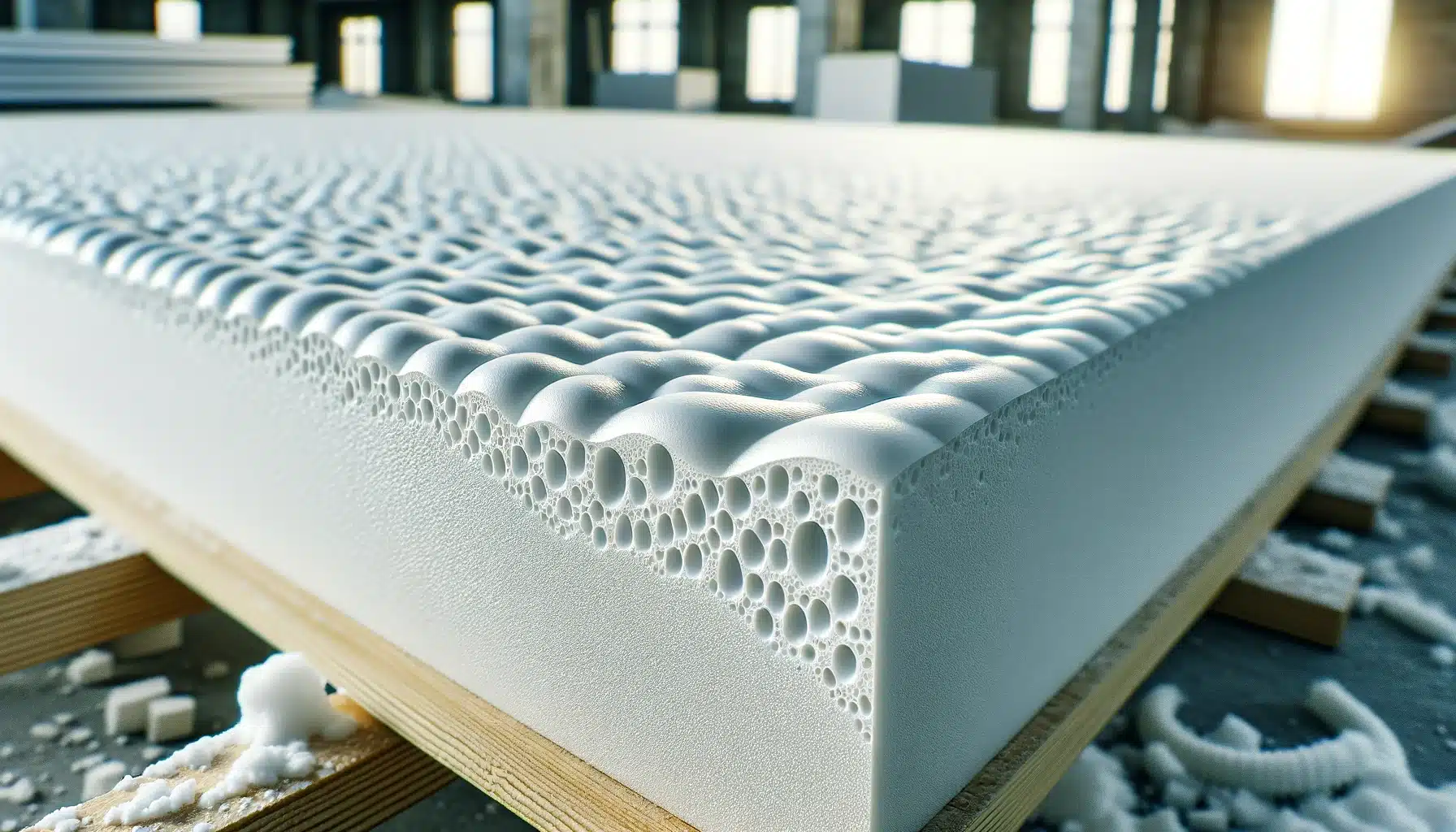
Closed-cell PU foams contain gas-filled polyhedral cells separated by continuous polymer membranes. Increasing the closed-cell ratio enhances gas retention, increases compressive stiffness, reduces thermal conductivity, and improves dimensional stability.
2.2 Microstructural Defects
Defects commonly found in traditional PU foams include:
- Open-cell defects due to thin or ruptured cell membranes
- Cell coalescence caused by inadequate nucleation control
- Localized overexpansion or collapse
- Density gradients due to heat and pressure inhomogeneities
These defects are detrimental to strength consistency and predictability.
2.3 Effect of Microstructure on Properties
Mechanical Properties
Compressive and shear properties scale with:
- Cell-wall thickness (∝ stiffness)
- Uniformity of cell distribution (∝ failure consistency)
- Anisotropy (∝ directional stiffness)
Thermal Properties
Thermal conductivity is governed by:
- Gas conduction (dominant)
- Solid polymer conduction
- Radiation through cell walls
Higher closed-cell ratios reduce gas diffusion and achieve lower conductivity.
Durability
Long-term properties such as creep, fatigue, and hydrothermal aging strongly depend on:
- Membrane integrity
- Gas transport resistance
- Uniformity of polymer crosslinking
Hence, fine control of microstructure is a prerequisite for high-performance foam cores.
3. Advances in Microstructure-Controlled Foaming Technologies
Modern foaming technologies aim to shape the microstructure during bubble nucleation and growth.
3.1 Supercritical CO₂ Foaming
SC-CO₂ provides:
- High nucleation rate due to rapid depressurization
- Narrow pore distribution
- Environmentally friendly process
- Enhanced closed-cell content
- Ability to tune the solubility and diffusion of CO₂
Despite its potential, challenges include uniform gas dissolution and control of rapid expansion kinetics.
3.2 Microchannel-Assisted Nucleation
Microchannel reactors create extremely uniform nucleation conditions that:
- Minimize bubble coalescence
- Produce uniform cell size distributions
- Allow dynamic control over temperature and mixing
This technique provides unprecedented repeatability.
3.3 Reactive Rheology and Cure Kinetics Control
During PU foaming, viscosity evolution competes with gas expansion. Advanced strategies such as:
- Temperature ramp control
- Catalyst temporal programming
- Isocyanate–polyol ratio optimization
enable synchronization of viscosity increase (gelation) and bubble stabilization, ensuring maximal closed-cell content.
3.4 Surfactant Molecular Engineering
Silicone surfactants determine:
- Interfacial tension
- Cell stabilization
- Cell-wall drainage
- Open vs. closed cell formation
Tailored surfactant architecture (e.g., block copolymer sequence tuning) provides precision in bubble stabilization.
4. Experimental Characterization of PU Foam Microstructure
4.1 X-ray Computed Tomography (XCT)
XCT provides:
- 3D reconstruction of whole foam structures
- Quantification of pore sizes, shapes, connectivity
- Mapping of density gradients
- Direct input meshes for finite-element simulations
High-resolution XCT (down to 1 μm) allows microstructure–property correlation with unprecedented accuracy.
4.2 Scanning Electron Microscopy (SEM)
SEM provides qualitative and high-resolution evaluations of:
- Cell-wall thickness
- Membrane defects
- Polymer phase morphology
Combined with cryo-fracture methods, SEM reveals deformation-induced microchanges.
4.3 In-situ mechanical testing
In-situ XCT or SEM coupled with compression allows visualization of:
- Cell collapse
- Buckling behavior
- Failure evolution patterns
This reveals mechanisms that traditional bulk tests cannot capture.
5. Mechanical–Thermal Coupling Mechanisms
High–closed-cell PU foams must withstand multi-physics operating environments.
5.1 Coupled Compression–Thermal Effects
Foam stiffness decreases significantly near the glass transition temperature (Tg). Thermal cycling causes gas pressure variations inside closed cells, which may:
- Increase internal stresses
- Accelerate membrane rupture
- Alter long-term compression set
Predictive models must incorporate T-dependent polymer modulus and gas-law effects.
5.2 Creep and Stress Relaxation
Creep is dominated by:
- Polymer viscoelasticity
- Gas diffusion through closed cells
- Cell-wall bending
Higher closed-cell content generally improves creep resistance by providing more structural constraints.
5.3 Fatigue Behavior
Repeated shear/compression loading leads to:
- Local buckling
- Gradual cell collapse
- Debonding between struts and membranes
Microstructure uniformity significantly improves fatigue life.
6. Modeling Approaches
6.1 Micromechanical Models
Classic models such as Gibson–Ashby theory are limited by assumptions of uniform, idealized cells. Newer models incorporate:
- Irregular cell shapes
- Anisotropic geometry
- Random distributions
These models better predict real foam behavior.
6.2 XCT-Based Finite Element Modeling (FEM)
XCT-FEM workflow:
- 3D microstructure acquisition
- Segmentation and mesh generation
- Assignment of nonlinear polymer properties
- Simulation of compression, shear, and thermal loading
This provides predictive accuracy far beyond analytical models.
6.3 Computational Fluid Dynamics (CFD) for Foaming Dynamics
CFD models simulate:
- Bubble nucleation
- Gas diffusion
- Reaction–expansion coupling
- Cell-wall drainage
These help optimize process parameters for uniform microstructure.
6.4 AI-Assisted Design and Inverse Modeling
Machine learning enables:
- Prediction of mechanical properties from microstructure images
- Optimization of formulations for target characteristics
- Foaming process control via reinforcement learning
Data-driven inverse design could revolutionize foam engineering.
7. Research Gaps and Challenges
Despite significant progress, several issues remain unresolved:
1. Lack of unified framework linking chemistry–processing–microstructure–properties.
Complex reactive foaming processes hinder predictive design.
2. Difficulty in maintaining uniform microstructure at industrial scales.
Local temperature gradients and exothermic reaction non-uniformity cause density variation.
3. Insufficient understanding of long-term structural evolution.
Closed-cell foams gradually lose internal gas, altering properties over years.
4. Limited multiscale models incorporating aging, creep, and fatigue.
5. Need for sustainable foams balancing high performance and low environmental impact.
8. Proposed Research Roadmap
A comprehensive research roadmap should integrate the following steps:
8.1 Step 1: Molecular-Level Design
- Tailor polyol structures
- Adjust isocyanate reactivity
- Design surfactants for targeted cellular stability
8.2 Step 2: Controlled Foaming via Advanced Processing
- Use SC-CO₂ for precise nucleation
- Employ microchannel reactors for homogeneous mixing
- Implement reactive rheology feedback control
8.3 Step 3: Quantitative Microstructure Characterization
- 3D XCT mapping
- In-situ mechanical analysis
- Gas permeability tracking over time
8.4 Step 4: Multiscale Modeling
- Coupled CFD + FEM modeling of foaming and mechanical performance
- AI-assisted property prediction
- Data-driven inverse design
8.5 Step 5: Application-Driven Optimization
Target applications include:
- Wind turbine blade shear webs
- EV crash structures
- Aerospace sandwich panels
- Low-conductivity insulation
Custom performance profiles can be engineered by tuning microstructure parameters.
9. Conclusion
High–closed-cell polyurethane foam cores represent a critical materials platform for the next generation of lightweight structural systems and energy-efficient insulation technologies. The performance of these foams arises from their hierarchical cellular morphology, whose control remains a central challenge. Advances in foaming technologies, microstructure characterization, multiscale modeling, and data-driven design have created the foundation for a new research paradigm—one in which PU foam microstructures can be intentionally designed, predicted, and optimized.
Future research combining chemistry, processing, advanced imaging, and computational intelligence will enable deterministic control of foam architecture. Such capabilities will not only enhance mechanical–thermal performance but also improve reliability, sustainability, and manufacturability. Ultimately, the systematic microstructural engineering of high–closed-cell PU foam cores will pave the way for high-performance structural materials tailored for emerging applications in renewable energy, transportation, and aerospace engineering.
