
Ultra-low-density PU foam core has emerged as one of the most important lightweight structural materials in advanced engineering applications such as wind energy, aerospace, transportation, marine composites, and next-generation insulation systems. As industries accelerate toward lighter, stronger, and more energy-efficient designs, the demand for PU foam core—especially in ultra-low-density ranges (20–80 kg/m³)—has increased dramatically. However, lowering density introduces risks such as structural instability, early cell collapse, buckling under compression, and non-uniform deformation. Understanding the anti-buckling mechanics of PU foam and stabilizing its microstructure are essential for both product innovation and engineering reliability.
This article provides an in-depth technical review and a highly SEO-effective overview of the ultra-low-density PU foam core market, including material characteristics, microstructure control strategies, buckling mechanisms, advanced testing methods, and application-driven design principles. It targets engineers, researchers, and companies looking to improve their current portfolio of polyurethane foam core solutions or optimize their material selection strategies.

1. Introduction: Why Ultra-Low-Density PU Foam Core Matters Today
Polyurethane (PU) foam core is a foundational material in modern lightweight engineering. It delivers a unique combination of:
- low mass
- high stiffness-to-weight ratio
- excellent thermal resistance
- ease of processing
- compatibility with fiber-reinforced composites
In the 2020s and moving into 2026+, the global shift toward lightweight composite structures has significantly expanded the use of ultra-low-density PU foam cores. Industries now rely on PU foam cores for:
- wind turbine blades (shear webs, trailing edges, sandwich skins)
- aerospace interior structures
- automotive crash-safety parts
- electric vehicle lightweighting
- marine hulls and decks
- thermal insulation panels
- energy-efficient building materials
However, lower density inherently means thinner cell walls, larger pores, and weaker mechanical stability. This makes the foam more susceptible to buckling, local collapse, impact damage, and progressive compressive deformation. Therefore, understanding structural stability and anti-buckling behavior in ultra-low-density PU foam cores is essential for both material designers and end users.
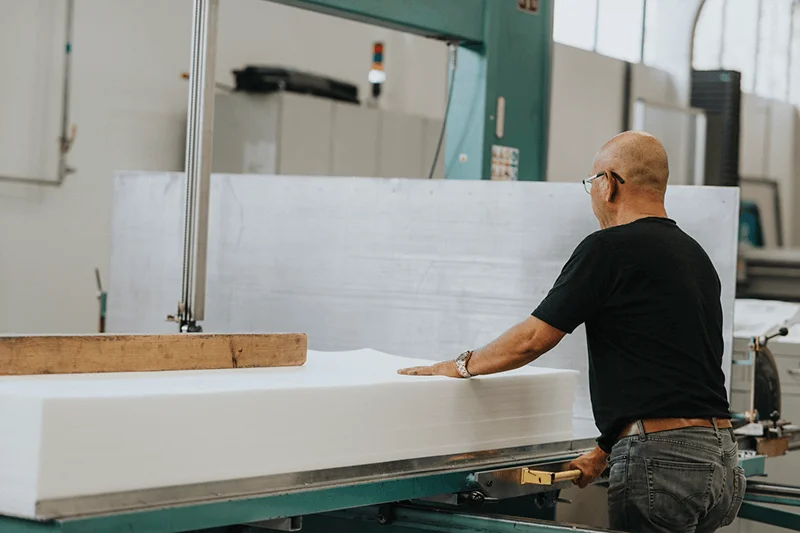
2. Understanding Ultra-Low-Density PU Foam Core
2.1 Definition
Ultra-low-density PU foam cores typically exhibit densities in the range of:
20–80 kg/m³,
compared to conventional PU foams (100–250 kg/m³).
As density decreases:
- cell walls become thinner
- structural anisotropy increases
- mechanical consistency becomes more sensitive to microstructural defects
Despite these challenges, ultra-low-density PU foam cores remain highly attractive due to unmatched weight savings.
2.2 Key Features
| Feature | Description |
|---|---|
| Extreme lightweight | Ideal for composite sandwich structures |
| High closed-cell ratio | Necessary to maintain mechanical strength |
| Thermal insulation | Low density → low thermal conductivity |
| Low resin uptake | Important for vacuum infusion in composites |
| Cost-efficient processing | PU chemistry is adaptable and scalable |
These features make PU foam cores a top choice in sectors where every gram matters.
3. Microstructure of Ultra-Low-Density PU Foam Core
The performance of ultra-low-density PU foam core is dominated by its 3D cellular architecture.
3.1 Cell Size and Distribution
Ultra-low-density foams generally exhibit:
- large cell diameters (300–800 μm)
- high variability in shape
- wide pore size distribution if not carefully controlled
Uniformity is critical: inconsistent cell size can trigger early buckling under load.
3.2 Cell-Wall Morphology
At extremely low densities:
- walls are very thin
- polymer segments are highly stretched
- struts deform easily
This makes buckling the primary failure mode during compression.
3.3 Anisotropy
Foams often expand unevenly during processing, leading to:
- vertical vs. horizontal strength differences
- orientation-dependent mechanical behavior
Understanding anisotropy is essential for correct structural design.
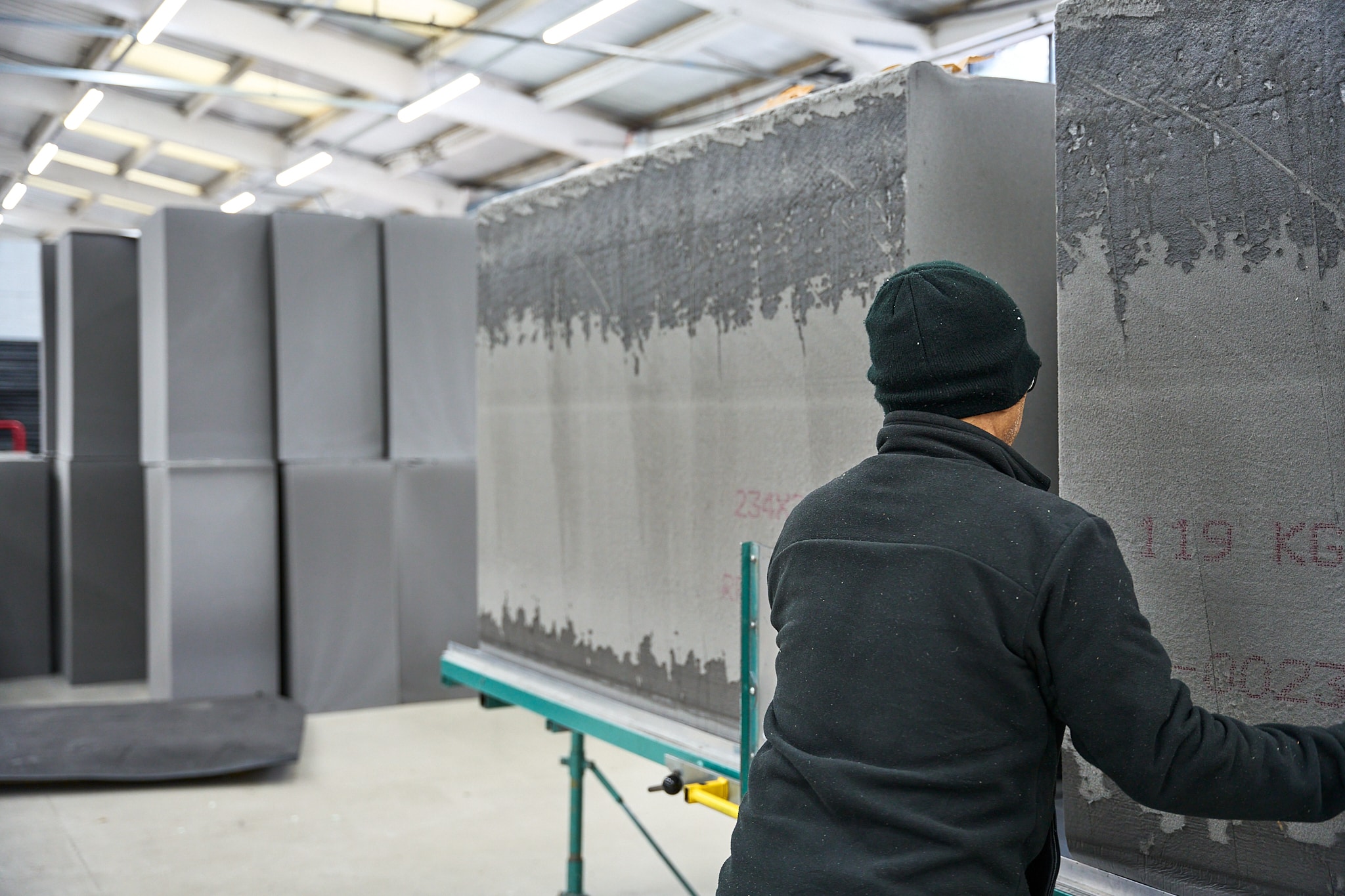
4. Buckling and Structural Instability: Core Mechanics
Ultra-low-density PU foam core fails primarily by elastic buckling and plastic collapse, not brittle fracture.
4.1 Fundamental Buckling Mechanism
When a compressive load is applied:
- cell walls bend
- localized buckling appears in weaker regions
- instability spreads through strut networks
- plateau region appears in the stress–strain curve
- densification occurs and stiffness rises sharply
This sequence is typical for ultra-low-density cellular solids.
4.2 Influential Factors
| Parameter | Effect on Buckling |
|---|---|
| Density | Lower density → earlier buckling |
| Cell-wall thickness | Thicker walls → improved stability |
| Cell anisotropy | Aligned cells buckle more easily in certain directions |
| Closed-cell ratio | Higher closure → improved resistance |
| Defects | Act as stress concentrators |
| Temperature | Near Tg, polymer softening accelerates collapse |
Engineers must balance all these factors to optimize foam performance.
4.3 Failure Modes
Common buckling-related failures include:
- long-wavelength elastic buckling
- cell collapse and cascading failure
- shear localization
- progressive crushing
- deformation band formation
This behavior makes PU foam core predictable yet highly sensitive to structure uniformity.
5. Methods for Improving Anti-Buckling Stability
Ultra-low-density PU foam core can be dramatically improved through advanced material engineering.
5.1 Optimized Foaming Chemistry
Key adjustments include:
- isocyanate index tuning
- polyol molecular-weight control
- chain extender content
- urethane vs. urea hard-segment ratio
- surfactant reactivity
These adjustments modify:
- cell nucleation rate
- gas pressure balance
- gel time vs. rise time synchronization
5.2 Nucleation Control Technologies
Modern foam production technologies enable greater structural consistency.
Supercritical Fluid Assisted Foaming
Provides extremely fine and uniform cells.
Microchannel Mixing
Ensures homogeneous reactant mixing → fewer defects.
Nanoparticle-induced Nucleation
Adding nanoscale particles (e.g., silica, nanoclay) increases nucleation sites → produces denser cell networks.
5.3 Mechanical Reinforcement at Low Density
Several methods strengthen ultra-low-density PU foam cores:
- nanofillers (CNT, graphene)
- hollow glass microspheres
- polymer grafting to improve crosslinking uniformity
- dual-phase foam structures
These reinforcements increase stability without raising mass significantly.
6. Advanced Characterization for Ultra-Low-Density Foams
Evaluating stability requires sophisticated techniques.
6.1 X-ray Computed Tomography (XCT)
Provides:
- 3D reconstruction of microstructure
- defect identification
- quantitative pore analysis
- FEM model generation
XCT is essential for microstructure-based design.
6.2 In-situ Compression Testing
Reveals:
- buckling propagation
- local deformation patterns
- deformation band development
6.3 Dynamic Mechanical Analysis (DMA)
DMA is crucial for understanding stability near Tg—an important factor for PU foams used outdoors.
6.4 Gas Permeability and Aging Tests
High closed-cell content reduces gas loss → essential for long-term stability.
7. Mechanical Properties of Ultra-Low-Density PU Foam Core
7.1 Compressive Strength
For densities 30–60 kg/m³:
- compressive strength typically ranges 0.3–1.2 MPa
- dominated by cell-wall bending and buckling
7.2 Shear Strength
Shear performance is vital for sandwich composites:
- typical values 0.2–0.8 MPa
7.3 Creep and Stress Relaxation
At low density, foams exhibit significant viscoelastic deformation.
7.4 Fatigue Resistance
Repeated loading can produce:
- progressive cell collapse
- shear band formation
- stiffness degradation
Therefore, fatigue modeling is crucial for wind turbine blades and transportation structures.
8. Applications of Ultra-Low-Density PU Foam Core
Ultra-low-density PU foam core enables major advances across sectors.
8.1 Wind Energy
Used in:
- shear webs
- shell reinforcement
- trailing edges
- filler for structural voids
Benefits:
- excellent fatigue behavior
- reduced turbine weight
- lower resin uptake during infusion
8.2 Aerospace
Used in lightweight interiors:
- sandwich panels
- ducting structures
- non-structural housings
8.3 Automotive and EVs
Applications include:
- interior safety components
- crash-energy absorbers
- lightweight trim panels
8.4 Marine and Offshore
Benefits:
- buoyancy
- corrosion resistance
- weight reduction
8.5 Industrial Insulation
Low thermal conductivity makes PU foam core ideal for:
- cold-chain logistics
- HVAC systems
- building envelopes
9. Industrial and SEO-Relevant Buying Considerations
For businesses searching for PU foam core manufacturers or suppliers, critical evaluation criteria include:
- density tolerance
- closed-cell ratio
- compressive/shear strength
- dimensional stability
- thermal conductivity
- compatibility with composite processing
- resin uptake behavior
- long-term mechanical reliability
These factors influence product performance, total cost of ownership, and suitability for large-scale production.
10. Market Trends and Future Directions
10.1 AI-Driven Foam Design
Machine learning can predict:
- optimal foaming formulations
- microstructure–property relationships
- defect formation risks
10.2 Bio-based PU Foam Development
Sustainability is accelerating the adoption of:
- bio-polyols
- recyclable PU systems
- CO₂-based polyols
10.3 Multi-functional Foam Cores
Future ultra-low-density foams may incorporate:
- self-sensing capabilities
- fire retardancy
- higher thermal stability
- EMI shielding properties
10.4 Multi-scale Digital Twins
Foam digital twins will link:
- chemical reactions
- foaming kinetics
- microstructure evolution
- long-term property prediction
This will drastically improve quality control and development timelines.

11. Conclusion
Ultra-low-density PU foam core is a critical material for modern lightweight engineering, enabling strong, energy-efficient, and cost-effective composite structures. However, its performance is controlled by complex buckling behavior, microstructural stability, and defect sensitivity. With advanced processing technologies, predictive modeling tools, and innovative reinforcement strategies, next-generation PU foam cores can achieve unprecedented levels of anti-buckling stability and long-term reliability.
From wind turbine blades to aerospace panels, from EV components to thermal insulation systems, ultra-low-density PU foam core remains one of the most strategically important and versatile materials in the global engineering landscape. As industry trends shift toward sustainability, AI-driven design, and multi-functional materials, PU foam core technology is positioned for continued growth and innovation.
