
1. What Is MPP Foam Core?
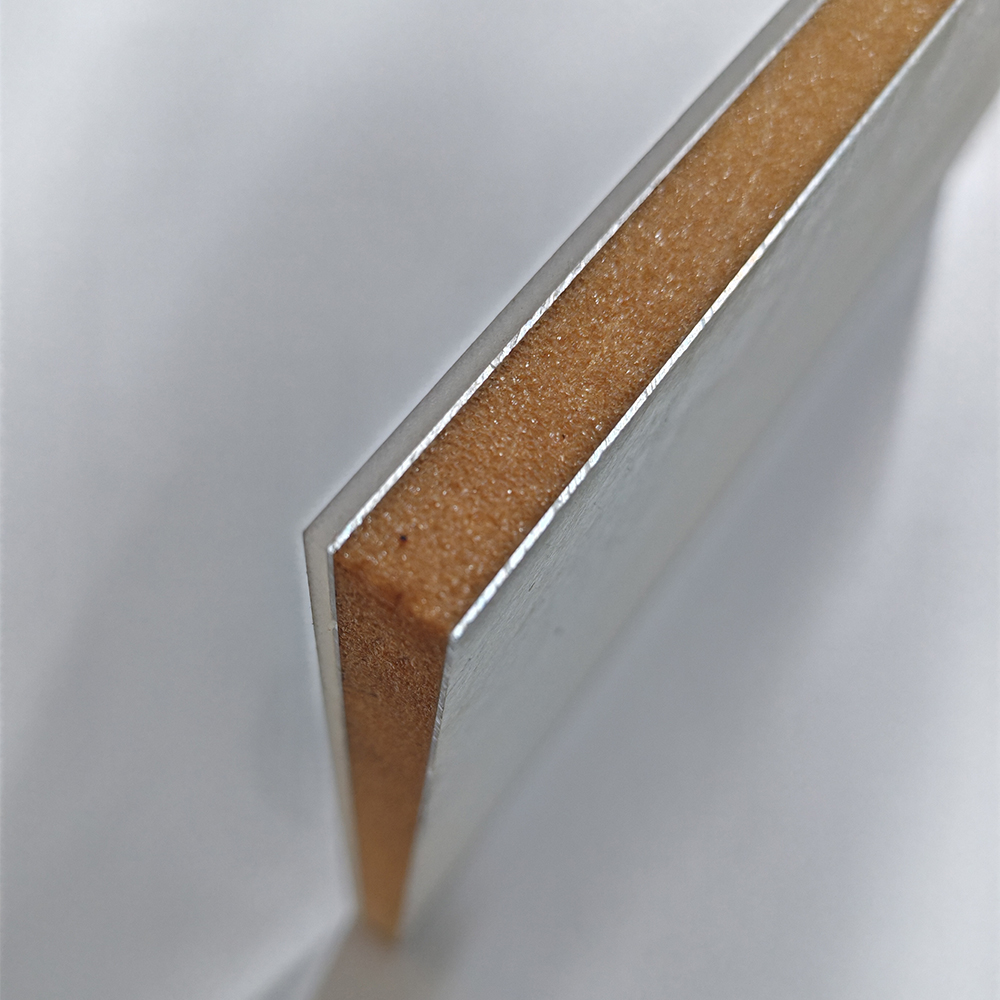
MPP Foam Core, commonly used to describe Microcellular Polypropylene Foam Core, is a lightweight cellular material based on polypropylene (PP). It is produced by introducing gas into a polypropylene matrix and controlling the foaming process to create a structure containing numerous small cells.
Compared with solid polypropylene, microcellular PP foam contains less polymer per unit volume. This reduces material weight while retaining useful mechanical properties when the cellular architecture and polymer formulation are properly controlled.
MPP is particularly interesting for applications requiring a combination of lightweight construction, impact absorption, chemical resistance and thermoplastic processing.
It should be distinguished from two related materials:
- MPP Foam Core: A cellular polypropylene foam with micro-scale or fine cellular morphology.
- EPP Foam: Expanded polypropylene foam, commonly manufactured through bead expansion and molding. It is widely used in impact protection, automotive components and reusable packaging.
- PP Honeycomb Core: A structural cellular material made from polypropylene walls arranged in a honeycomb geometry.
These materials share polypropylene chemistry but have different manufacturing processes, cellular structures and mechanical behaviors.
For composite manufacturers, the distinction is important because a microcellular foam cannot automatically replace a PP honeycomb core or a conventional structural foam core.
The suitability of MPP depends on its density, cell morphology, mechanical properties, surface characteristics and compatibility with the intended composite manufacturing process.
2. Microcellular Architecture: How Cell Size Changes Material Performance
The defining feature of MPP is its cellular structure.
Unlike conventional solid PP, which has a relatively continuous polymer matrix, microcellular PP contains many small gas-filled cells distributed throughout the polymer.
In microcellular polymer technology, cell sizes are commonly discussed in the micrometer range. However, the actual cell-size distribution depends on the polymer formulation, gas content and foaming process.
2.1 Cell Size and Cell Density
Two important parameters are:
Cell size: The average or characteristic diameter of individual foam cells.
Cell density: The number of cells per unit volume of the foam.
Smaller cells and higher cell density can improve the uniformity of the cellular structure. They may also help reduce large stress concentrations associated with oversized or irregular cells.
However, finer cells do not automatically guarantee better mechanical performance.
A foam with very small cells but insufficient expansion control may have poor weight efficiency. Excessive foaming can also reduce the amount of load-bearing polymer within the material.
The final mechanical performance depends on the balance between cell size, cell density, expansion ratio, polymer crystallinity and cell-wall integrity.
2.2 Relative Density and Expansion Ratio
Relative density is the ratio of foam density to the density of the solid polymer.
It can be expressed as:
Relative Density = Foam Density / Solid Polymer Density
A lower relative density generally means greater weight reduction, but it also means less polymer material is available to carry mechanical loads.
This creates a fundamental engineering trade-off:
- Lower density improves weight efficiency.
- Higher density generally improves load-bearing capacity.
- A refined cellular structure can improve the balance between weight and mechanical performance.
- Excessive expansion can reduce cell-wall stability and structural strength.
For this reason, MPP should be evaluated using both absolute and density-normalized mechanical properties.
3. Manufacturing Technology: How Microcellular Polypropylene Foam Is Produced
MPP manufacturing commonly involves physical or chemical foaming methods.
3.1 Supercritical Gas Foaming
Supercritical carbon dioxide (CO₂) and nitrogen (N₂) can be used as physical blowing agents.
A typical process involves:
- Heating polypropylene to the required processing temperature.
- Introducing gas into the polymer under controlled pressure.
- Allowing the gas to dissolve or disperse within the polymer matrix.
- Reducing pressure to create supersaturation and cell nucleation.
- Controlling cell growth and stabilizing the cellular structure through cooling.
The number of nucleation sites, gas concentration, pressure release rate and cooling conditions influence the final foam morphology.
Research on isotactic polypropylene microcellular foams has demonstrated that supercritical CO₂ processing can produce cell sizes ranging from approximately 1 to 50 μm under the investigated conditions.
This range is an experimental result, not a universal specification for commercial MPP sheets.
3.2 Microcellular Injection Molding
Microcellular injection molding introduces a physical blowing agent into the polymer melt before injection into a mold.
The technology can reduce material consumption and part weight while maintaining useful dimensional and mechanical properties.
It is particularly suitable for producing complex molded components and integrated thermoplastic structures.
The process can be optimized by controlling:
- Melt temperature
- Injection pressure
- Gas concentration
- Mold temperature
- Cooling rate
- Expansion ratio
- Nucleation and cell-growth conditions
3.3 Extrusion Foaming
Extrusion foaming is another manufacturing method for continuous polypropylene foam products.
Polypropylene is melted and mixed with a blowing agent before passing through an extrusion die. Pressure reduction allows the material to expand into a cellular structure.
The process is suitable for continuous production and can be adapted to different sheet, profile or board geometries.
However, producing a microcellular PP component does not automatically mean it qualifies as a structural sandwich-panel core. Product thickness, density uniformity, mechanical properties and bonding compatibility must be verified.
4. Mechanical Properties: The Relationship Between Cellular Structure and Performance
MPP performance is determined by both the intrinsic properties of polypropylene and the geometry of its cellular structure.
The most relevant engineering parameters include:
| Parameter | Engineering Meaning | Application Relevance |
|---|---|---|
| Density | Mass per unit volume | Weight reduction |
| Cell Size | Characteristic diameter of foam cells | Cellular uniformity |
| Cell Density | Number of cells per unit volume | Microstructure control |
| Expansion Ratio | Volume increase during foaming | Material efficiency |
| Compressive Strength | Resistance to compression | Core crushing resistance |
| Compressive Modulus | Stiffness under compression | Structural deformation |
| Tensile Strength | Resistance to tensile loading | Structural integrity |
| Flexural Strength | Resistance to bending | Panel and component stiffness |
| Impact Strength | Resistance to sudden loading | Impact protection |
| Energy Absorption | Energy dissipated during deformation | Crash and impact applications |
| Thermal Conductivity | Ability to transfer heat | Thermal management |
| Water Absorption | Water uptake under specified conditions | Environmental durability |
4.1 Representative Research Data: Microcellular PP
Unlike established structural PVC and PET foam families, MPP does not have one universally accepted commercial grading system.
Published research often reports experimental specimens rather than standardized structural core grades.
For this reason, it is more technically accurate to present research-based cellular parameters separately from commercial product specifications.
A 2016 study published in The Journal of Supercritical Fluids investigated isotactic PP foams produced through supercritical CO₂ solid-state foaming.
| Research Parameter | Reported Experimental Range |
|---|---|
| Polymer | Isotactic Polypropylene |
| Foaming Agent | Supercritical CO₂ |
| Cell Size | 1–50 μm |
| Relative Density | 0.04–0.86 |
| Main Mechanical Tests | Tensile and Impact |
| Main Research Focus | Cell Morphology and Mechanical Performance |
The researchers reported that specimens with cell sizes below 3 μm exhibited higher tensile strength than the unfoamed PP reference under the tested conditions. Cell sizes below 10 μm also showed a toughening effect in the investigated material system.
These findings demonstrate the importance of microcellular structure control.
They do not establish universal commercial MPP compression, shear or fatigue values.
4.2 Why Mechanical Properties Cannot Be Predicted from Density Alone
Two MPP products can have the same density but different mechanical performance.
Possible reasons include:
- Different cell-size distributions
- Different cell-wall thicknesses
- Different polymer grades
- Different crystallinity
- Different nucleating agents
- Different foaming conditions
- Different cell orientation
Consequently, buyers should request actual mechanical test results rather than evaluating MPP solely by its nominal density.
For structural sandwich applications, compression, shear, tensile, flexural and flatwise bonding tests are particularly important.
5. Energy Absorption and Impact Performance
One of the most interesting engineering applications of polypropylene foam is energy absorption.
When a cellular polymer is compressed, its cells can deform, buckle and progressively collapse. This process dissipates mechanical energy.
The ability to absorb energy depends on the stress-strain response of the foam.
A typical foam compression curve contains three regions:
- Elastic region: Cell walls initially deform and the material responds approximately elastically.
- Collapse or plateau region: Cells progressively deform and collapse, allowing substantial energy absorption.
- Densification region: The collapsed cells begin to contact each other, causing stress to increase rapidly.
5.1 Specific Energy Absorption
Specific energy absorption is an important parameter for lightweight impact-protection materials.
It measures the amount of energy absorbed relative to the mass of the material.
A higher specific energy absorption can be beneficial where weight is restricted, such as automotive components, protective structures and transportation equipment.
However, the maximum energy absorption is not always the only design objective.
Engineers may also need to control peak transmitted force, deformation distance, rebound behavior and residual structural strength.
5.2 Impact Performance and Cell Morphology
Research on microcellular isotactic PP has demonstrated that cell size and relative density significantly influence tensile and impact behavior.
A separate 2022 study investigated lightweight, high-impact polypropylene foam using a modified injection-molding process. It reported a PP/polyolefin elastomer foam with an average cell size of approximately 4.13 μm and a cell density of 2.7 × 10⁹ cells/cm³.
This demonstrates that polymer modification and microcellular processing can be combined to improve impact-related performance.
The results apply to the tested formulation and process, not every MPP product.
6. Thermoplastic Advantages: Recyclability, Processing and Material Integration
Polypropylene is a thermoplastic polymer.
Unlike conventional thermosetting resin systems, thermoplastics can generally be softened through heating and processed again under appropriate conditions.
This creates several potential advantages for MPP-based products.
6.1 Reprocessing Potential
PP-based materials may be mechanically recycled or incorporated into compatible thermoplastic recycling streams.
However, the actual recyclability of an MPP component depends on its complete construction.
Adhesives, coatings, reinforcing fabrics, incompatible polymers and contamination can complicate recycling.
A PP foam core bonded to thermoset FRP face sheets should not be described as fully recyclable simply because the core itself is thermoplastic.
6.2 Thermal Forming
Suitable PP foam grades may be processed through heating and forming operations.
Thermoforming and compression molding can be considered for selected component designs.
The process window must be controlled carefully because excessive temperature can cause cell collapse, dimensional changes or loss of mechanical properties.
6.3 Integration with Thermoplastic Composite Skins
One development direction is the combination of PP foam with thermoplastic composite face sheets.
Compatible polymer systems may offer opportunities for thermal bonding and improved material integration.
A 2025 study on multiscale CFRP sandwich structures explored the integration of microcellular foam cores and continuous-fiber composite reinforcements through additive manufacturing and in-situ foaming.
The research highlights the potential of combining cellular architecture, polymer foaming and composite reinforcement in advanced sandwich structures.
This is an emerging research direction rather than evidence that all commercial MPP foam sheets are already suitable for such manufacturing processes.
7. MPP Foam Core vs. PP Honeycomb Core vs. EPP Foam
These three materials are related through polypropylene chemistry but serve different engineering purposes.
| Comparison | MPP Foam Core | PP Honeycomb Core | EPP Foam |
|---|---|---|---|
| Basic Structure | Microcellular polymer foam | PP cellular honeycomb geometry | Expanded PP bead structure |
| Manufacturing | Physical or chemical foaming | Extrusion, forming or bonding of cellular sheets | Expandable bead molding |
| Cellular Scale | Often micro-scale | Larger engineered cells | Bead-based cellular structure |
| Structural Behavior | Depends on foam density and cell morphology | Depends on cell geometry and wall thickness | Depends on bead structure and molding quality |
| Main Advantage | Fine cellular structure and weight efficiency | High structural efficiency in sandwich panels | Excellent impact-energy absorption in suitable grades |
| Typical Applications | Lightweight molded and experimental composite structures | Truck bodies, transportation panels and furniture panels | Automotive protection, packaging and impact absorption |
The distinction is important for product marketing.
A buyer searching for PP Honeycomb Core is generally looking for a cellular sheet material with defined cell size, density and panel-bonding requirements.
A buyer searching for EPP Foam is more likely to be evaluating molded energy-absorbing components.
MPP Foam Core serves a different technical search intent focused on microcellular polymer structure and lightweight material performance.
8. Potential Applications of MPP Foam Core
MPP has potential in several industrial areas, but commercial suitability depends on the actual product grade and its qualification.
Automotive and Transportation
Lightweight thermoplastic foam can be considered for interior components, protective structures, energy-absorbing elements and molded parts.
Potential benefits include reduced mass, impact-energy management and compatibility with thermoplastic manufacturing processes.
For crash-related applications, dynamic compression, impact testing, temperature sensitivity and long-term durability must be evaluated.
Aerospace and Advanced Composite Structures
Microcellular foam cores are being investigated for lightweight sandwich structures used in aerospace-related research.
The combination of cellular materials and continuous-fiber composite reinforcement offers opportunities for designing components with tailored stiffness and energy absorption.
However, aerospace applications require strict material traceability, fire and smoke qualification, environmental testing and structural certification. Experimental MPP foam should not be marketed as aerospace-qualified without the necessary evidence.
Industrial Protective Components
MPP may be suitable for selected protective housings, equipment components and lightweight structures where impact resistance and weight reduction are important.
The design should consider the full compression curve rather than relying only on maximum compressive strength.
Composite Sandwich Panels
MPP may be considered as a core material in selected thermoplastic sandwich-panel concepts.
Before using it in conventional FRP sandwich production, manufacturers should verify:
- Adhesive compatibility
- Resin compatibility
- Surface energy
- Core-to-skin bonding strength
- Compression and shear performance
- Thermal stability during curing
- Long-term environmental durability
Polypropylene has relatively low surface energy, which can make direct bonding difficult with some conventional adhesives and thermosetting resin systems.
Surface treatment, primers, compatible films or thermoplastic bonding systems may therefore be required.
9. Technical Challenges: What Manufacturers Need to Solve
Despite its potential, MPP presents several technical challenges.
9.1 Balancing Weight and Strength
Reducing density can improve weight efficiency, but excessive expansion reduces the load-bearing polymer fraction.
Manufacturers must optimize density and cellular morphology according to the required compression, impact and bending performance.
9.2 Cell Uniformity
Uneven cell size or density distribution can produce inconsistent mechanical behavior.
This is especially important in structural components where local stress concentrations may initiate damage.
9.3 Surface Bonding
PP’s low surface energy can limit adhesion.
For sandwich-panel manufacturing, the bonding interface should be treated as a critical part of the material specification.
Suitable methods may include:
- Corona treatment
- Plasma treatment
- Flame treatment
- Compatible primers
- Polypropylene-compatible adhesive films
- Thermoplastic fusion bonding
The effectiveness of each method must be verified using actual peel, tensile and shear testing.
9.4 Thermal Stability
PP is a semi-crystalline thermoplastic. Its stiffness and dimensional stability are influenced by temperature.
The processing temperature, service temperature and heat-deflection behavior must be evaluated separately.
For components exposed to elevated temperatures, creep and long-term dimensional stability also require attention.
10. How to Specify MPP Foam Core for Industrial Procurement
Because MPP is not a single standardized commercial grade, a purchasing specification should clearly define the intended material architecture.
| Specification Item | Information to Confirm |
|---|---|
| Material | Microcellular Polypropylene Foam |
| Polymer Type | PP grade and formulation |
| Density | Nominal density and tolerance |
| Cell Size | Average cell size and distribution |
| Cell Density | Cells per unit volume, where available |
| Thickness | Required finished thickness |
| Dimensions | Length and width |
| Compression | Strength and modulus |
| Tensile | Strength and elongation |
| Impact | Test method and energy absorption |
| Thermal Properties | Operating and processing temperature |
| Surface Condition | Untreated or surface-treated |
| Bonding System | Adhesive, film or thermoplastic joining |
| Manufacturing Method | Extrusion, injection molding or other process |
| Quality Documentation | Technical data sheet and test reports |
For sandwich structures, the specification should additionally define face-sheet material, core-to-skin bonding requirements and the complete panel’s bending and shear performance.
11. ONEBOND Polypropylene-Based Core Material Solutions
ONEBOND focuses on composite core materials and lightweight structural solutions for industrial manufacturers.
Polypropylene-based cellular materials can be evaluated according to the intended application, structural requirements and manufacturing process.
For buyers considering MPP Foam Core, important technical details include target density, cell size, thickness, surface treatment, thermal conditions and mechanical performance.
Where the intended application involves composite sandwich panels, the compatibility between the PP core and the face-sheet bonding system should be established before production approval.
ONEBOND can also evaluate related PP Honeycomb Core requirements for manufacturers seeking a more established cellular panel structure.
The correct material should be selected according to the required mechanical behavior rather than treating MPP foam and PP honeycomb as interchangeable products.
12. Frequently Asked Questions
Q1: What does MPP Foam Core stand for?
In this article, MPP refers to Microcellular Polypropylene Foam Core, a lightweight cellular material based on polypropylene.
Q2: What is the difference between MPP Foam Core and PP Honeycomb Core?
MPP is a microcellular polymer foam, while PP Honeycomb Core uses engineered honeycomb cell geometry. Their structural behavior, manufacturing methods and applications are different.
Q3: What are the advantages of microcellular polypropylene foam?
Potential advantages include reduced material weight, controllable cellular morphology, thermoplastic processing potential and useful impact-energy absorption characteristics.
Q4: Can MPP Foam Core be used in composite sandwich panels?
It may be suitable for selected sandwich structures, but compression, shear, bonding, thermal stability and face-sheet compatibility must be verified.
Q5: Is MPP Foam Core recyclable?
The polypropylene base material has thermoplastic recycling potential. However, the recyclability of a finished sandwich panel depends on its face sheets, adhesives, coatings and other combined materials.
Conclusion
MPP Foam Core represents an interesting development in polypropylene-based lightweight cellular materials.
Its performance is strongly influenced by microcellular morphology, relative density, polymer formulation and foaming conditions. These factors determine how the material responds to compression, impact and other mechanical loads.
For advanced composite manufacturing, the potential of MPP lies in combining lightweight cellular architecture with thermoplastic processing and energy-absorption capabilities.
However, its application as a structural sandwich core requires careful validation of mechanical performance, bonding compatibility, thermal stability and long-term durability.
For industrial buyers, the most reliable approach is to define the complete material and performance requirements before selecting an MPP grade.
