
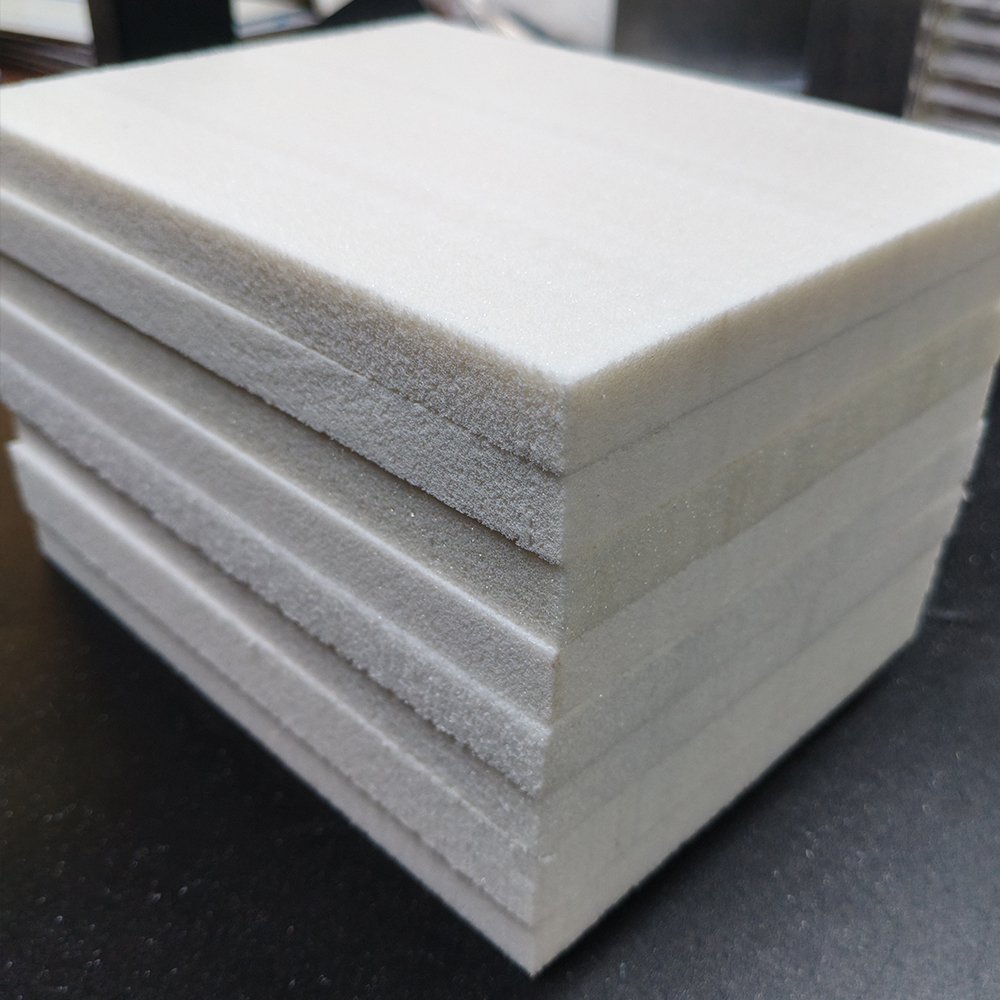
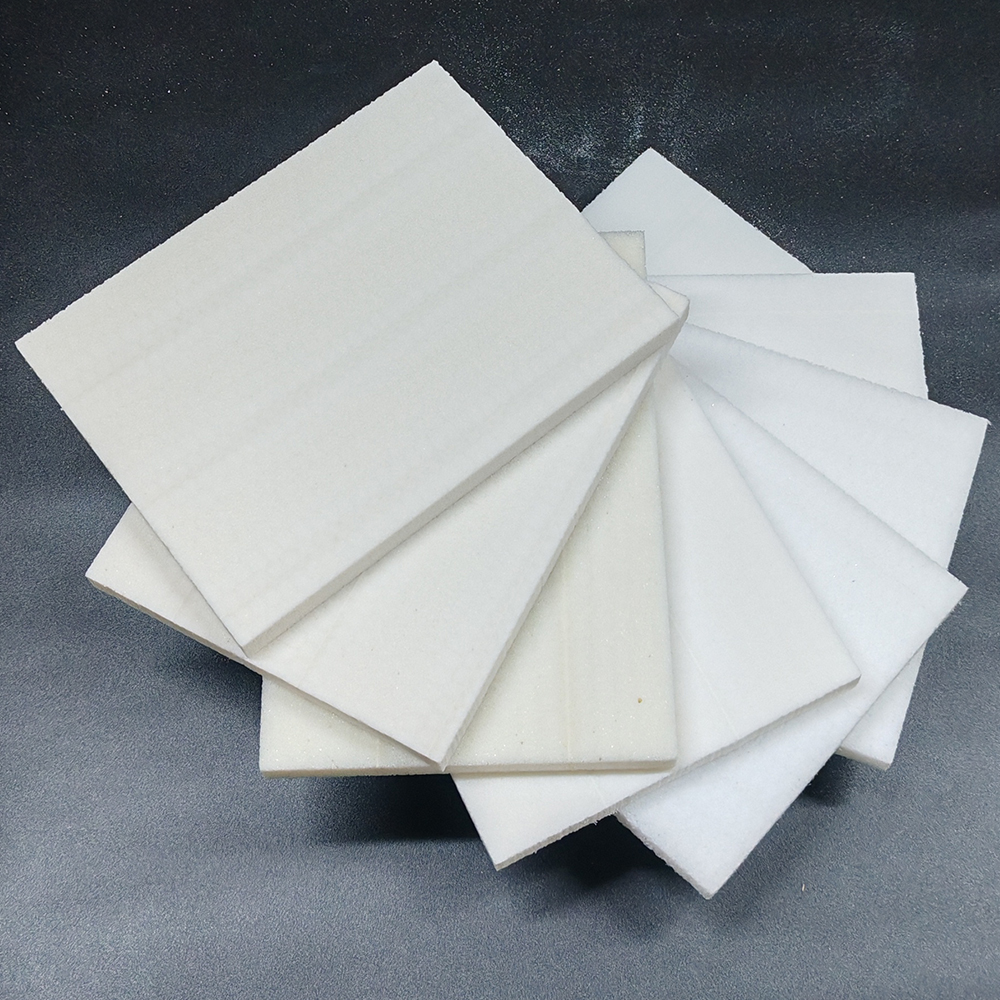
1. What Is PET Foam Core?
PET Foam Core, also known as Polyethylene Terephthalate Foam Core or PET Structural Foam, is a rigid thermoplastic foam material widely used in composite sandwich structures. It is manufactured from polyethylene terephthalate (PET) resin and designed to provide structural support while reducing the overall weight of composite products.
In a typical composite sandwich panel, PET foam is placed between two outer skins, such as fiberglass reinforced plastic (FRP), carbon fiber, aluminum, or other composite materials. This structure increases bending stiffness and structural efficiency without requiring a solid, heavy panel.
Compared with traditional solid materials, PET foam core offers a useful combination of lightweight construction, mechanical strength, thermal stability, and recyclability. It is therefore increasingly used in wind energy, marine manufacturing, rail transportation, automotive components, and industrial composite panels.
For composite manufacturers looking for an alternative to conventional foam core materials, PET Foam Core provides a versatile solution for lightweight structural applications.
2. Key Properties and Advantages of PET Foam Core
2.1 Lightweight Structure and High Strength-to-Weight Ratio
One of the main advantages of PET structural foam is its ability to reduce component weight while maintaining structural performance.
Its cellular structure helps distribute loads between the outer skins of a sandwich panel. By increasing the distance between the skins, the core improves the panel’s bending stiffness without adding unnecessary mass.
This makes PET foam suitable for large composite panels, transportation components, and structural parts where weight reduction is important.
2.2 Good Compression and Shear Performance
PET Foam Core provides useful compressive and shear properties for structural sandwich applications.
Compressive strength determines how well the core resists loads applied perpendicular to its surface. Shear strength indicates its ability to withstand forces acting parallel to the panel surface.
These properties are particularly important in wind turbine structures, boat hulls, vehicle body panels, and other composite components exposed to mechanical loading.
Higher-density PET foam grades generally provide greater compressive and shear strength, although the final performance depends on the specific formulation and manufacturing process.
2.3 Recyclable Thermoplastic Material
PET is a thermoplastic polymer and can be produced using recycled PET feedstock. Some commercial structural PET foam products are manufactured with high proportions of recycled raw materials.
This gives PET foam core an advantage when manufacturers are working toward more sustainable composite production and material sourcing.
However, recyclability depends on the actual material composition, manufacturing process, contamination, and available recycling infrastructure. A PET-based core does not automatically make an entire composite sandwich panel recyclable, particularly when it is permanently bonded to thermoset resin skins.
2.4 Thermal Stability During Composite Processing
PET structural foam is compatible with several composite manufacturing processes, including resin infusion, vacuum-assisted resin transfer molding (VARTM), lamination, and pressing.
Certain PET foam grades can withstand elevated processing temperatures. The permitted temperature depends on the material grade, exposure time, pressure, and processing conditions.
Manufacturers should always check the technical data sheet before selecting a PET core for heated molding or prepreg applications.
2.5 Low Weight and Production Efficiency
PET foam can be supplied in different densities, thicknesses, and pre-machined configurations. CNC cutting, grooving, perforation, and contour shaping can help composite manufacturers prepare the core for specific production requirements.
These processing options can improve material utilization and reduce preparation work during sandwich panel manufacturing.
3. PET Foam Core Technical Specifications
PET Foam Core is available in multiple density grades to meet different structural requirements. Lower-density grades are generally used where weight reduction is the primary objective, while higher-density grades are selected when greater mechanical strength is required.
The following table shows representative mechanical properties published for selected PET foam grades.
Typical Mechanical Properties of PET Foam Core
| Property | Test Standard | PET80 | PET100 | PET150 | PET200 | PET250 | PET320 |
|---|---|---|---|---|---|---|---|
| Density (kg/m³) | ISO 845 | 80 | 100 | 150 | 200 | 250 | 320 |
| Compressive Strength (MPa) | ISO 844 | 1.1 | 1.3 | 2.6 | 4.0 | 4.4 | 6.7 |
| Compressive Modulus (MPa) | ISO 844 | 100 | 110 | 170 | 220 | 250 | 370 |
| Shear Strength (MPa) | ISO 1922 | 0.75 | 0.80 | 1.35 | 1.60 | 1.75 | 2.20 |
| Shear Modulus (MPa) | ISO 1922 | 22 | 26 | 48 | 65 | 70 | 120 |
| Tensile Strength (MPa) | ASTM C297 | 1.6 | 1.6 | 2.1 | 2.6 | 3.0 | 3.0 |
Note: These are representative values from a published PET foam core technical data sheet. They are not ONEBOND guaranteed specifications. Actual values vary by manufacturer, grade, specimen orientation, and testing conditions.
General PET Foam Core Product Specifications
| Item | Typical Specification Range |
|---|---|
| Material | Polyethylene Terephthalate (PET) |
| Density | Approximately 60–320 kg/m³ |
| Thickness | Available in multiple thicknesses, depending on grade and production capability |
| Surface | Plain, grooved, perforated, or customized |
| Structure | Rigid cellular foam |
| Color | Usually white or light-colored, depending on formulation |
| Processing | Cutting, CNC machining, grooving, perforation, and contour shaping |
| Applications | Marine, wind energy, transportation, construction, and industrial composites |
The specifications above describe common product configurations in the market. Buyers should confirm actual dimensions, tolerances, density options, and mechanical properties with the manufacturer before ordering.
4. Main Applications of PET Foam Core
4.1 Wind Energy and Wind Turbine Blades
Wind energy is an important application area for structural foam core materials.
PET foam core can be used in selected sandwich structures within wind turbine blade manufacturing. It helps improve structural stiffness while reducing component weight.
Typical application areas include:
- Wind turbine blade sandwich sections
- Structural reinforcement panels
- Wind energy equipment enclosures
- Composite nacelle covers
- Lightweight internal structural components
For wind blade applications, manufacturers need to evaluate shear strength, fatigue resistance, resin compatibility, core bonding, and long-term environmental performance.
4.2 Marine and Boat Building
In marine manufacturing, PET Foam Core is used in composite sandwich panels for lightweight structural components.
Typical applications include:
- Boat hull sandwich structures
- Yacht deck panels
- Bulkheads and partitions
- Marine interior panels
- Cabin structures
- Lightweight equipment covers
Its relatively low weight and structural properties make it suitable for applications where reducing vessel weight is important.
For marine use, core selection should also consider water exposure, resin compatibility, bonding quality, and the consequences of local damage.
4.3 Rail Transit and Automotive Transportation
PET structural foam is also used in transportation composite components.
Its lightweight structure can help reduce vehicle weight, while its processing flexibility supports the production of complex shapes and panel designs.
Typical applications include:
- Railway interior wall panels
- Train ceiling panels
- Floor and partition sandwich panels
- Automotive body panels
- Vehicle interior structures
- Lightweight truck and trailer components
For railway and automotive projects, fire, smoke, and toxicity requirements must be evaluated separately. Standard PET foam should not automatically be considered fire-rated or compliant with a specific transportation standard.
4.4 Construction and Industrial Composite Panels
PET foam core can also be incorporated into lightweight building and industrial sandwich panels.
Potential applications include:
- FRP sandwich panels
- Lightweight partition panels
- Industrial equipment enclosures
- Composite doors
- Insulated structural panels
- Customized industrial covers
The appropriate PET density and panel configuration depend on the required stiffness, loading conditions, fastening design, and environmental exposure.
5. PET Foam Core Processing and Customization
PET Foam Core can be processed into different configurations to meet the requirements of composite panel manufacturers.
Common processing options include:
Plain Sheets: Flat PET foam sheets for general sandwich panel production.
Grooved PET Foam: Grooves can provide resin flow paths and help accommodate curved or shaped structures.
Perforated PET Foam: Perforations can assist resin distribution and air evacuation in certain vacuum infusion processes.
Double-Sided Grooved Foam: Grooves on both sides can support resin flow and bonding requirements, depending on the panel design.
CNC Contour Cutting: Custom shapes and profiles can be produced for specific composite components.
When selecting a processing configuration, manufacturers should consider resin viscosity, infusion strategy, skin material, core thickness, and the required finished panel properties.
6. PET Foam Core vs. PVC Foam Core
PET Foam Core and PVC Foam Core are both widely used in composite sandwich structures. However, they have different material characteristics and may be suitable for different production requirements.
| Comparison | PET Foam Core | PVC Foam Core |
|---|---|---|
| Material Type | Thermoplastic polyester | Cross-linked PVC |
| Recyclability | Can be recycled depending on composition and infrastructure | More limited and dependent on material formulation and recycling route |
| Mechanical Performance | Available in a wide range of structural grades | Available in a wide range of structural grades |
| Processing | Infusion, lamination, pressing, and machining | Infusion, lamination, pressing, and machining |
| Temperature Resistance | Depends on grade and processing conditions | Depends on grade and formulation |
| Typical Applications | Wind energy, transportation, marine, industrial panels | Marine, wind energy, transportation, and construction |
Neither material is universally better. PET may be preferred when thermoplastic content and recycled feedstock are important considerations. PVC may be selected when its specific mechanical properties, processing behavior, or established application history better match the project.
A proper comparison should be based on technical data sheets, finished-panel testing, and total manufacturing cost rather than material names alone.
7. How to Choose the Right PET Foam Core
Selecting the correct PET Foam Core requires evaluating the complete sandwich structure rather than considering density alone.
Important factors include:
- Density: Select a density based on the required compression, shear, and weight performance.
- Thickness: Determine the core thickness according to panel stiffness, structural design, and available installation space.
- Mechanical Properties: Review compressive strength, shear strength, tensile properties, and fatigue requirements.
- Manufacturing Process: Confirm compatibility with vacuum infusion, RTM, lamination, or heated pressing.
- Surface Configuration: Choose plain, grooved, perforated, or CNC-machined sheets according to resin flow and panel geometry.
- Operating Environment: Consider temperature, moisture exposure, chemicals, and service life.
- Compliance Requirements: Check project-specific fire, smoke, toxicity, and structural standards.
For large-scale composite production, it is also important to evaluate sheet dimensions, thickness tolerance, density consistency, cutting accuracy, and batch stability.
8. ONEBOND PET Foam Core Solutions
ONEBOND focuses on composite core materials and lightweight sandwich panel solutions for international industrial customers.
Our product range covers different foam core and honeycomb core materials for applications in marine, wind energy, transportation, construction, and industrial manufacturing.
For PET Foam Core projects, buyers can discuss requirements such as:
- Customized density and thickness
- Sheet dimensions and cutting tolerances
- Plain, grooved, and perforated surfaces
- CNC cutting and contour machining
- Material selection for different composite processes
- Customized packaging and supply requirements
Whether you are manufacturing wind turbine components, marine sandwich panels, FRP composite boards, or lightweight transportation structures, selecting the correct core material is essential to achieving the required panel performance.
Contact ONEBOND to discuss your PET Foam Core requirements and obtain product specifications for your application.
9. Frequently Asked Questions About PET Foam Core
Q1: What is PET Foam Core used for?
PET Foam Core is used in composite sandwich panels for wind turbine blades, boats, yachts, railway interiors, automotive components, construction panels, and industrial structures.
Q2: Is PET Foam Core recyclable?
PET is a thermoplastic polymer and can be recycled under suitable conditions. Some structural PET foam products use recycled PET raw materials, but the recyclability of a finished sandwich panel depends on its complete material composition and recycling process.
Q3: What densities are available for PET Structural Foam Core?
Common commercial PET foam grades include approximately 60, 80, 100, 150, 200, 250, and 320 kg/m³. Available grades vary by manufacturer and product series.
Q4: Can PET Foam Core be used for vacuum infusion?
Yes. Suitable PET foam grades can be used in vacuum infusion and VARTM processes. Grooved or perforated surfaces may help resin distribution and air evacuation, depending on the infusion design.
Q5: What is the difference between PET Foam Core and PVC Foam Core?
PET Foam Core is a thermoplastic polyester material with recycling potential, while PVC Foam Core is generally a cross-linked thermoset-like structural foam. Both offer structural support in composite sandwich panels, but their mechanical properties, processing behavior, and environmental characteristics differ by grade.
Conclusion
PET Foam Core is an important structural material for lightweight composite manufacturing. Its combination of mechanical performance, processing flexibility, thermal stability, and potential use of recycled raw materials makes it suitable for a wide range of sandwich panel applications.
As demand for lightweight and resource-efficient structures continues to develop, PET structural foam offers composite manufacturers another material option for wind energy, marine, transportation, construction, and industrial applications.
For buyers and manufacturers, the key is to select the correct density, thickness, mechanical properties, and surface configuration according to the actual product design and production process.
