
Table of Contents
- Introduction
- Understanding PVC Foam Core
- The Evolution of Core Materials in Boatbuilding
- Types of PVC Foam Used in Marine Construction
- Structural Benefits of PVC Foam Core
- Key Marine Applications and Use Cases
- Manufacturing Processes Compatible with PVC Foam
- Mechanical Properties and Engineering Considerations
- Durability, Fatigue Performance, and Long-Term Reliability
- Foam Core Selection: Density, Grade, and Layup Strategies
- Bonding, Adhesives, and Resin Compatibility
- Comparison with Balsa, PET, Honeycomb, and Plywood
- Common Failure Modes and How to Prevent Them
- Quality Control and NDT Inspection Methods
- Sustainability, Regulations, and Class Approvals
- The Future of PVC Foam in the Marine Industry
- Summary and Key Takeaways
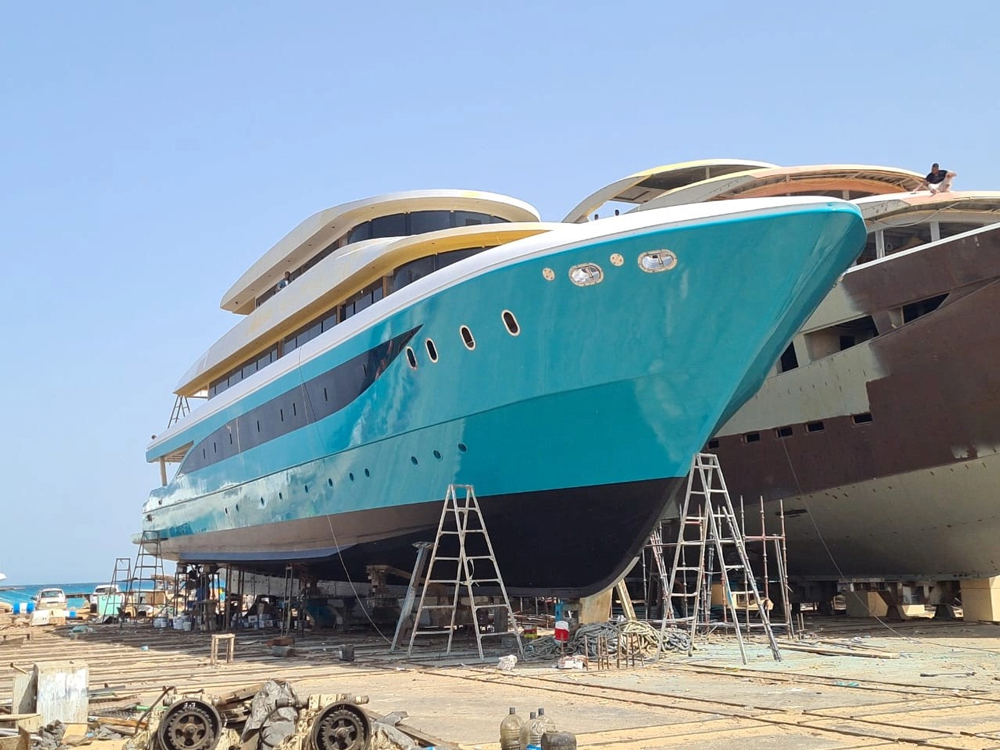
1. Introduction: Why PVC Foam Changed Modern Marine Composites
Over the last 30 years, the boatbuilding industry has undergone a dramatic transformation. The shift from traditional construction—solid fiberglass, plywood, and balsa—toward lightweight, high-performance sandwich composites has enabled a new generation of vessels that are faster, stronger, more efficient, and significantly more durable.
At the center of this evolution is PVC foam core, a closed-cell, structural composite core material engineered for marine-grade performance. It is now the preferred choice for:
- Sailboats and powerboats
- Offshore and patrol vessels
- Performance catamarans
- Superyachts
- Commercial workboats
- Military craft
- Passenger ferries
- RIBs and light tenders
Boatbuilders have adopted PVC foam not merely because it is light, but because it provides a rare combination of structural stiffness, toughness, fatigue resistance, moisture stability, and design flexibility that outperforms traditional materials in almost every metric.
2. Understanding PVC Foam Core
PVC foam (polyvinyl chloride foam) is a closed-cell, structural foam designed to serve as the lightweight core of a sandwich composite. The core’s function is to increase stiffness by separating two strong skins—typically fiberglass, carbon fiber, or aramid—resulting in a structure with the mechanical efficiency of an I-beam.
Core Material Fundamentals
PVC foam is engineered to provide:
- Low density (40–250 kg/m³)
- High shear strength
- Excellent fatigue life
- Low water absorption
- Thermal and acoustic insulation
- Impact resistance
Its closed-cell structure prevents resin and water penetration, making it ideal for marine environments where long-term durability and moisture immunity are critical.
Why Closed-Cell Structure Matters
Closed-cell PVC foam:
- Does not wick water
- Prevents saturation even if skins are damaged
- Limits resin uptake during infusion
- Maintains buoyancy even under partial damage
This makes it superior to balsa and many open-cell foams.
3. The Evolution of Core Materials in Boatbuilding
For decades, marine builders relied on solid laminate fiberglass, a construction method that was strong but extremely heavy. Later, balsa wood core became popular due to its high compressive strength, but moisture ingress and rot issues created long-term reliability problems.
PVC foam emerged as a solution to:
- Reduce vessel weight
- Improve stiffness-to-weight ratios
- Increase speed and fuel efficiency
- Eliminate rot and moisture sensitivity
- Improve consistency in manufacturing
- Enable modern infusion and prepreg processes
Today, PVC foam has become the industry standard, replacing:
- Marine plywood
- Balsa
- Solid fiberglass laminates
- Aluminum honeycomb (in many applications)
Its adoption is almost universal in high-end marine manufacturing.
4. Types of PVC Foam Used in Marine Construction
PVC foam is available in multiple formulations, each optimized for specific structural requirements.
4.1 Linear PVC Foam
Characteristics:
- More flexible
- High impact toughness
- Good elongation
- Ideal for areas needing energy absorption
Common uses:
- Hull bottoms for slamming impact
- Stringers
- Bulkheads
- RIB hulls
4.2 Crosslinked PVC Foam
Characteristics:
- Higher rigidity
- High compressive and shear strength
- Excellent fatigue resistance
- Better dimensional stability
Common uses:
- Decks
- Superstructures
- Cabin tops
- High-performance racing craft
4.3 FR (Fire Retardant) PVC Foam
Used for:
- Passenger ferries
- Workboats under SOLAS
- Vessels requiring class certification
4.4 Contour, Scored, Scrimmed, and Kits
Many projects require foam that conforms to complex hull shapes.
Available configurations include:
- Scored & scrimmed (mosaic pattern for curves)
- Double-cut contour foam
- Thermoformed foam panels
- CNC-cut core kits
These streamline production and ensure accuracy.
5. Structural Benefits of PVC Foam Core
5.1 Weight Reduction
The most significant advantage is dramatic weight reduction—up to 40–60% compared to solid laminates.
Benefits of lighter vessels:
- Higher top speed
- Improved acceleration
- Reduced fuel consumption
- Increased range
- Lower emissions
- Better payload capacity
- Greater design flexibility
5.2 Increased Panel Stiffness
A sandwich composite with PVC foam is several times stiffer than solid fiberglass of the same weight.
PVC foam acts as:
- A shear web
- A structural separator
- A load distributor
This reduces flexing and oil-canning.
5.3 Improved Fatigue Resistance
Marine vessels experience millions of cycles of wave loading. PVC foam maintains long-term performance better than:
- Balsa
- Marine plywood
- Aluminum structures
5.4 Impact and Slamming Resistance
Linear PVC grades are ideal for:
- Planing hulls
- Offshore racing boats
- Military interceptors
Their ability to absorb and dissipate energy protects the laminate skins.
5.5 Corrosion and Rot Resistance
PVC is inert to:
- Saltwater
- Oil
- Fuel
- Chemical contaminants
- Marine bacterial activity
Unlike wood, it cannot rot.
6. Key Marine Applications and Use Cases
PVC foam is used throughout the entire vessel structure.
6.1 Hull Bottoms and Sides
Benefits:
- Higher stiffness without weight penalty
- Improved impact resistance
- Reduced slamming loads
- Better hydrodynamic performance
6.2 Decks, Superstructures, and Cabin Tops
Foam cores reduce:
- Deflection
- Vibration
- Sound transmission
This improves comfort for passengers and crew.
6.3 Transoms
High-density foam (160–250 kg/m³) replaces plywood, eliminating:
- Rot
- Moisture wicking
- Long-term structural failures
6.4 Stringers and Internal Reinforcement
Foam stringers maintain hull shape and stiffness with significantly less weight.
6.5 Bulkheads and Interior Panels
Used for:
- Sound dampening
- Insulation
- Lightweight joinery
6.6 Multihulls / Catamarans
Weight reduction is critical for:
- Bridge decks
- Crossbeams
- Cabin roofs
Foam cores improve structural efficiency while minimizing pitching inertia.
7. Manufacturing Processes Compatible with PVC Foam
PVC foam is compatible with nearly every marine composite production method.
7.1 Vacuum Infusion (VARTM)
PVC foam is ideal for infusion due to:
- Low resin uptake
- High dimensional stability
- Reduced exotherm sensitivity
7.2 Hand Lay-Up
Still widely used for:
- Repairs
- Small-scale builds
- Custom yachts
7.3 Resin Transfer Molding (RTM)
Foam works well for controlled manufacturing.
7.4 Prepreg Lamination
Used in:
- High-performance racing boats
- Superyachts
- Military interceptors
7.5 Thermoforming
Allows foam to fit complex hull geometries.
7.6 CNC Machining
Core kits cut precisely to:
- Reduce labor
- Improve repeatability
- Lower waste
8. Mechanical Properties and Engineering Considerations
Structural engineers evaluate foam cores based on several key parameters.
8.1 Shear Strength & Shear Modulus
Critical for hull bottoms and decks under bending loads.
8.2 Compressive Strength
Key requirement for:
- Transoms
- Stringers
- Hardware mounting areas
8.3 Tensile Strength
Necessary for absorbing dynamic impacts.
8.4 Fatigue Resistance
Foam must handle millions of wave impacts.
8.5 Elongation & Toughness
Linear PVC grades are best for high-impact zones.
9. Durability, Fatigue Performance, and Long-Term Reliability
In long-term marine service, PVC foam has demonstrated outstanding resistance to:
- Hydrostatic pressure
- Delamination
- Fatigue cracking
- Moisture cycling
- Chemical degradation
Many vessels built with PVC foam in the 1980s remain in active service today, with no measurable degradation.
10. Foam Core Selection: Density, Grade, and Layup Strategies
Densities range from 60–250 kg/m³, each suited for specific applications.
Low (60–80 kg/m³)
- Cabin walls
- Interior panels
- Deck cores
Medium (80–130 kg/m³)
- Hull sides
- Decks
- Superstructures
High (160–250 kg/m³)
- Transoms
- Stringers
- Engine beds
Designers often use multi-density layups to optimize structural efficiency.
11. Bonding, Adhesives, and Resin Compatibility
PVC foam bonds with:
- Epoxy (highest performance)
- Vinyl ester
- Polyester
Adhesives:
- Epoxy pastes
- Methacrylate (MMA) adhesives
- Polyurethane adhesives
Surface prep:
- Light sanding
- Solvent cleaning
12. Comparison with Balsa, PET, Honeycomb, and Plywood
| Property | PVC Foam | Balsa | PET | Honeycomb | Plywood |
|---|---|---|---|---|---|
| Water Resistance | Excellent | Poor | Excellent | Good | Poor |
| Impact Toughness | High | Medium | Medium | Low | High |
| Weight | Very Low | Medium | Medium | Very Low | High |
| Cost | Medium | Low | Medium | High | Low |
| Fatigue Life | Excellent | Good | Good | Medium | Medium |
| Processability | Easy | Moderate | Easy | Difficult | Easy |
PVC foam offers the best all-around performance.
13. Common Failure Modes and How to Prevent Them
13.1 Delamination
Prevention:
- Correct resin ratio
- Proper vacuum bagging
- Adequate surface preparation
13.2 Shear Cracking
Occurs from under-specifying density.
13.3 Print-Through
Prevented by:
- Post-curing
- Thicker skins
- Controlled exotherm resins
13.4 Core Crushing
Use higher density foam in hardware areas.
14. Quality Control and NDT Inspection Methods
For class-approved vessels, NDT is mandatory.
Methods include:
- Tap testing
- Ultrasonics
- Thermography
- X-ray (rare in marine use)
These detect:
- Debonding
- Voids
- Moisture ingress
- Core shear damage
15. Sustainability, Regulations, and Class Approvals
PVC foam meets standards from:
- DNV
- Lloyd’s Register
- ABS
- ISO 12215
Many PVC foams are now partially recyclable, and their weight-saving benefits reduce overall vessel emissions.
16. The Future of PVC Foam in the Marine Industry
Trends driving adoption:
- Electrification (weight reduction is essential)
- High-speed commercial vessels
- Performance cruising catamarans
- Superyacht weight optimization
- CAD-driven CNC core kits
- Hybrid sandwich structures
PVC foam will remain the industry standard for at least the next decade.
17. Summary and Key Takeaways
- PVC foam core has become the backbone of modern composite boatbuilding.
- It provides unmatched strength-to-weight efficiency, moisture resistance, and durability.
- Compatible with all major marine manufacturing processes.
- Ideal for hulls, decks, superstructures, transoms, and bulkheads.
- Offers superior performance compared to plywood, balsa, PET, and honeycomb.
- Enables faster, lighter, stronger, and more efficient vessels.
PVC foam is not just a material choice—it is a foundational technology that defines modern marine engineering.
