
Choosing the right core material is one of the most important decisions in sandwich panel manufacturing. The core affects panel weight, mechanical performance, bonding quality, manufacturing efficiency and overall production cost.
For composite panel manufacturers, two commonly considered materials are polypropylene (PP) honeycomb core and PVC foam core.
Both materials are used in lightweight composite structures, but they have different cellular structures, mechanical characteristics and processing requirements.
PP honeycomb core is a thermoplastic cellular material with a honeycomb geometry. PVC foam core is a rigid polymer foam with a closed-cell structure and can be supplied in sheets, blocks or customized shapes.
Neither material is universally better. The appropriate choice depends on the panel application, facing materials, load requirements, manufacturing process and target cost.
This article compares PP honeycomb core and PVC foam core from the perspective of composite panel manufacturers and industrial procurement buyers.
1. What Is PP Honeycomb Core?
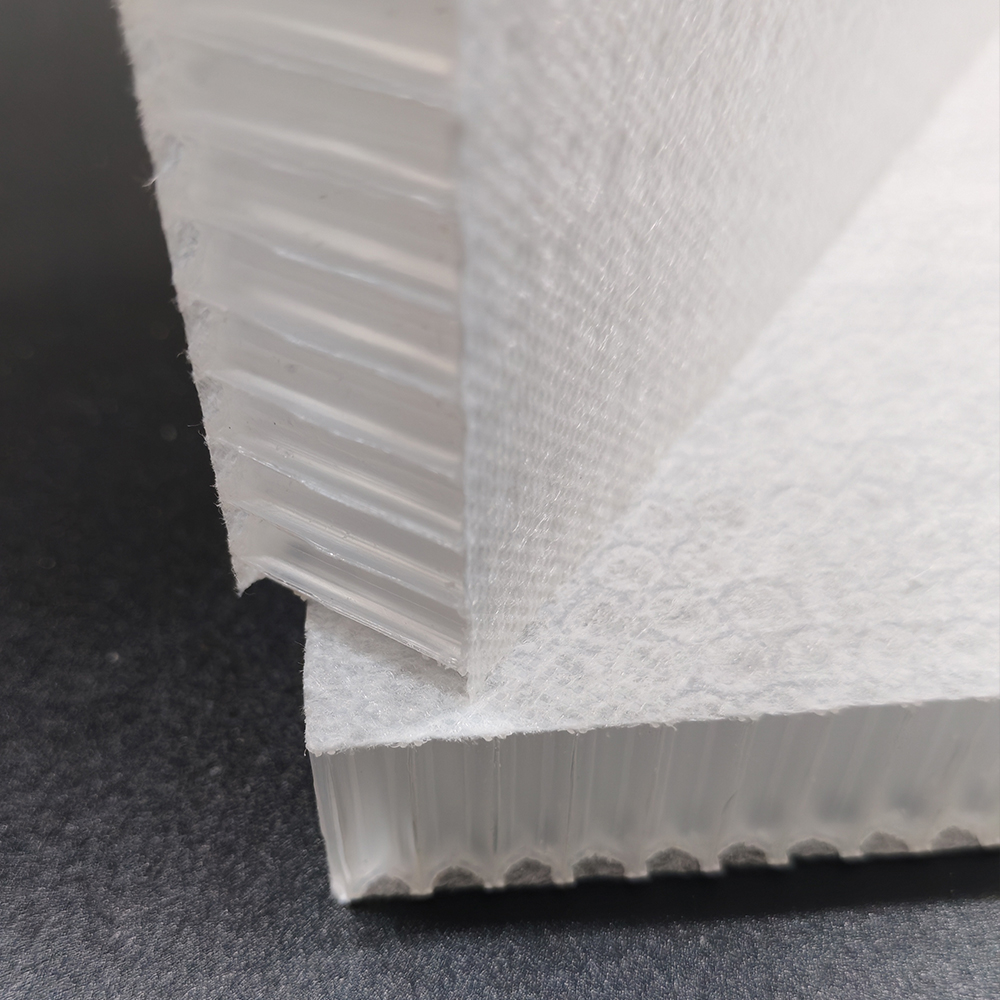
PP honeycomb core is a lightweight cellular core material manufactured from polypropylene thermoplastic.
Its honeycomb geometry consists of interconnected cells that create a structured internal framework. This structure provides support for the facing materials and helps transfer loads through the sandwich panel.
PP honeycomb core is commonly used in lightweight composite panels where weight reduction, moisture resistance and customized cellular structures are important.
Typical product configurations include:
- Bare PP Honeycomb Core
- Nonwoven Faced PP Honeycomb Core
- PP Honeycomb Sheets
- Customized PP Honeycomb Core for FRP Panels
Depending on the manufacturing process, PP honeycomb core can be customized according to core thickness, cell size, density or areal weight, sheet dimensions and facing configuration.
Common applications include truck body panels, RV components, FRP sandwich panels, transportation structures and selected industrial composite products.
Key Characteristics
PP honeycomb core offers several characteristics that make it attractive for lightweight panel manufacturing.
Cellular structure: The honeycomb geometry provides a structured core that supports the panel facings.
Low material weight: Its weight depends on the material density, cell geometry, core thickness and manufacturing configuration.
Moisture resistance: Polypropylene has low water absorption and does not undergo metallic corrosion.
Thermoplastic behavior: PP can exhibit deformation and changes in mechanical properties when exposed to elevated temperatures.
Bonding considerations: Polypropylene has relatively low surface energy, which can make direct bonding with conventional adhesives challenging.
For composite manufacturers, the bonding system and complete panel construction must be evaluated before selecting PP honeycomb core.
2. What Is PVC Foam Core?
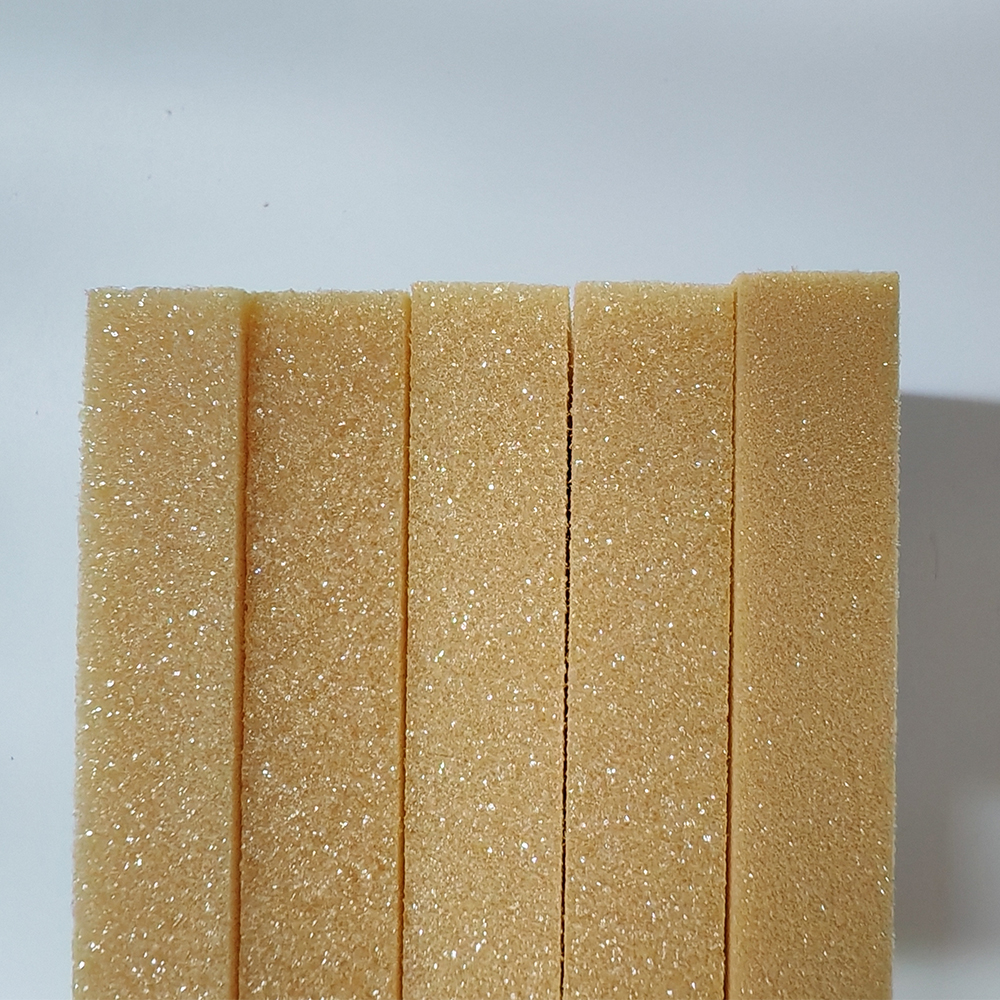
PVC foam core is a rigid cellular material manufactured from polyvinyl chloride-based polymer systems.
It contains a cellular structure formed by gas-filled pores within the polymer matrix.
Depending on its formulation and manufacturing process, PVC foam core can be produced with different densities, thicknesses, cell structures and mechanical properties.
Cross-linked PVC structural foam is widely used in composite sandwich panels because it can provide a combination of low weight, mechanical support and compatibility with selected composite manufacturing processes.
PVC foam core is commonly considered for:
- Marine and boat composite structures
- Wind turbine blade components
- FRP sandwich panels
- Transportation panels
- Industrial composite structures
- Construction and equipment panels
Key Characteristics
Closed-cell structure: Many structural PVC foam cores feature a closed-cell structure that helps limit fluid penetration into the material.
Machinability: PVC foam core can be cut, shaped and machined using suitable tools and processing conditions.
Mechanical support: Its performance depends on density, thickness, formulation and manufacturing quality.
Composite compatibility: PVC foam core can be incorporated into FRP sandwich structures using suitable resin systems and manufacturing processes.
Customization: Different densities, thicknesses and surface configurations can be selected according to project requirements.
PVC foam core is particularly relevant when manufacturers require a continuous foam structure that can be machined or shaped into specific panel geometries.
3. PP Honeycomb Core vs PVC Foam Core: Main Differences
Although both materials are lightweight composite cores, their structures and mechanical behavior are different.
| Comparison Factor | PP Honeycomb Core | PVC Foam Core |
|---|---|---|
| Base material | Polypropylene thermoplastic | PVC-based polymer foam |
| Internal structure | Cellular honeycomb geometry | Cellular foam structure |
| Core configuration | Bare or faced honeycomb | Foam sheets, blocks or customized shapes |
| Weight | Depends on density, cell size and thickness | Depends on density, formulation and thickness |
| Compression behavior | Influenced by cell wall bending, buckling and collapse | Influenced by foam cell structure and polymer deformation |
| Shear behavior | Depends on cell geometry, material and orientation | Depends on density, formulation and foam structure |
| Water absorption | PP material has low water absorption; panel interfaces still require protection | Closed-cell structural foam can limit water penetration; absorption depends on foam quality and construction |
| Bonding | Often requires appropriate surface treatment or facing | Requires compatible resin or adhesive system |
| Machining | Suitable for specified cutting and processing methods | Commonly suitable for cutting, routing and shaping |
| Typical applications | Truck body panels, lightweight FRP panels, RV and industrial structures | Marine, wind energy, FRP panels and engineered composite structures |
The most important difference is the internal structure.
PP honeycomb core uses a geometric cellular framework, while PVC foam core provides a continuous cellular material.
This difference affects how each material responds to compression, shear, machining, bonding and manufacturing processes.
4. Weight Comparison: Which Core Is Lighter?
Weight reduction is a major reason manufacturers use both PP honeycomb core and PVC foam core.
However, the statement that one material is always lighter than the other is not technically reliable.
The weight of each core depends on its density and thickness.
For a uniform material, theoretical core areal weight can be calculated as:
Areal Weight = Density × Thickness
When density is expressed in kg/m³ and thickness in meters, the result is kg/m².
For example:
| Hypothetical Core | Density | Thickness | Theoretical Areal Weight |
|---|---|---|---|
| PP Honeycomb Core | 80 kg/m³ | 20 mm | 1.6 kg/m² |
| PVC Foam Core | 80 kg/m³ | 20 mm | 1.6 kg/m² |
These are illustrative calculations, not ONEBOND product specifications.
The example demonstrates that identical nominal density and thickness produce the same theoretical core mass per unit area.
However, equal density does not mean equal structural performance.
The two materials may behave differently under compression, shear and bending because their internal structures are different.
What Should Buyers Compare?
For a meaningful weight comparison, procurement teams should request:
- Core density or apparent density
- Core thickness
- Core areal weight
- Cell size for PP honeycomb
- Facing configuration
- Complete panel weight
- Mechanical test results
The complete panel weight should include both facings, adhesives, coatings and additional components.
For truck body panels, RV structures and industrial sandwich panels, comparing finished panel weight is more useful than comparing core weight alone.
5. Compression Strength: Honeycomb Structure vs Foam Structure
Compression performance is one of the most important properties in sandwich panel design.
However, compression strength should not be confused with compression modulus or complete panel bending strength.
PP Honeycomb Core Compression Performance
PP honeycomb core responds to compression through deformation of its cellular structure.
Depending on the core configuration, deformation may involve:
- Cell wall bending
- Local buckling
- Cell collapse
- Progressive deformation
Important factors include cell size, cell wall geometry, material characteristics, density and loading direction.
A honeycomb core with different cell geometry may exhibit different compression behavior even when the material and nominal thickness are similar.
PVC Foam Core Compression Performance
PVC foam core responds to compression through deformation of its cellular structure and polymer matrix.
Its performance is influenced by:
- Foam density
- Cell structure
- Polymer formulation
- Manufacturing quality
- Core thickness
- Loading direction
Higher-density PVC foam grades often provide greater compression resistance than lower-density grades within a comparable product family.
However, density alone cannot establish the performance of every PVC foam formulation.
Which Material Has Better Compression Strength?
There is no universal answer.
A properly selected PP honeycomb core may perform well in a particular panel design, while a PVC foam core may be more appropriate in another.
For accurate comparison, buyers should request test results obtained under comparable conditions.
Relevant test information includes:
- Specimen dimensions
- Loading direction
- Test method
- Test speed
- Conditioning conditions
- Number of specimens
- Failure mode
For structural panels, compression testing of the core should be supplemented by complete sandwich panel testing when required.
6. Shear Strength and Sandwich Panel Performance
Core shear performance is particularly important in sandwich panels.
The core transfers shear loads between the two facing materials and helps maintain the separation between the skins.
PP Honeycomb Core
PP honeycomb core transfers shear through its cellular framework.
Its shear behavior depends on cell geometry, material properties, core orientation and manufacturing consistency.
For applications involving significant shear loads, the selected core configuration should be validated through appropriate testing.
PVC Foam Core
PVC foam core transfers shear through its continuous cellular structure.
Its shear performance depends on foam density, cell structure, material formulation and the direction of loading.
PVC foam core can be used in engineered sandwich panels where core shear performance is important, but the appropriate grade must be selected according to the application.
Complete Panel Performance
The shear behavior of a sandwich panel is not determined by the core alone.
It also depends on:
- Facing material
- Facing thickness
- Adhesive system
- Bonding quality
- Panel geometry
- Support conditions
- Manufacturing process
A panel with high core shear strength can still fail prematurely if the bonding interface is weak.
For this reason, composite panel manufacturers should evaluate core shear properties and skin-to-core bonding together.
7. Bonding PP Honeycomb Core and PVC Foam Core with FRP Skins
Bonding compatibility is a critical consideration when selecting a composite core material.
The core must be compatible with the facing material, adhesive or resin system, and manufacturing process.
Bonding PP Honeycomb Core with FRP
Polypropylene has relatively low surface energy.
This characteristic can make it difficult to achieve reliable direct bonding with conventional adhesives or polyester and epoxy resin systems without suitable preparation.
Depending on the manufacturing configuration, manufacturers may consider:
- Nonwoven faced PP honeycomb core
- Suitable surface treatment
- Compatible adhesive systems
- Controlled lamination conditions
- Process-specific bond testing
For nonwoven faced PP honeycomb core, the bonding system includes two interfaces:
- PP core to nonwoven facing.
- Nonwoven facing to FRP skin.
Both interfaces should be evaluated.
A nonwoven facing may improve compatibility with certain panel manufacturing processes, but it does not automatically guarantee reliable bonding.
Bonding PVC Foam Core with FRP
PVC foam core is commonly incorporated into FRP sandwich panels using compatible resin or adhesive systems.
The appropriate bonding process depends on the foam grade, surface condition, resin system and panel manufacturing method.
Manufacturers should evaluate:
- Resin compatibility
- Surface preparation
- Adhesive distribution
- Lamination pressure
- Curing conditions
- Core surface integrity
- Bond strength
For vacuum-assisted or infusion-based processes, resin flow, core compatibility and the intended manufacturing configuration should be validated.
Bonding Selection Summary
| Manufacturing Requirement | PP Honeycomb Core | PVC Foam Core |
|---|---|---|
| Direct bonding | Requires careful compatibility evaluation | Requires compatible resin or adhesive |
| Surface preparation | May require treatment or facing | Depends on foam grade and process |
| FRP skin compatibility | Requires validated bonding system | Requires validated resin or adhesive system |
| Nonwoven facing | Available in selected configurations | Depends on product and application |
| Process validation | Essential | Essential |
The correct bonding solution should be selected according to the complete material system rather than the core material alone.
8. Water Resistance and Environmental Performance
Water resistance is particularly important for marine panels, truck bodies, RV structures and outdoor composite products.
PP Honeycomb Core
Polypropylene has low water absorption and does not undergo metallic corrosion.
These characteristics make PP honeycomb core attractive for selected moisture-exposed applications.
However, water resistance of the core does not guarantee waterproof performance of the finished panel.
Water can enter through:
- Panel edges
- Fastener holes
- Damaged facings
- Adhesive interfaces
- Unsealed joints
Therefore, panel design, edge sealing and installation details remain important.
PVC Foam Core
Many structural PVC foam cores have closed-cell structures that help limit water penetration.
However, actual water absorption depends on the foam formulation, cell structure, manufacturing quality and exposure conditions.
The complete sandwich panel must also be evaluated for moisture ingress through skins, edges and interfaces.
Environmental Selection
For marine and outdoor applications, manufacturers should consider:
- Moisture exposure
- Saltwater exposure
- Temperature fluctuations
- UV exposure
- Chemical exposure
- Panel edge protection
- Long-term bonding durability
Neither PP honeycomb core nor PVC foam core should be selected solely because the material is described as water-resistant.
The complete panel system must meet the actual environmental requirements.
9. Machining and Manufacturing Efficiency
Manufacturing efficiency can influence the total cost of a composite panel.
The choice between PP honeycomb core and PVC foam core may affect cutting, shaping, bonding and assembly operations.
PP Honeycomb Core Processing
PP honeycomb core can be processed using suitable cutting and machining methods.
Manufacturing considerations include:
- Core thickness
- Cell geometry
- Cutting accuracy
- Edge quality
- Facing configuration
- Panel bonding requirements
When PP honeycomb core is used with FRP skins, the manufacturer should consider how the cellular structure interacts with the selected lamination process.
PVC Foam Core Processing
PVC foam core is commonly suitable for cutting, routing, shaping and machining.
Its continuous foam structure can provide flexibility in manufacturing customized panel geometries and core shapes.
Processing requirements depend on density, thickness, material grade and machining conditions.
Production Efficiency Comparison
| Manufacturing Factor | PP Honeycomb Core | PVC Foam Core |
|---|---|---|
| Cutting | Depends on cellular structure and tooling | Depends on density, thickness and tooling |
| Shaping | Suitable for specified panel configurations | Suitable for cutting and customized shapes |
| Bonding | Requires careful interface validation | Requires resin or adhesive compatibility |
| Core material waste | Depends on cutting layout and cell configuration | Depends on cutting layout and foam geometry |
| Process optimization | Requires control of core geometry and bonding | Requires control of machining and bonding |
Manufacturers should evaluate production efficiency using actual processing trials.
The best material is the one that meets panel performance requirements while supporting a stable and economical manufacturing process.
10. Cost Comparison: PP Honeycomb Core vs PVC Foam Core
Material price is important, but it does not determine the final panel cost by itself.
The total cost of a sandwich panel may include:
- Core material
- Facing materials
- Adhesives or resins
- Surface treatment
- Cutting and machining
- Lamination
- Labor
- Quality inspection
- Material waste
- Transportation
PP Honeycomb Core Cost Factors
PP honeycomb core cost depends on:
- Material configuration
- Density or areal weight
- Core thickness
- Cell size
- Facing requirements
- Customized dimensions
- Order quantity
- Manufacturing process
For some lightweight panel applications, PP honeycomb core may offer an economical solution when its properties align with the required panel design.
PVC Foam Core Cost Factors
PVC foam core cost depends on:
- Foam density
- Thickness
- Material formulation
- Mechanical performance requirements
- Sheet dimensions
- Machining requirements
- Order quantity
Higher-performance foam grades may have different costs from general-purpose foam materials.
Which Core Is More Economical?
Neither material is always cheaper.
The appropriate comparison should use equivalent application requirements.
For example, comparing a low-density PP honeycomb core with a high-density structural PVC foam core may produce a misleading result.
A fair comparison should consider the required panel weight, mechanical properties, bonding process and complete manufacturing cost.
Procurement recommendation: Request quotations using the same panel dimensions, target weight, facing materials, mechanical requirements and production quantity.
11. Application Comparison: Which Core Should You Choose?
Truck Body and Trailer Panels
Truck body panels commonly require lightweight construction, durability and compatibility with industrial panel manufacturing.
PP honeycomb core can be considered for FRP sandwich panels where weight reduction and moisture resistance are important.
PVC foam core may be considered where its continuous foam structure, mechanical properties and processing characteristics fit the panel design.
The selection should account for:
- Panel thickness
- Compression requirements
- Shear loads
- Impact resistance
- Fastener locations
- Skin-to-core bonding
- Manufacturing process
RV and Caravan Panels
RV manufacturers often require lightweight wall, floor, roof and interior panel structures.
PP honeycomb core may be suitable for selected lightweight panel designs.
PVC foam core may be suitable for panels requiring a machinable structural foam core.
The appropriate choice depends on panel design, load requirements, moisture exposure and manufacturing process.
Marine and Boat Panels
Marine applications require careful consideration of moisture exposure, bonding, structural performance and applicable fire requirements.
PVC foam core is widely used in selected marine composite structures.
PP honeycomb core may be considered for appropriate marine interior and lightweight panel applications when bonding, durability and application requirements have been validated.
For critical structural applications, the selected material should be evaluated against relevant engineering and marine requirements.
Wind Energy Composite Structures
PVC foam core is used in selected wind energy composite structures, including applications where structural foam core materials are required.
PP honeycomb core may be considered for other suitable composite applications, but the design must account for the intended load conditions, material compatibility and manufacturing process.
The core should not be selected based on weight alone.
Industrial Composite Panels
For industrial equipment and lightweight structures, the choice depends on panel configuration, production requirements and performance targets.
PP honeycomb core may be appropriate for cellular lightweight panel structures.
PVC foam core may be appropriate for panels requiring a continuous foam structure and customized machining.
12. How to Select the Right Core Material
Before selecting PP honeycomb core or PVC foam core, composite panel manufacturers should define the complete panel requirements.
Step 1: Identify the Application
Determine whether the panel is intended for:
- Truck body
- Trailer
- RV
- Marine
- Wind energy
- Industrial equipment
- Construction
Different applications have different mechanical, environmental and regulatory requirements.
Step 2: Define the Required Panel Weight
Specify the target panel weight per square meter.
Compare the complete sandwich panel rather than the core material alone.
Step 3: Define Mechanical Requirements
Identify the required:
- Compression strength
- Core shear strength
- Flexural performance
- Impact resistance
- Fastener performance
- Long-term durability
Where necessary, test the complete panel structure.
Step 4: Confirm Core Specifications
For PP honeycomb core, specify:
- Core thickness
- Cell size
- Density or areal weight
- Sheet dimensions
- Facing configuration
For PVC foam core, specify:
- Foam density
- Thickness
- Sheet dimensions
- Material grade
- Mechanical requirements
- Machining requirements
Step 5: Confirm Bonding Compatibility
Identify the facing material and adhesive or resin system.
Evaluate whether the selected core can be reliably bonded under the intended manufacturing conditions.
Step 6: Evaluate Total Manufacturing Cost
Include material, processing, bonding, labor, waste and quality-control costs.
Step 7: Request Samples and Testing
Before mass production, evaluate representative core samples and complete panel prototypes.
Confirm that the selected material meets the actual application requirements.
13. Technical Testing for Composite Core Materials
Testing is important when comparing PP honeycomb core and PVC foam core.
Relevant properties may include:
| Test Category | Purpose |
|---|---|
| Density | Determine material mass per unit volume |
| Thickness | Verify dimensional consistency |
| Flatwise compression | Evaluate compression behavior |
| Core shear | Evaluate shear properties |
| Flatwise tensile | Evaluate tensile behavior perpendicular to the panel |
| Sandwich panel flexure | Evaluate complete panel bending behavior |
| Water absorption | Evaluate moisture uptake |
| Bond testing | Evaluate core-to-facing adhesion |
Possible ASTM standards for relevant sandwich core and panel testing include:
- ASTM C271/C271M — Density of Sandwich Core Materials
- ASTM C365/C365M — Flatwise Compressive Properties of Sandwich Cores
- ASTM C273/C273M — Core Shear Properties of Sandwich Construction
- ASTM C297/C297M — Flatwise Tensile Strength of Sandwich Constructions
- ASTM C393/C393M — Core Shear Properties of Sandwich Constructions by Beam Flexure
- ASTM C272/C272M — Water Absorption of Core Materials
The appropriate standard and test configuration should be confirmed for the specific material, specimen and application.
Testing the core material alone does not establish the performance of the complete sandwich panel.
14. Why Choose ONEBOND for Customized Composite Core Materials?
ONEBOND focuses on composite core materials and lightweight sandwich panel solutions for industrial applications.
Our product portfolio includes PP honeycomb core, PVC foam core and other composite core materials used in selected panel manufacturing applications.
For buyers evaluating PP honeycomb core and PVC foam core, customization can be discussed according to the intended application and manufacturing process.
PP Honeycomb Core Solutions
- Bare PP Honeycomb Core
- Nonwoven Faced PP Honeycomb Core
- Customized PP Honeycomb Sheets
- PP Honeycomb Core for FRP Composite Panels
- PP Honeycomb Core for Transportation Panels
PVC Foam Core Solutions
- Customized PVC Foam Core
- PVC Foam Core Sheets
- PVC Foam Core for FRP Panels
- PVC Foam Core for Marine Applications
- PVC Foam Core for Industrial Composite Structures
The final material configuration should be selected according to the required core specifications, facing materials, mechanical properties and manufacturing conditions.
15. Request a Customized Composite Core Material
Are you manufacturing FRP sandwich panels, truck body panels, RV panels or other lightweight composite structures?
ONEBOND can discuss PP honeycomb core and PVC foam core solutions according to your project requirements.
To help evaluate a suitable material, please provide:
- Application
- Required core material
- Core thickness
- Target density or areal weight
- Cell size for PP honeycomb core
- Facing material
- Panel dimensions
- Mechanical requirements
- Estimated order quantity
Contact ONEBOND to discuss your composite panel project and request product information.
Frequently Asked Questions
1. What is the main difference between PP honeycomb core and PVC foam core?
PP honeycomb core has a geometric cellular structure, while PVC foam core has a continuous cellular foam structure. Their mechanical behavior, bonding requirements and processing characteristics differ.
2. Which material is lighter, PP honeycomb core or PVC foam core?
It depends on density, thickness and product configuration. Compare core areal weight and complete panel weight using equivalent specifications.
3. Which core has better compression strength?
Neither material is universally stronger. Compression performance depends on material properties, density, cellular structure, thickness and test conditions.
4. Can PP honeycomb core be used in FRP sandwich panels?
Yes. PP honeycomb core can be used in FRP sandwich panels when the bonding system, core configuration and manufacturing process are appropriately validated.
5. Is PVC foam core suitable for marine composite panels?
PVC foam core is used in selected marine composite structures. The appropriate grade depends on structural requirements, moisture exposure, bonding and applicable regulations.
6. Can PP honeycomb core replace PVC foam core?
In some applications, PP honeycomb core may be considered as an alternative. However, replacement requires evaluation of mechanical performance, bonding compatibility, manufacturing process and total panel cost.
7. Which material is more cost-effective for truck body panels?
The answer depends on the panel design, material specifications, processing costs, bonding system and production volume. Buyers should compare complete panel costs.
8. What information should buyers provide when requesting a quotation?
Provide application, core thickness, density or areal weight, cell size for PP honeycomb, facing materials, panel dimensions, mechanical requirements and estimated order quantity.
