
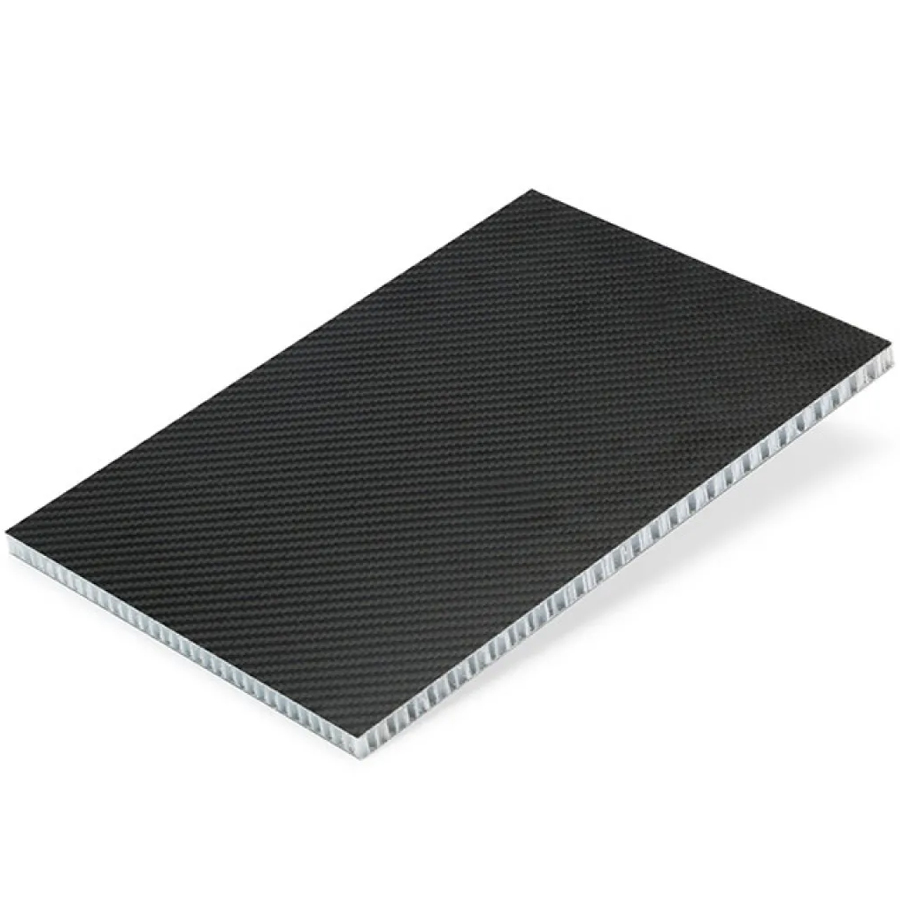
FRP Composite Panels for Truck Body and Trailer Manufacturing: Structure, Materials and Lightweight Design
1. Introduction: Why FRP Composite Panels Are Widely Used in Truck Body Manufacturing
Lightweight construction has become an important consideration in modern truck body and trailer manufacturing. Vehicle manufacturers are continuously looking for materials that can reduce body weight while maintaining structural performance, durability and production efficiency.
Traditional materials such as steel, plywood and conventional metal sheets are still used in commercial vehicle bodies. However, they may involve limitations related to weight, corrosion, maintenance and structural design.
FRP composite panels offer an alternative solution.
FRP, or Fiberglass Reinforced Plastic, combines fiberglass reinforcement with a polymer resin matrix to create a durable and lightweight panel skin. When combined with a suitable core material, FRP forms a sandwich panel structure that can provide high bending stiffness relative to its weight.
Today, FRP sandwich panels are used in various vehicle applications, including:
- Truck body side walls
- Trailer side panels
- Truck body roofs
- Front and rear walls
- Refrigerated truck body panels
- RV and motorhome structures
- Commercial vehicle interior panels
- Lightweight cargo body systems
For manufacturers, selecting the right core material and panel structure is just as important as choosing the FRP surface.
This article explains how FRP composite panels are designed for truck body and trailer manufacturing, compares common core materials, and discusses the technical factors that influence panel performance.
2. Basic Structure of an FRP Truck Body Sandwich Panel
An FRP truck body panel is commonly designed as a sandwich structure consisting of two FRP skins and a lightweight structural core.
A typical configuration includes three main components.
FRP Surface Skin
The outer and inner skins are made from fiberglass-reinforced plastic.
Their main functions include:
- Providing surface protection
- Contributing to tensile and compressive strength
- Improving resistance to weather and environmental exposure
- Protecting the internal core
- Creating a suitable finished surface for vehicle body construction
Depending on the application, manufacturers can select different FRP skin thicknesses, colors, surface finishes and reinforcement structures.
Core Material
The core occupies the space between the two FRP skins.
Its primary role is to maintain the distance between the skins and transfer shear loads through the sandwich structure.
Common core materials include:
- PP Honeycomb Core
- PVC Foam Core
- PET Foam Core
- XPS Foam Core
- PU Foam Core
- Aluminum Honeycomb Core
Each material has different mechanical, thermal, bonding and processing characteristics.
Bonding Interface
The bonding interface connects the FRP skins to the core.
This is a critical part of sandwich panel manufacturing. Even when the FRP skins and core materials have suitable individual properties, poor bonding can reduce the performance of the finished panel.
Manufacturers should evaluate:
- Adhesive compatibility
- Surface preparation
- Resin compatibility
- Bonding pressure and temperature
- Curing conditions
- Peel and flatwise tensile performance
For polypropylene honeycomb, its relatively low surface energy requires particular attention. Direct bonding should not be assumed to work with every adhesive or resin system.
Nonwoven-faced PP honeycomb may provide an additional bonding surface, but the complete bonding system still needs to be validated.
3. Common Core Materials for FRP Truck Body Panels
Different truck body applications require different combinations of weight, stiffness, insulation, impact resistance and manufacturing cost.
The following materials are commonly considered when designing FRP sandwich panels.
3.1 PP Honeycomb Core
PP Honeycomb Core is a lightweight thermoplastic structural core with a cellular honeycomb geometry.
Its main characteristics include:
- Low weight relative to many solid materials
- Efficient cellular structure
- Good resistance to moisture
- Thermoplastic material characteristics
- Flexible thickness and cell-size design options
PP honeycomb is suitable for lightweight composite panel structures where the manufacturer wants to reduce core weight while maintaining a cellular structural configuration.
Typical applications include:
- Truck body side panels
- Trailer wall panels
- Vehicle interior panels
- Lightweight cargo body panels
- RV composite structures
However, PP honeycomb has a relatively low surface energy. The bonding interface must be designed carefully using an appropriate surface treatment, facing material and adhesive system.
3.2 PVC Foam Core
PVC Foam Core is a rigid closed-cell structural foam used in many FRP sandwich panel applications.
Its characteristics include:
- Closed-cell foam structure
- Relatively uniform material composition
- Good structural design flexibility
- Compatibility with various composite manufacturing processes, subject to the selected resin and adhesive system
- Availability in different densities and thicknesses
PVC foam can be considered for truck body panels that require a rigid structural core and reliable bonding performance.
It is also widely used in marine and industrial composite structures.
3.3 PET Foam Core
PET Foam Core is a thermoplastic structural foam used in lightweight sandwich composite applications.
Potential advantages include:
- Lightweight construction
- Closed-cell foam structure
- Good dimensional stability when properly selected
- Compatibility with different composite manufacturing systems
- Recyclability considerations depending on material formulation and processing
PET foam can be evaluated for truck body panels, trailer structures and other composite applications where manufacturers need a balance between weight and structural requirements.
3.4 PU and XPS Foam Cores
PU and XPS foam cores may also be considered when thermal insulation is an important design requirement.
For example, refrigerated truck bodies require more than a lightweight structural panel. They also need suitable insulation performance, thermal continuity and carefully designed joints.
The core material should therefore be selected according to the complete vehicle body’s thermal and mechanical requirements.
4. Core Material Comparison for Truck Body and Trailer Panels
The following table provides a preliminary material selection reference.
| Core Material | Main Characteristics | Potential Applications | Key Design Considerations |
|---|---|---|---|
| PP Honeycomb | Cellular structure, lightweight, moisture resistant | Truck walls, trailer panels, interior panels | Bonding interface and facing compatibility |
| PVC Foam | Rigid closed-cell structural foam | Structural FRP sandwich panels | Density, shear strength and resin compatibility |
| PET Foam | Lightweight thermoplastic structural foam | Truck panels, trailers, industrial composites | Density, bonding and temperature conditions |
| PU Foam | Foam structure with insulation potential | Refrigerated vehicle panels | Thermal performance and structural requirements |
| XPS Foam | Closed-cell foam with insulation characteristics | Insulated panels and selected vehicle structures | Temperature, adhesive and load requirements |
| Aluminum Honeycomb | Metallic cellular structure with high structural efficiency | Specialized lightweight structural panels | Corrosion protection, edge sealing and bonding |
There is no universally best core material for every truck body panel.
The correct selection depends on the finished panel design, including skin thickness, core thickness, bonding system, support spacing and service conditions.
5. Material Selection for Different Truck Body Components
A truck body is not a single uniform structure. Different components experience different loads and environmental conditions.
Therefore, manufacturers should not automatically use the same sandwich panel configuration for every part of a vehicle.
5.1 Truck Body Side Wall Panels
Side wall panels usually require:
- Low overall weight
- Adequate bending stiffness
- Surface durability
- Resistance to vibration
- Stable bonding between skins and core
PP honeycomb, PVC foam and PET foam can all be evaluated for side wall structures.
The final choice should be based on panel dimensions, support spacing, loading conditions and required mechanical performance.
5.2 Truck Body Roof Panels
Roof panels may experience:
- Weather exposure
- Temperature changes
- Wind loads
- Vibration during transportation
- Maintenance or service loads
For roof structures, manufacturers should consider water resistance, edge sealing, panel deflection and the performance of joints and mounting points.
The complete roof structure must be evaluated rather than relying only on the core material’s datasheet.
5.3 Front Wall Panels
The front wall of a truck body may experience aerodynamic pressure, vibration and operational loads.
Important design factors include:
- Bending stiffness
- Panel-to-frame connection
- Local reinforcement
- Impact resistance
- Long-term bonding stability
A suitable core density and thickness should be selected according to the panel structure and actual service requirements.
5.4 Rear Door Panels
Rear doors are frequently opened and closed and may be exposed to repeated operational loads.
Their design should consider:
- Hinge attachment areas
- Locking hardware
- Local reinforcement
- Edge protection
- Impact and fatigue resistance
Lightweight sandwich panels can help reduce door weight, but the areas around hinges and locking systems may require additional structural reinforcement.
5.5 Truck Flooring Panels
Truck flooring is different from wall and roof panels because it experiences concentrated loads, abrasion and repeated loading from cargo and handling equipment.
The panel design should consider:
- Compressive strength
- Flexural performance
- Surface wear resistance
- Point-load resistance
- Core shear performance
- Local reinforcement
A lightweight core alone does not guarantee that a floor panel can withstand forklift wheels, cargo impact or concentrated loads.
The complete panel should be tested under representative loading conditions.
6. Lightweight Design: Why Core Material Selection Matters
Reducing vehicle body weight can improve payload capacity and vehicle operating efficiency, subject to the vehicle’s rated limits and overall design.
However, lightweight design should not simply mean choosing the lowest-density core.
A successful lightweight sandwich panel needs to balance several factors.
Skin Thickness
FRP skins contribute significantly to the bending performance of a sandwich panel.
Increasing skin thickness may improve certain mechanical properties, but it also increases material consumption and finished panel weight.
Core Thickness
The core separates the two skins.
Increasing core thickness can improve bending stiffness under suitable structural conditions, although the final result depends on the core’s shear properties, skin properties and bonding quality.
Core Density
Core density influences weight and is often associated with mechanical performance, but density alone cannot determine structural suitability.
Two cores with similar densities may have very different compression, shear and bonding characteristics.
Panel Span and Support Distance
The distance between supporting frames affects panel deflection and stress.
A panel that performs well with closely spaced supports may not perform equally well with a larger unsupported span.
Connection and Reinforcement Design
Hinges, locks, frame connections, fasteners and edge profiles can create localized stress concentrations.
These areas should be included in the structural design and validation process.
7. Typical FRP Truck Body Panel Specification Parameters
When purchasing FRP sandwich panels or core materials, manufacturers should define the technical requirements clearly.
The following table provides a general RFQ specification framework.
| Parameter | Description |
|---|---|
| Panel Application | Side wall, roof, front wall, rear door or floor |
| Panel Structure | FRP / Core / FRP |
| Outer Skin Material | Fiberglass Reinforced Plastic |
| Inner Skin Material | Fiberglass Reinforced Plastic or specified facing |
| Core Material | PP Honeycomb, PVC Foam, PET Foam, PU Foam or XPS |
| Core Density | To be specified according to design requirements |
| Core Thickness | Based on panel structure and required stiffness |
| Overall Panel Thickness | According to vehicle design |
| Panel Length and Width | Customized dimensions |
| FRP Skin Thickness | According to structural and surface requirements |
| Surface Finish | Smooth, textured, gel-coated or specified finish |
| Bonding System | Adhesive or resin system compatible with both skins and core |
| Mechanical Requirements | Compression, shear, bending and flatwise tensile performance |
| Environmental Requirements | Moisture, temperature, vibration and weather exposure |
| Special Requirements | Fire performance, insulation, impact resistance or other project requirements |
Actual values should be confirmed through product specifications, sample evaluation and testing.
8. Manufacturing Considerations for FRP Sandwich Panels
For truck body and trailer panel manufacturers, material selection is only one part of production quality.
The manufacturing process also affects the finished panel’s structural performance and consistency.
Core Preparation
Core materials should be inspected for:
- Thickness consistency
- Density consistency
- Surface condition
- Flatness
- Dimensional accuracy
For PP honeycomb, the selected surface treatment or facing should be compatible with the planned bonding system.
Adhesive Application
Adhesive selection should consider the surface chemistry of the core and FRP skins.
Important process variables include adhesive quantity, coating uniformity, open time and curing conditions.
Panel Assembly and Pressing
The skins and core must be assembled under controlled conditions.
Pressing pressure, temperature and curing time should follow the requirements of the selected adhesive or resin system.
Excessive or insufficient pressure may affect panel thickness, core integrity and bonding quality.
Quality Inspection
Manufacturers should establish inspection procedures for:
- Finished panel thickness
- Surface appearance
- Flatness
- Bonding integrity
- Dimensional accuracy
- Mechanical performance
For critical vehicle structures, representative panel testing should be carried out before mass production.
9. How to Choose an FRP Sandwich Panel Supplier
When evaluating an FRP panel or core material supplier, buyers should consider more than the quoted unit price.
A reliable supplier should be able to support the technical and manufacturing requirements of the project.
Key evaluation points include:
- Material Options: Can the supplier provide PP honeycomb, PVC foam, PET foam and other suitable core materials?
- Customization: Can core thickness, density, cell size, facing and dimensions be customized?
- Technical Support: Can the supplier help evaluate the material structure and bonding requirements?
- Quality Control: Are there inspection procedures for density, thickness, dimensions and material consistency?
- Sample Availability: Can the buyer evaluate samples before confirming bulk orders?
- Production Consistency: Can the supplier maintain stable specifications across production batches?
- Export Experience: Can the supplier support international packaging, documentation and delivery requirements?
For panel manufacturers, a supplier who understands the relationship between core materials, FRP skins and bonding systems can provide more value than a supplier who only offers standard material sheets.
10. ONEBOND: Composite Core Materials for FRP Panel Manufacturers
ONEBOND focuses on composite core materials for industrial sandwich panel applications.
Our product range includes:
- PP Honeycomb Core
- PVC Foam Core
- PET Foam Core
- XPS Foam Core
- Other customized composite core material solutions
These materials can be evaluated for FRP sandwich panels used in truck bodies, trailers, RVs, marine structures and industrial composite applications.
We understand that different panel manufacturers have different production processes and product requirements.
Therefore, core material selection should consider not only density and thickness, but also bonding compatibility, panel construction, mechanical requirements and final application.
Whether you are developing lightweight truck body panels or expanding your FRP sandwich panel product range, ONEBOND can discuss suitable core material configurations based on your project specifications.
Contact ONEBOND to discuss your FRP sandwich panel core material requirements.
11. Frequently Asked Questions
Q1. What is an FRP truck body panel?
An FRP truck body panel is a composite panel that uses fiberglass-reinforced plastic as its surface skin. It may be combined with PP honeycomb, PVC foam, PET foam or other core materials to create a lightweight sandwich structure.
Q2. Which core material is best for FRP truck body panels?
There is no single best option. PP honeycomb, PVC foam and PET foam can all be considered depending on weight, stiffness, bonding, manufacturing process and application requirements.
Q3. Can PP honeycomb be used for FRP trailer panels?
Yes. PP honeycomb can be used in FRP trailer sandwich panels when the bonding interface is properly designed and validated. Surface treatment, facing materials and adhesive compatibility are important considerations.
Q4. Are FRP sandwich panels suitable for truck body side walls?
Yes. FRP sandwich panels are used in truck body side wall applications because their skin-core structure can provide lightweight construction and structural stiffness. The final design must meet the required loading and service conditions.
Q5. Can FRP sandwich panels be used for truck flooring?
Yes, but flooring panels require special consideration of compression, point loads, abrasion, impact and core shear performance. A standard wall panel configuration should not automatically be used for flooring.
Q6. What is the difference between PP honeycomb and PVC foam cores?
PP honeycomb has a cellular thermoplastic structure, while PVC foam has a rigid closed-cell foam structure. They differ in mechanical properties, bonding requirements, weight and manufacturing compatibility.
Q7. Can ONEBOND supply customized PP honeycomb core for FRP panels?
ONEBOND can discuss customized PP honeycomb core requirements based on the buyer’s target dimensions, thickness, density, cell structure and facing requirements, subject to production feasibility confirmation.
Q8. What information should buyers provide when requesting an FRP panel core quotation?
Buyers should provide the intended application, core material, density, thickness, dimensions, facing requirements, target panel structure, estimated quantity and any mechanical or environmental requirements.
Q9. How can manufacturers improve the bonding strength of FRP and PP honeycomb?
They should evaluate PP surface treatment, suitable facing materials, adhesive compatibility, coating uniformity and curing conditions. Bonding performance should be verified through appropriate tests.
Q10. Does a lower-density core always produce a better lightweight truck body panel?
No. A lower-density core may reduce core weight, but it can also affect compression, shear and overall panel performance. The complete sandwich structure must be optimized according to actual service requirements.
