
1. Why Aluminum Honeycomb Is More Than a Lightweight Core Material
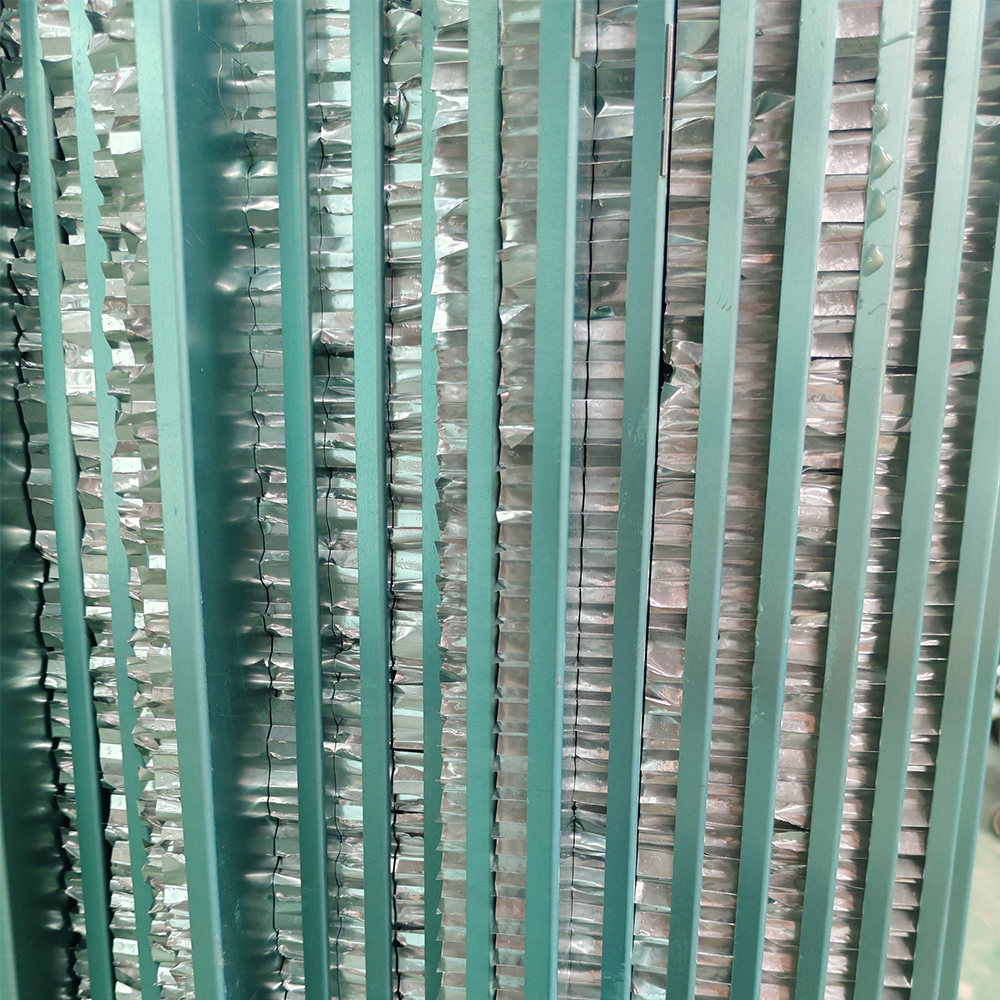
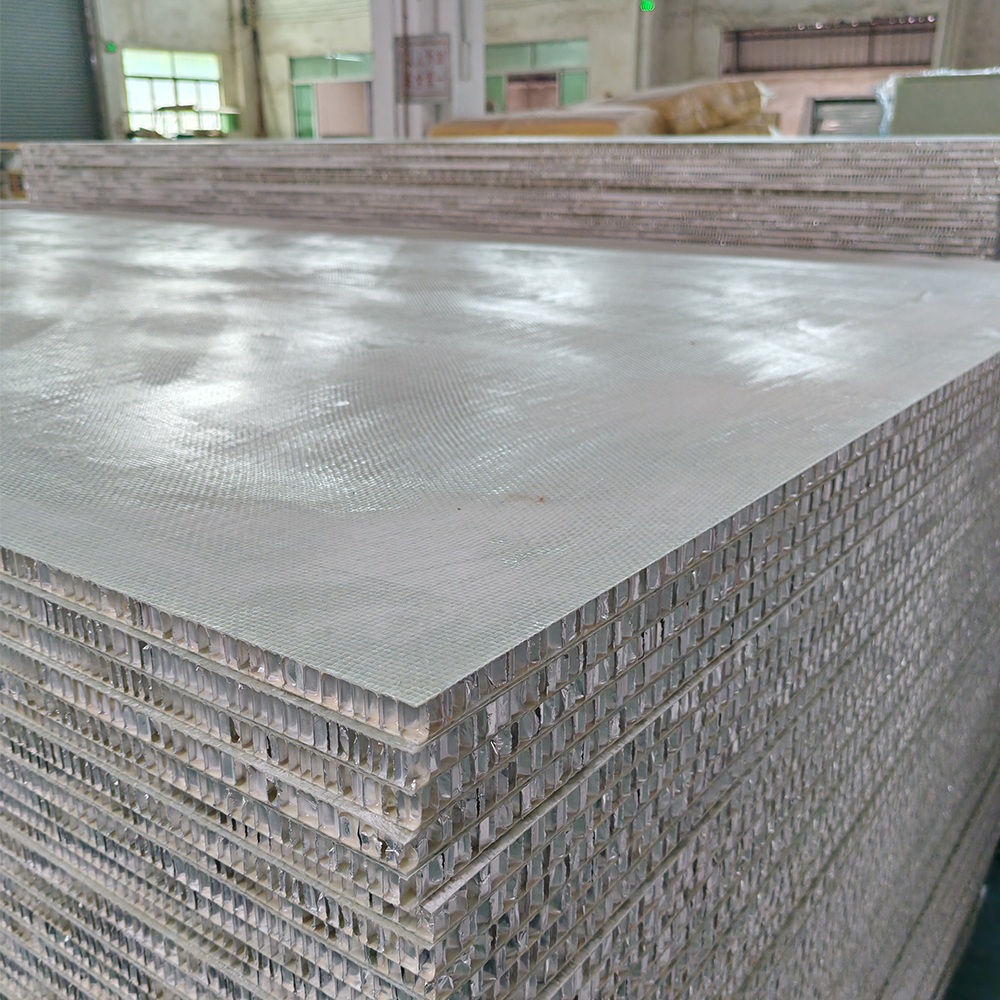
Aluminum Honeycomb Core is a cellular structural material engineered to provide high stiffness and strength at relatively low weight. Unlike solid aluminum sheets, its mechanical performance comes from the geometry of thin aluminum foil walls arranged into a repeating cellular structure.
In composite sandwich construction, the honeycomb core separates two relatively thin face sheets. The face sheets primarily resist tensile and compressive stresses generated by bending, while the core maintains the distance between them, transfers transverse shear loads and stabilizes the overall structure.
This arrangement creates an efficient structural system: a relatively small amount of material can deliver considerable bending stiffness without requiring a thick solid metal plate.
However, the engineering value of aluminum honeycomb does not come from density alone. Cell geometry, foil thickness, aluminum alloy, ribbon direction, bonding quality and panel configuration all influence the final mechanical performance.
For this reason, selecting aluminum honeycomb should be treated as a structural design decision rather than simply choosing a lightweight filling material.
2. Cellular Geometry: How the Honeycomb Structure Carries Loads
The conventional aluminum honeycomb structure consists of thin aluminum foil walls bonded together at specific node lines and expanded into a cellular configuration.
The most common configuration is hexagonal honeycomb. Other configurations, including over-expanded, under-expanded and specially formed cells, can be manufactured to meet different structural and forming requirements.
2.1 Cell Size and Foil Thickness
Two parameters have a particularly important influence on honeycomb performance:
- Cell size: The nominal dimension of an individual honeycomb cell.
- Foil thickness: The thickness of the aluminum foil used to form the cell walls.
Smaller cells generally provide more cell walls within a given area. When alloy and foil thickness are comparable, this can increase core density and improve resistance to local deformation.
Increasing foil thickness generally increases the amount of metal available to resist cell-wall buckling and crushing. It also increases core weight and material consumption.
These parameters should therefore be optimized together.
A small-cell, thick-foil core may be appropriate for applications requiring higher local support and mechanical strength. A larger-cell, thinner-foil core may be more appropriate when weight reduction and material efficiency are the main priorities.
2.2 The Three-Dimensional Load-Transfer Mechanism
Aluminum honeycomb has three principal structural directions:
- T direction: Through-thickness direction, perpendicular to the panel faces.
- L direction: Ribbon direction, associated with the direction of the continuous foil ribbons.
- W direction: Transverse direction, perpendicular to the ribbon direction within the panel plane.
Compression is primarily evaluated through the thickness, while shear performance is evaluated in the L and W directions.
The distinction matters because honeycomb is an anisotropic material. Its mechanical properties are not identical in every direction.
A core with high L-direction shear strength may have considerably lower W-direction shear strength. A designer who uses only one shear-strength value without identifying the test direction may select an unsuitable material for the actual loading condition.
2.3 Why Core Geometry Improves Sandwich Panel Stiffness
In a sandwich panel, bending stiffness depends strongly on the separation between the two face sheets.
The honeycomb core maintains this separation while carrying transverse shear loads. This allows the face sheets to resist bending efficiently without requiring a solid metal plate of equivalent thickness.
The resulting structure can offer a favorable stiffness-to-weight ratio for large panels, doors, floors, partitions and structural components.
The key engineering principle is not that the honeycomb core independently carries every load. Rather, the core and face sheets work together as a coordinated structural system.
3. Aluminum Alloy Selection: 3003, 5052 and 5056
Aluminum alloy selection influences strength, forming behavior, corrosion resistance and manufacturing cost.
3.1 AA3003 Aluminum Honeycomb
AA3003 is widely used for commercial aluminum honeycomb core.
It offers a practical balance of formability, corrosion resistance, availability and cost. It is suitable for many architectural panels, transportation interiors, industrial panels and general sandwich structures.
For manufacturers producing large quantities of aluminum honeycomb panels, 3003 is often a practical starting point for specification development.
3.2 AA5052 Aluminum Honeycomb
AA5052 is a magnesium-containing aluminum alloy commonly used in higher-performance honeycomb products.
It is available in commercial and specification-grade configurations and can be selected where mechanical requirements or particular environmental conditions justify the alloy choice.
However, the alloy designation alone does not determine the final core performance. Cell size, foil gauge, density, temper, manufacturing quality and protective treatment must also be considered.
3.3 AA5056 Aluminum Honeycomb
AA5056 is used in certain higher-performance honeycomb applications, including aerospace-oriented structures.
According to Hexcel’s published material guide, comparable 5056 honeycomb configurations can provide approximately 20% higher strength properties than corresponding 5052 configurations, depending on the specified construction.
This should not be interpreted as a universal improvement for every product. Comparisons must use equivalent cell geometry, foil thickness, density and test conditions.
3.4 Alloy Selection Is a System-Level Decision
A higher-strength alloy does not automatically produce a better sandwich panel.
If the face-sheet bonding system is weak, the panel may fail through adhesive separation before the core reaches its mechanical limit. If the panel operates in a corrosive environment, surface protection and edge sealing may be more important than a modest increase in core strength.
The correct alloy is therefore the one that satisfies the complete panel’s structural, environmental and manufacturing requirements.
4. Mechanical Performance: Understanding the Parameters That Matter
The principal mechanical properties used to evaluate aluminum honeycomb core include:
| Parameter | Engineering meaning | Design relevance |
|---|---|---|
| Density | Mass per unit volume | Weight optimization |
| Bare compression strength | Resistance to through-thickness crushing | Local compressive loading |
| Stabilized compression strength | Compression performance under a defined stabilized condition | Structural core selection |
| L-direction shear strength | Resistance to shear along the ribbon direction | Directional panel loading |
| W-direction shear strength | Resistance to shear across the ribbon direction | Transverse panel loading |
| Shear modulus | Elastic stiffness under shear loading | Deflection and deformation analysis |
| Core thickness | Distance between face sheets | Bending stiffness and panel geometry |
| Cell size | Nominal cellular dimension | Local support and core architecture |
Compression strength, crush strength and stabilized compression strength are not interchangeable terms. Their values depend on the test method and specimen configuration.
Likewise, L- and W-direction shear results must be reported separately whenever directional performance is important.
4.1 Representative Mechanical Data for 3003 Aluminum Honeycomb
The following values are representative published data for selected AA3003 honeycomb configurations. They illustrate how cell size and density relate to mechanical performance.
| Cell Size (mm) | Density (kg/m³) | Bare Compression Strength (MPa) | L Shear Strength (MPa) | W Shear Strength (MPa) |
|---|---|---|---|---|
| 6.4 | 85 | 4.69 | 2.28 | 1.34 |
| 9.6 | 54 | 2.34 | 1.56 | 0.93 |
| 12.7 | 40 | 1.41 | 0.97 | 0.53 |
| 19.1 | 30 | 0.86 | 0.72 | 0.42 |
| 25.4 | 20 | 0.59 | 0.48 | 0.34 |
Important technical note: These are indicative supplier-published values, not ONEBOND guaranteed specifications. They must not be treated as design allowables. Actual performance varies with foil thickness, alloy condition, core thickness, cell geometry, test method and manufacturing quality. Obtain the relevant product data sheet and test reports before engineering approval.
5. Failure Mechanisms: What Limits the Performance of a Honeycomb Panel?
A useful engineering analysis should examine how a sandwich structure can fail, not only how strong its core appears on a data sheet.
5.1 Core Crushing
Core crushing occurs when compressive stress causes the thin cell walls to buckle, fold or collapse.
It may occur under concentrated loads, fastener loads, equipment mounting points or insufficiently supported panel regions.
Local reinforcement, inserts, load-spreading plates or higher-density core may be required where concentrated loads are present.
5.2 Core Shear Failure
Core shear failure occurs when the shear stress exceeds the honeycomb’s capacity in the relevant direction.
This is especially important in large sandwich panels, where transverse shear can contribute significantly to total deformation.
Both L- and W-direction properties should be checked against the actual panel orientation and load path.
5.3 Face-to-Core Debonding
Face-to-core debonding is a critical failure mode in bonded sandwich construction.
It can result from insufficient surface preparation, unsuitable adhesive selection, contamination, uneven adhesive distribution, inadequate curing or poor process control.
Even a high-strength honeycomb core cannot compensate for a poorly bonded interface.
5.4 Face-Sheet Wrinkling and Local Indentation
Thin face sheets may wrinkle or locally deform when the core does not provide adequate support.
The risk depends on face-sheet material, thickness, core properties, adhesive quality, panel geometry and applied loading.
For this reason, core selection should always be evaluated together with the proposed face-sheet structure.
6. Manufacturing and Bonding: The Hidden Factors Behind Core Quality
Aluminum honeycomb is commonly manufactured through an expansion process.
Aluminum foil is prepared with controlled adhesive node lines, stacked into a block, cured and expanded into a cellular structure. The expanded material can then be cut to the required thickness and dimensions.
Other manufacturing routes, including corrugated construction, are also used for specific product configurations.
6.1 Surface Preparation and Bonding
The core must form a reliable bond with the face sheets.
Depending on the panel design, bonding may involve structural adhesives, film adhesives or other qualified joining systems.
Important process variables include:
- Aluminum surface cleanliness and surface condition
- Adhesive compatibility with the core and face-sheet materials
- Adhesive quantity and distribution
- Curing temperature, pressure and time
- Core flatness and dimensional stability
- Prevention of adhesive blockage inside cells where relevant
For aluminum-to-aluminum panels, the bonding system should be qualified for the intended operating environment.
For aluminum core combined with FRP or other dissimilar face materials, compatibility and surface preparation require additional attention.
6.2 Perforated and Non-Perforated Honeycomb
Perforated honeycomb contains small openings in the cell walls that allow air or gas to pass between cells.
This can be useful in vacuum processing, pressure equalization and certain acoustic or ventilation applications.
Non-perforated honeycomb restricts airflow between cells and may be preferred where the panel design requires isolated cells.
Perforation should not be selected automatically. It changes the core configuration and may affect structural performance, so the actual product specification must be checked.
7. Corrosion and Environmental Durability
Aluminum is generally corrosion resistant because a protective oxide layer forms on its surface. Nevertheless, aluminum honeycomb is not immune to environmental degradation.
Moisture trapped inside cells, damaged protective coatings, exposed cut edges and contact with dissimilar metals can create durability problems.
In marine and outdoor applications, engineers should pay particular attention to:
- Protective treatment of aluminum foil
- Edge sealing and moisture ingress prevention
- Drainage and ventilation design
- Galvanic compatibility with fasteners and face sheets
- Adhesive durability under temperature and humidity cycling
- Inspection and maintenance requirements
Specialized corrosion-resistant treatments are available for certain honeycomb grades. Hexcel, for example, describes chromate-based CR III and phosphoric-acid-anodized CR-PAA treatment options for its aluminum honeycomb products.
The treatment should be selected according to the intended environment, bonding system and applicable compliance requirements.
8. Application Engineering: Matching Honeycomb Design to the Product
Aluminum honeycomb is used in several industries, but the engineering priorities differ considerably.
| Industry | Typical applications | Main design priorities |
|---|---|---|
| Aerospace | Floors, doors, fairings and interior structures | Weight, stiffness, fatigue and qualification |
| Rail transportation | Interior partitions, doors, ceilings and floors | Fire performance, dimensional stability and durability |
| Marine | Bulkheads, ceilings, partitions and furniture panels | Moisture management, corrosion protection and bonding |
| Architecture | Facades, ceilings and decorative panels | Flatness, panel size, wind loading and weather resistance |
| Industrial equipment | Machine covers, work surfaces and access panels | Stiffness, local loading and dimensional accuracy |
| Cleanroom systems | Wall and ceiling panels | Flatness, cleanability and panel integration |
Aerospace structures typically require strict material traceability, process qualification and extensive testing. Commercial architectural or furniture panels may prioritize surface finish, flatness, production efficiency and cost.
A material that is suitable for one application should not automatically be assumed suitable for another.
9. Aluminum Honeycomb vs. Foam Core: Which Is the Better Engineering Choice?
Aluminum honeycomb and polymer foam cores solve different structural problems.
| Comparison | Aluminum Honeycomb Core | PVC / PET Foam Core |
|---|---|---|
| Structure | Thin metallic cellular walls | Cellular polymer structure |
| Weight | Very low at suitable densities | Depends on foam density |
| Stiffness-to-weight | Excellent in suitable sandwich designs | Good, depending on grade |
| Directional properties | Strongly dependent on L/W orientation | Often less directionally dependent |
| Local machining | Requires suitable cutting and edge treatment | Generally easier to machine |
| Moisture considerations | Requires attention to trapped moisture and corrosion | Depends on polymer and cell structure |
| Bonding | Requires controlled metal surface preparation and adhesive selection | Requires resin and surface compatibility |
| Typical selection focus | Structural stiffness, low weight and metallic construction | Conformability, machining and composite-process compatibility |
The correct choice depends on the complete panel design, including face sheets, loading, environmental conditions, manufacturing process and cost targets.
Aluminum honeycomb is not automatically superior to foam. Foam may be more practical where complex machining, resin infusion compatibility or a continuous cellular structure is required.
10. Engineering Checklist for Selecting Aluminum Honeycomb Core
Before placing an order or approving a core material, technical buyers and panel manufacturers should define the following:
- Application and load conditions: Static, dynamic, impact, vibration or concentrated loading.
- Core alloy: AA3003, AA5052, AA5056 or another specified grade.
- Cell size and foil thickness: Selected according to strength, stiffness, weight and process requirements.
- Core density: Evaluated together with mechanical test results, not as an isolated quality indicator.
- Core thickness and panel dimensions: Matched to the final sandwich-panel design.
- L/W orientation: Clearly marked and controlled during panel assembly.
- Surface treatment: Selected for corrosion resistance and bonding compatibility.
- Perforation: Defined according to vacuum, ventilation or pressure-equalization requirements.
- Bonding system: Qualified with the actual face-sheet material and production process.
- Testing and documentation: Compression, shear, flatwise tensile, bond durability and other application-specific tests.
For structural applications, engineers should also review the relevant test methods, specimen dimensions, conditioning procedures and statistical design values before using supplier data in calculations.
11. ONEBOND Aluminum Honeycomb Core Solutions
ONEBOND focuses on composite materials and lightweight core solutions for industrial manufacturing.
Aluminum Honeycomb Core can be specified according to the requirements of sandwich-panel manufacturers and industrial users, including alloy selection, cell size, foil thickness, density, core thickness, perforation and panel dimensions, subject to actual manufacturing capability.
For technical evaluation, buyers should provide the intended application, face-sheet material, panel dimensions, expected loading conditions and environmental requirements.
This information helps establish a more appropriate core specification instead of selecting a product based only on nominal density or cell size.
12. Frequently Asked Questions
Q1: What is the difference between 3003 and 5052 aluminum honeycomb core?
AA3003 is widely used for commercial honeycomb applications because of its balance of formability, corrosion resistance and cost. AA5052 is selected for certain applications requiring different mechanical or environmental characteristics. Final performance depends on the complete core configuration.
Q2: Does a smaller cell size always mean stronger aluminum honeycomb?
No. Smaller cells can increase the number of cell walls per unit area, but strength also depends on foil thickness, alloy, density, bonding quality and test direction.
Q3: Why are L-direction and W-direction shear strengths different?
The expanded honeycomb structure is anisotropic. Its geometry and ribbon orientation produce different mechanical responses in the two in-plane directions.
Q4: Can aluminum honeycomb core be used in marine sandwich panels?
Yes. It can be used in selected marine bulkheads, partitions and interior panels, provided corrosion protection, edge sealing, bonding durability and moisture management are properly addressed.
Q5: How should buyers specify aluminum honeycomb core?
A complete specification should include alloy, cell size, foil thickness, density, core thickness, L/W orientation, perforation, surface treatment, dimensions and required mechanical test results.
Conclusion
Aluminum Honeycomb Core is an engineered cellular structure whose performance depends on the interaction between material composition, cell geometry, directional mechanics and manufacturing quality.
For composite-panel manufacturers, the most important selection principle is to evaluate the honeycomb as part of the complete sandwich structure. Compression strength, shear strength, face-sheet stability, bonding durability and environmental resistance must all be considered together.
A properly specified aluminum honeycomb core can help manufacturers develop lightweight, stiff and dimensionally stable panels for transportation, marine, architectural and industrial applications.
