
1. Understanding Fiberglass Honeycomb Core as an Engineering Material
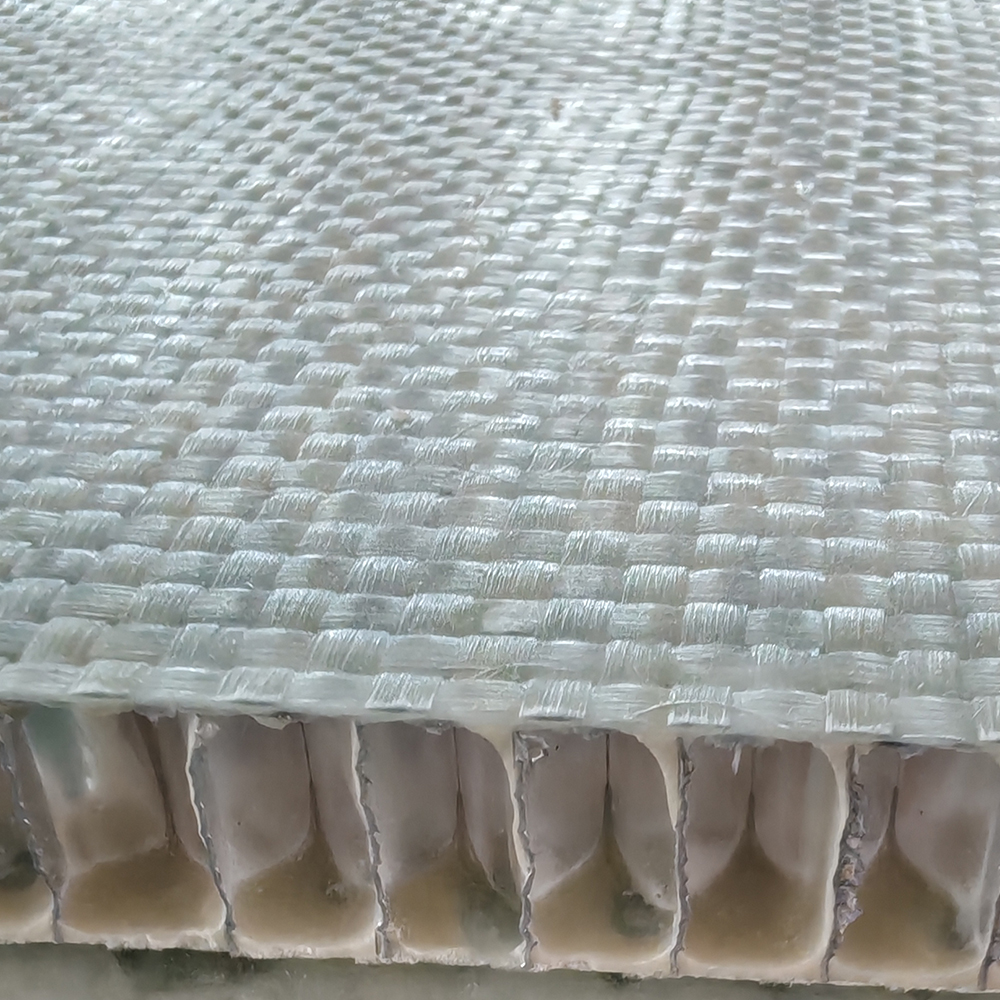
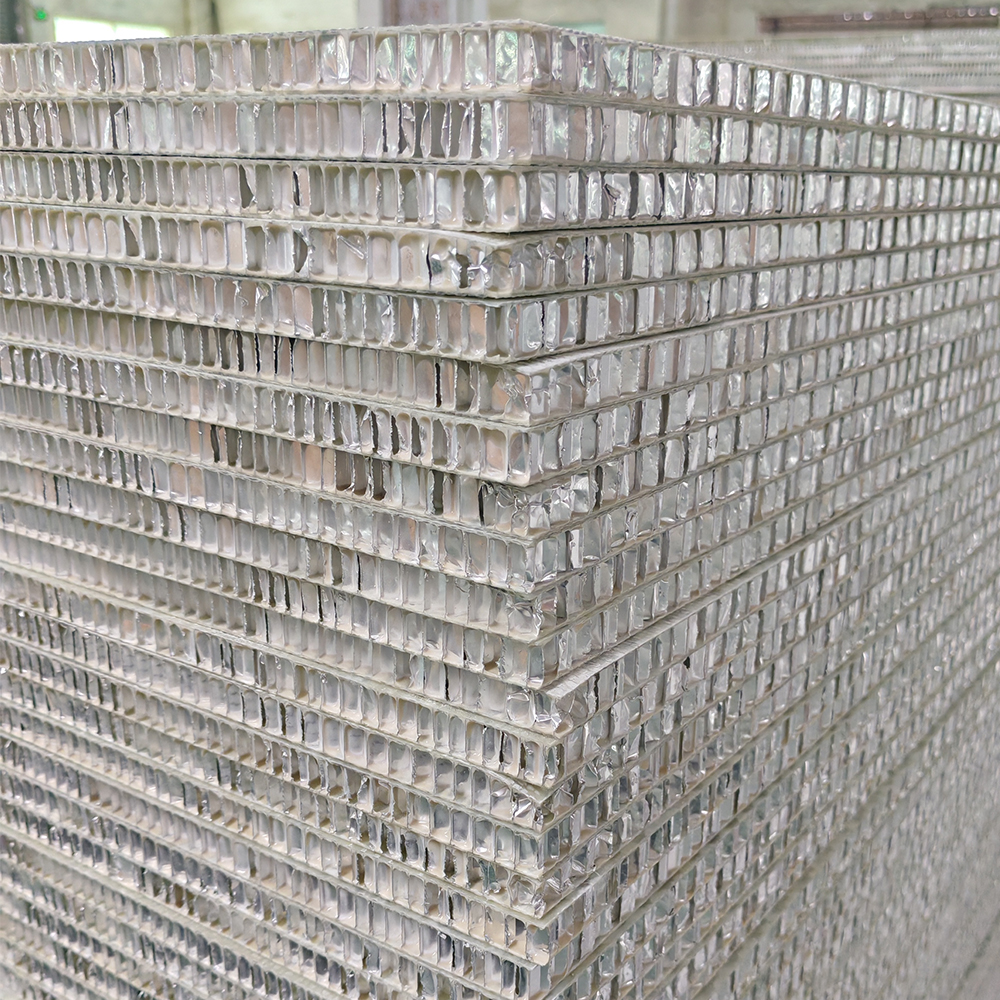
Fiberglass Honeycomb Core is a non-metallic cellular structural material manufactured from glass-fiber reinforcement and a resin matrix. In many high-performance products, woven or specially formed glass-fiber fabric is impregnated with phenolic resin, cured and converted into a honeycomb structure.
Unlike aluminum honeycomb, which relies on thin metallic foil walls, fiberglass honeycomb uses fiber-reinforced composite cell walls. The resulting material combines the lightweight geometry of honeycomb with the corrosion resistance, electrical insulation and thermal characteristics of a glass-fiber composite.
It is used in selected aerospace structures, radomes, marine components, industrial equipment and advanced sandwich panels where metallic cores may be unsuitable.
An important distinction should be made between three products:
- Fiberglass Honeycomb Core: The cellular core itself is made from glass-fiber-reinforced resin.
- FRP Honeycomb Panel: A complete sandwich panel with FRP face sheets and a honeycomb core, which may be aluminum, PP, fiberglass or another material.
- Fiberglass-Reinforced Foam Core: A foam core reinforced with fiberglass layers or scrims rather than a true cellular honeycomb structure.
These products have different structures, manufacturing methods and mechanical properties. Correct product identification is essential when preparing technical specifications or purchasing composite materials.
2. Material Composition: Why Glass Fiber and Resin Work Together
The performance of fiberglass honeycomb depends on the interaction between reinforcement fibers, resin chemistry and cellular geometry.
2.1 Glass-Fiber Reinforcement
Glass fibers provide the principal reinforcement within the cell walls. Their mechanical contribution depends on fiber type, fabric architecture, fiber orientation and resin impregnation quality.
Woven glass fabric is commonly used because it provides reinforcement in more than one in-plane direction. Other reinforcement configurations can be developed for particular structural or forming requirements.
Compared with metallic foil, glass-fiber reinforcement offers electrical insulation and avoids the typical galvanic corrosion concerns associated with metal-to-metal contact.
2.2 Resin Matrix
The resin binds the glass fibers together, maintains the cell-wall geometry and transfers loads between reinforcement fibers.
Phenolic resin is an important matrix option for fiberglass honeycomb because selected phenolic systems provide good thermal stability and fire-related performance.
Other resin systems may be considered according to the intended operating temperature, mechanical requirements, bonding process and environmental conditions.
The resin system cannot be treated as a secondary specification. It influences moisture behavior, temperature resistance, bonding compatibility, smoke characteristics and long-term durability.
2.3 Why Phenolic Fiberglass Honeycomb Is Used in High-Temperature Applications
Some fiberglass/phenolic honeycomb grades are designed for elevated-temperature service. For example, Hexcel’s HRP fiberglass/phenolic honeycomb product family is described for service temperatures up to approximately 350°F (177°C).
This figure applies to the specified product family and its defined conditions. It should not be interpreted as a universal service-temperature rating for every fiberglass honeycomb product.
The maximum processing temperature, short-term thermal exposure and continuous operating temperature are different engineering parameters. Buyers should request the applicable technical data sheet before specifying a temperature limit.
3. Cellular Architecture and Directional Mechanical Behavior
Fiberglass honeycomb is generally manufactured in hexagonal or specially engineered cellular configurations.
Its structural performance is determined by several interacting parameters:
- Cell size
- Cell-wall thickness
- Glass-fiber fabric construction
- Resin content and impregnation quality
- Core density
- Ribbon direction
- Core thickness and geometry
3.1 Cell Size and Core Density
Cell size describes the nominal dimension of each honeycomb cell. Smaller cells generally create more cell walls within a given area, while larger cells reduce the number of walls and can lower material consumption.
However, cell size alone does not determine mechanical strength.
A small-cell core with thin cell walls may have different performance from a larger-cell core with heavier reinforcement. Density, reinforcement architecture and resin content must be considered together.
3.2 L and W Directions
Like aluminum honeycomb, fiberglass honeycomb exhibits directional mechanical behavior.
- L direction: The ribbon direction of the honeycomb block.
- W direction: The direction perpendicular to the ribbon direction in the panel plane.
- T direction: The through-thickness direction.
Compression is generally evaluated through the thickness, while shear properties are measured in the two in-plane directions.
The L- and W-direction shear strengths can differ significantly. Consequently, a single shear-strength value is insufficient for structural applications where load direction matters.
3.3 Flexible and Formable Honeycomb Configurations
Not all fiberglass honeycomb products are manufactured as rigid, standard hexagonal cores.
Special geometries, including flexible or formable configurations, can accommodate curved components and complex surfaces.
These designs are useful when a sandwich structure must follow a curved contour without excessive cutting or segmentation. However, formability and mechanical properties depend on the specific geometry and product construction.
4. Mechanical Properties: What Should Engineers Evaluate?
The most important parameters for fiberglass honeycomb selection include:
| Parameter | What It Measures | Why It Matters |
|---|---|---|
| Density | Core mass per unit volume | Weight and material efficiency |
| Compression strength | Resistance to through-thickness compression | Local load capacity |
| Compression modulus | Elastic stiffness under compression | Deformation under load |
| L-direction shear strength | Resistance to shear along ribbon direction | Directional structural capacity |
| W-direction shear strength | Resistance to shear across ribbon direction | Transverse structural capacity |
| Shear modulus | Elastic stiffness under shear | Sandwich-panel deflection |
| Cell size | Nominal cellular dimension | Geometry and local support |
| Thermal stability | Ability to retain properties under temperature exposure | Operating-environment suitability |
Compression and shear values must be interpreted with their test methods and specimen conditions. Stabilized compression data, for example, should not be directly compared with unrelated bare-core compression results.
Representative Mechanical Data
The following example is taken from a published Ultracor fiberglass/phenolic honeycomb data sheet. It represents one specific product configuration rather than a universal fiberglass honeycomb specification.
| Parameter | UGF-256F-1/4-4.0 |
|---|---|
| Reinforcement | Fiberglass |
| Resin | Phenolic |
| Nominal Cell Size | 1/4 inch (6.35 mm) |
| Nominal Density | 4.0 lb/ft³ (approximately 64 kg/m³) |
| Stabilized Compression Strength | 440 psi (3.03 MPa) |
| Compression Modulus | 34.9 ksi (approximately 241 MPa) |
| L-Direction Shear Strength | 243 psi (1.68 MPa) |
| L-Direction Shear Modulus | 18.9 ksi (approximately 130 MPa) |
| W-Direction Shear Strength | 140 psi (0.97 MPa) |
| W-Direction Shear Modulus | 9.9 ksi (approximately 68 MPa) |
| Compression Test | ASTM C365 |
| Shear Test | ASTM C273 |
Technical qualification: The values above are converted from the manufacturer’s published imperial-unit data. They apply only to the identified product configuration and test conditions. They are not ONEBOND product specifications, design allowables or guaranteed values. Actual procurement specifications should be based on the selected grade’s current technical data sheet and test reports.
5. How Fiberglass Honeycomb Fails Under Structural Loading
Understanding failure mechanisms is essential when fiberglass honeycomb is used in a load-bearing sandwich panel.
5.1 Cell-Wall Buckling and Crushing
Under through-thickness compression, the thin composite cell walls can buckle, fracture or progressively collapse.
The failure behavior depends on cell geometry, reinforcement architecture, resin properties and loading rate.
Localized concentrated loads can create core crushing even when the average panel compression stress appears acceptable. Load-spreading inserts or local reinforcement may therefore be required around mounting points and fasteners.
5.2 Shear Failure
Under in-plane shear loading, cell walls experience deformation and stress concentration. Depending on the configuration, failure may involve fiber fracture, resin cracking, wall buckling or separation within the composite cell wall.
Both L- and W-direction shear performance should be checked against the actual load path.
5.3 Face-to-Core Debonding
The interface between the honeycomb and the face sheets is another critical structural region.
Poor surface preparation, adhesive incompatibility, insufficient adhesive coverage or an inadequate curing process can cause face-to-core debonding.
In a sandwich panel, this can lead to a significant loss of bending stiffness even when the core material itself remains largely intact.
5.4 Impact Damage and Hidden Internal Defects
A sandwich panel may show only limited external damage after an impact while the core or bonded interface has experienced more extensive internal damage.
Inspection methods should be selected according to the panel design and application. For demanding structures, visual inspection alone may not be sufficient to establish residual structural integrity.
6. Manufacturing Technology and Quality Control
Fiberglass honeycomb manufacturing requires control over reinforcement, resin distribution, bonding and cellular geometry.
A typical production route includes:
- Glass-fiber material preparation: Select and prepare the required woven or engineered glass-fiber reinforcement.
- Resin impregnation: Apply the specified resin system under controlled conditions.
- Layering and bonding: Arrange the reinforced material and establish the required bonding pattern.
- Curing: Cure the resin system to develop the required cell-wall properties.
- Expansion or forming: Convert the bonded material into the specified cellular geometry.
- Cutting and finishing: Produce the required thickness, dimensions and edge configuration.
- Inspection: Check dimensional accuracy, cell geometry, density and mechanical properties.
The exact production route varies by manufacturer and product architecture. Not every fiberglass honeycomb is made using the same expansion process.
Quality-Control Priorities
For composite-core manufacturers and panel producers, important inspection items include:
- Cell geometry and dimensional consistency
- Core thickness and flatness
- Density uniformity
- Resin impregnation and cure quality
- Cell-wall integrity
- Compression and shear properties
- Face-to-core bonding performance
- Moisture and temperature durability
For critical applications, qualification should include tests on the complete sandwich panel rather than relying exclusively on standalone core data.
7. Fiberglass Honeycomb vs. Aluminum and Aramid Honeycomb
Fiberglass, aluminum and aramid honeycomb are not interchangeable materials. Each has a different reinforcement system and engineering profile.
| Comparison | Fiberglass Honeycomb | Aluminum Honeycomb | Aramid Honeycomb |
|---|---|---|---|
| Basic material | Glass fiber and resin | Aluminum alloy foil | Aramid paper and resin |
| Electrical properties | Electrically insulating | Electrically conductive | Electrically insulating |
| Corrosion considerations | No metallic galvanic corrosion | Requires corrosion and galvanic compatibility management | Corrosion resistant |
| Thermal performance | Depends on glass and resin system | Metallic heat conduction is relatively high | Generally good thermal insulation |
| Elevated-temperature capability | Selected resin systems offer high-temperature capability | Depends on alloy and treatment | Depends on paper and resin grade |
| Structural behavior | Directional composite cell walls | Directional metallic cell walls | Directional fiber-reinforced paper cell walls |
| Typical applications | Radomes, composite structures and selected industrial panels | Transportation, architecture and industrial panels | Aerospace interiors, marine and lightweight structures |
Fiberglass honeycomb is especially attractive when electrical insulation, non-metallic construction, corrosion resistance or selected high-temperature properties are important.
Aluminum honeycomb may be preferred where metallic construction, high structural efficiency and established metal-panel manufacturing processes are priorities.
Aramid honeycomb is widely used in aerospace and transportation sandwich structures where low weight, toughness and fire-related performance are required.
The final decision should be based on the complete panel design, not a single material property.
8. Application Areas: Where Fiberglass Honeycomb Provides Value
Aerospace and Radome Structures
Fiberglass honeycomb is used in selected radomes and aerospace composite structures because glass-fiber-based materials can provide electrical insulation and suitable dielectric characteristics.
For radomes, the electromagnetic behavior of the complete sandwich structure matters. Core geometry, resin system, face-sheet composition, moisture absorption and operating frequency can all affect transmission performance.
A product described as fiberglass honeycomb is not automatically qualified for a particular radar or aerospace application. Electrical and structural testing must match the actual design.
Marine and Offshore Components
Non-metallic construction is valuable in marine environments where corrosion and galvanic compatibility are concerns.
Fiberglass honeycomb may be considered for selected bulkheads, equipment enclosures, structural covers and composite components.
However, the core still requires appropriate edge protection, face-sheet bonding and moisture-management design. A non-metallic core does not make the complete sandwich panel automatically waterproof.
Industrial Equipment and Electrical Enclosures
Fiberglass honeycomb can be used in lightweight covers, structural panels, electrical equipment housings and selected insulation-related assemblies.
Its electrical insulating characteristics may be advantageous where metallic cores are unsuitable.
Transportation and Specialized Composite Panels
Selected transportation applications may use fiberglass honeycomb where weight reduction, corrosion resistance and thermal or electrical characteristics justify the material choice.
The required fire, smoke and toxicity performance must be verified for the specific panel construction and applicable industry regulations.
9. Design Considerations: How to Specify the Right Fiberglass Honeycomb
A technical buyer should avoid specifying fiberglass honeycomb using density alone.
A more complete purchasing specification should include:
| Specification Item | Information to Confirm |
|---|---|
| Reinforcement | Glass-fiber fabric type and construction |
| Resin system | Phenolic or other specified resin |
| Cell size | Nominal cell dimension |
| Cell geometry | Hexagonal, flexible or other configuration |
| Density | Nominal density and tolerance |
| Core thickness | Required finished thickness |
| L/W orientation | Directional identification |
| Compression | Test method and required strength |
| Shear | L- and W-direction strength and modulus |
| Temperature | Continuous and short-term exposure requirements |
| Surface condition | Bare core, treated core or prepared bonding surface |
| Dimensions | Sheet size, tolerances and cutting requirements |
| Documentation | Technical data sheet and relevant test reports |
For panel manufacturing, buyers should also specify face-sheet materials, adhesive type, curing process and the required flatwise tensile, peel, bending or environmental durability tests.
These details help ensure that the selected honeycomb is compatible with the actual production process.
10. ONEBOND Fiberglass Honeycomb Core Solutions
ONEBOND focuses on composite core materials and lightweight sandwich-panel solutions for industrial manufacturing.
Fiberglass Honeycomb Core can be evaluated for applications requiring a non-metallic cellular structure, electrical insulation, corrosion resistance or selected thermal-performance characteristics.
For a technical quotation, buyers should provide the intended application, core dimensions, cell size, density target, resin-system requirements, operating temperature and expected mechanical loading.
Where fiberglass honeycomb is intended for use in FRP sandwich panels, the face-sheet material and bonding process should also be specified.
This information enables the material selection process to focus on the performance of the complete sandwich structure rather than relying on nominal density alone.
11. Frequently Asked Questions
Q1: What is fiberglass honeycomb core made of?
It is generally manufactured from glass-fiber reinforcement combined with a resin matrix. Fiberglass/phenolic is an established construction for selected structural and high-temperature honeycomb applications.
Q2: Is fiberglass honeycomb better than aluminum honeycomb?
Neither material is universally better. Fiberglass honeycomb offers electrical insulation and avoids metallic galvanic corrosion, while aluminum honeycomb is often selected for metallic structural applications and high stiffness-to-weight efficiency.
Q3: Can fiberglass honeycomb be used in high-temperature applications?
Selected fiberglass/phenolic grades are designed for elevated-temperature service. The allowable temperature depends on the exact resin system, product grade and operating conditions.
Q4: What is the difference between fiberglass honeycomb core and FRP honeycomb panel?
Fiberglass honeycomb core refers to the cellular core material itself. An FRP honeycomb panel is a complete sandwich structure with FRP face sheets and a separate core, which may be made from fiberglass, aluminum, PP or another material.
Q5: What information is required when ordering fiberglass honeycomb core?
Buyers should specify cell size, density, resin system, core thickness, dimensions, L/W orientation, mechanical requirements and operating environment. The required test standards should also be identified.
Conclusion
Fiberglass Honeycomb Core is a specialized non-metallic structural material that combines cellular geometry with glass-fiber composite technology.
Its value lies in more than lightweight construction. Electrical insulation, corrosion resistance, selected high-temperature capabilities and compatibility with advanced composite structures make it a useful option for demanding applications.
For engineers and composite-panel manufacturers, successful material selection requires an understanding of reinforcement architecture, resin chemistry, directional mechanical properties and interface bonding.
The most reliable approach is to evaluate the core together with the face sheets, adhesive system, manufacturing process and operating environment. This ensures that the selected fiberglass honeycomb meets the requirements of the complete sandwich structure.
