
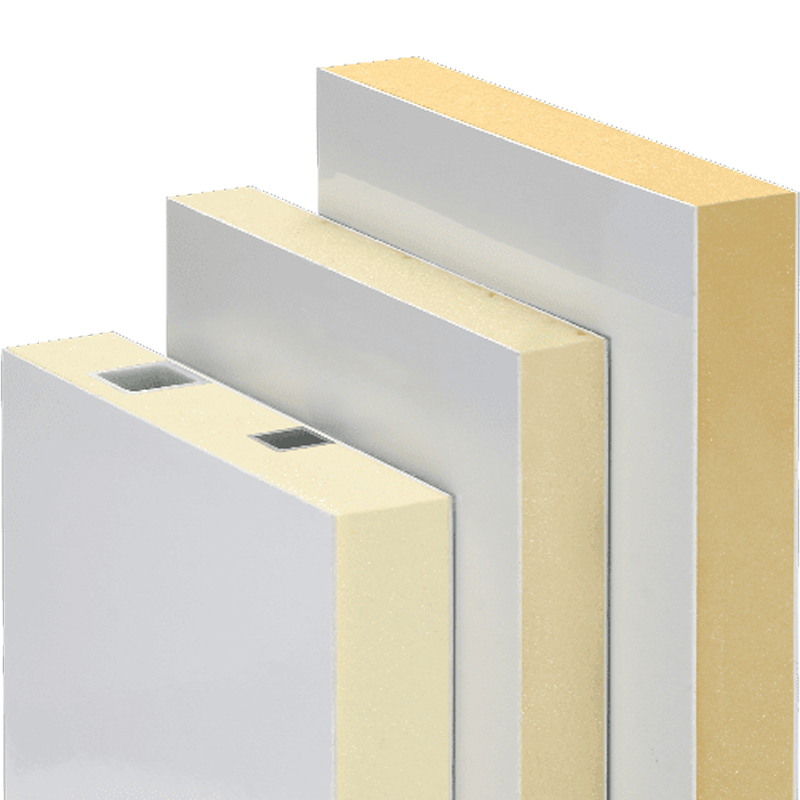
PP Honeycomb Core for Truck Body Panels: Cell Size, Density, Thickness and Facing Selection
1. Introduction: Why PP Honeycomb Core Is Used in Truck Body Panels
Lightweight construction has become an important consideration in modern truck body and trailer manufacturing. Manufacturers are continuously looking for materials that can reduce vehicle weight while maintaining the structural performance, durability and production efficiency required for commercial transportation.
PP honeycomb core for truck body panels is one of the lightweight core material options used in composite sandwich panel construction. Made from polypropylene, this cellular material features a series of interconnected hexagonal cells that create a lightweight structural core.
When combined with FRP (Fiber Reinforced Plastic) skins, PP honeycomb core can be incorporated into sandwich panels for truck side walls, roof panels, partitions and other lightweight structures.
However, selecting the right PP honeycomb core involves more than choosing a thickness. Cell size, bulk density, core thickness, facing configuration and bonding compatibility all influence the performance of the finished panel.
For truck body manufacturers and FRP composite panel producers, understanding these specifications is essential for developing a reliable sandwich panel structure.
This article explains the key PP honeycomb core specifications and how to evaluate them for truck body applications.
2. What Is PP Honeycomb Core?
PP honeycomb core, also known as polypropylene honeycomb core or PP cellular core, is a thermoplastic structural material manufactured from polypropylene sheets or films.
Its honeycomb geometry provides a lightweight cellular structure with relatively high stiffness-to-weight potential.
The core is commonly used as an intermediate layer in sandwich panel construction.
A typical FRP truck body sandwich panel consists of:
- Outer FRP skin
- Adhesive bonding layer
- PP honeycomb core
- Adhesive bonding layer
- Inner FRP skin
The FRP skins provide the external surfaces and contribute significantly to the bending performance of the finished panel. The PP honeycomb core separates the skins, transfers shear loads and helps maintain the structural distance between them.
The performance of the complete sandwich panel depends on the interaction between all layers rather than the core material alone.
Typical PP Honeycomb Core Characteristics
| Property | Description |
|---|---|
| Base Material | Polypropylene (PP) |
| Structure | Cellular honeycomb structure |
| Cell Shape | Commonly hexagonal |
| Core Configuration | Bare or faced |
| Facing Options | Nonwoven fabric and other project-specific facings |
| Main Advantage | Lightweight structural core |
| Processing | Cutting, sizing and panel assembly |
| Applications | Truck bodies, trailers, composite panels and transportation structures |
Actual properties depend on the PP formulation, cell geometry, manufacturing process and finished core configuration.
3. PP Honeycomb Cell Size: How Does It Affect Panel Performance?
Cell size is one of the important specifications when selecting PP honeycomb core.
It refers to the characteristic dimension of the individual honeycomb cells. Different cell sizes create different cellular geometries and influence how the core interacts with the facing materials and the finished panel structure.
Small Cell Size
Smaller cells provide more closely spaced cellular walls.
Potential characteristics include:
- More frequent support points for facing materials
- A finer surface structure
- Different local deformation behavior
- Potentially improved suitability for certain thin-skin panel constructions
Small-cell configurations may be considered when manufacturers require a more detailed cellular structure or specific surface and bonding characteristics.
Large Cell Size
Larger cells have wider openings and fewer cell walls per unit area.
Potential characteristics include:
- Different core weight and material distribution
- Different local compression behavior
- Different requirements for facing support
- Potential suitability for selected lightweight panel designs
Large-cell configurations may be considered where the overall panel design, skin stiffness and manufacturing process support their use.
PP Honeycomb Cell Size Selection Table
| Selection Factor | Smaller Cell | Larger Cell |
|---|---|---|
| Cellular Geometry | More closely spaced cells | Wider cell spacing |
| Facing Support | More frequent support locations | Wider unsupported openings |
| Surface Requirements | May suit finer structures | Depends more on facing design |
| Local Compression | Requires testing | Requires testing |
| Bonding | Requires interface validation | Requires interface validation |
| Application | Project-specific | Project-specific |
Important: A smaller cell does not automatically mean a stronger panel. Cell wall thickness, bulk density, core orientation, facing material, adhesive system and loading conditions must all be considered.
Truck body panel manufacturers should evaluate cell size together with compression, shear and complete sandwich panel test results.
4. PP Honeycomb Core Density: Why Is It Important?
Density is another critical specification for PP honeycomb core.
For a cellular material, it is important to distinguish between the density of solid polypropylene and the bulk density of the complete honeycomb structure.
The bulk density of PP honeycomb core represents the mass of the cellular core divided by its overall volume, including the internal cell spaces.
This is the more relevant density value for estimating core weight.
How Density Influences PP Honeycomb Core Selection
Density can affect several aspects of core performance:
- Core Weight: Higher bulk density generally means more material per unit volume and a higher core weight.
- Compression Performance: Compression resistance is influenced by density, cell geometry, wall thickness and material properties.
- Shear Performance: The core must transfer shear loads between the two FRP skins.
- Cost: Material consumption is one factor in determining core cost.
- Panel Design: Density should be selected according to the mechanical requirements of each panel section.
PP Honeycomb Core Density and Weight Calculation
The theoretical core weight per square meter can be calculated using:
Core Weight (kg/m²) = Bulk Density (kg/m³) × Thickness (mm) ÷ 1000
For example, if a hypothetical PP honeycomb core has a bulk density of 80 kg/m³ and a thickness of 20 mm:
Core Weight = 80 × 20 ÷ 1000 = 1.6 kg/m²
This is a calculation example, not a specification of a particular ONEBOND product.
For faced PP honeycomb products, the weight of nonwoven fabric or other facing materials must also be included.
Density Selection Considerations
| Design Requirement | What to Evaluate |
|---|---|
| Lightweight Side Walls | Core weight and required structural performance |
| Roof Panels | Weight, stiffness and environmental exposure |
| Floor Panels | Compression, shear, impact and concentrated loads |
| Rear Doors | Stiffness, durability and hardware attachment |
| General Sandwich Panels | Density consistency and bonding compatibility |
Density should never be selected independently of the intended application.
A lower-density core may reduce weight, but it must still meet the compression, shear and bonding requirements of the complete panel.
5. PP Honeycomb Core Thickness for Truck Body Panels
Core thickness affects the geometry and structural behavior of a sandwich panel.
In a sandwich structure, the core separates the outer and inner FRP skins. Increasing the distance between the skins can improve bending stiffness under appropriate structural conditions.
However, increasing thickness also changes the panel’s total weight, edge details, connection design and manufacturing requirements.
Common Thickness Options to Evaluate
The following thicknesses are useful design comparison points. They are not a statement of standard or confirmed ONEBOND stock availability.
| Core Thickness | Potential Design Consideration |
|---|---|
| 10 mm | Thin composite panel structures |
| 15 mm | Lightweight panel configurations |
| 20 mm | General sandwich panel design evaluation |
| 25 mm | Increased core depth for selected applications |
| 30 mm | Thicker structural sandwich panel designs |
The correct thickness depends on panel dimensions, support spacing, FRP skin thickness, loading conditions and the required mechanical performance.
Core Thickness vs Finished Panel Thickness
These two measurements should not be confused.
Finished panel thickness includes:
- Outer FRP skin
- Outer adhesive layer
- Core thickness
- Inner adhesive layer
- Inner FRP skin
A simplified calculation is:
Finished Panel Thickness = Outer Skin + Adhesive Layers + Core + Inner Skin
For example, a 20 mm core does not mean the finished sandwich panel is 20 mm thick.
Manufacturers should specify both core thickness and finished panel thickness when preparing technical drawings and purchasing documents.
6. Bare PP Honeycomb vs Nonwoven Faced PP Honeycomb
Facing configuration is particularly important when PP honeycomb core is used in FRP sandwich panel production.
Polypropylene has relatively low surface energy. This can make direct bonding to conventional adhesives, resins or composite skins more challenging than bonding to some other materials.
For this reason, manufacturers may evaluate different surface configurations to improve compatibility with their panel manufacturing process.
Bare PP Honeycomb Core
Bare PP honeycomb core is supplied without an additional facing layer.
Potential advantages include:
- A simple core configuration
- Flexibility in selecting surface preparation methods
- Suitability for customized bonding development
- Potentially lower material complexity
However, the bonding system must be carefully evaluated. Direct bonding between PP and FRP should not be assumed to provide reliable adhesion without testing.
Nonwoven Faced PP Honeycomb Core
Nonwoven faced PP honeycomb core includes a nonwoven fabric layer on one or both sides, depending on the product configuration.
The facing can provide an additional bonding interface for composite panel manufacturing.
Potential advantages include:
- A more suitable surface for selected adhesive systems
- Improved compatibility with certain composite manufacturing processes
- More convenient panel assembly in appropriately validated production systems
Nevertheless, adding a nonwoven layer does not automatically guarantee strong bonding.
There are two important interfaces to evaluate:
- PP honeycomb core to nonwoven facing
- Nonwoven facing to FRP skin
Both interfaces should be tested under the intended manufacturing conditions.
Bare vs Nonwoven Faced PP Honeycomb
| Comparison | Bare PP Honeycomb | Nonwoven Faced PP Honeycomb |
|---|---|---|
| Surface Configuration | Exposed PP structure | Nonwoven facing attached |
| Additional Material | No facing layer | Facing material included |
| Bonding Development | Requires suitable PP bonding solution | Requires validation of both interfaces |
| Manufacturing Flexibility | Depends on surface treatment and adhesive system | Depends on facing and adhesive compatibility |
| Weight | Core configuration weight | Core plus facing weight |
| Application | Customized composite structures | Selected FRP sandwich panel systems |
The best configuration depends on the adhesive, FRP skin, production equipment and final service environment.
7. PP Honeycomb Core Selection for Different Truck Body Applications
Different sections of a truck body experience different loads. Therefore, one PP honeycomb specification should not automatically be applied to every panel.
7.1 Truck Side Wall Panels
Truck side walls are commonly designed with lightweight construction as a priority.
Key selection factors include:
- Overall panel weight
- Bending stiffness
- Wind and operational loads
- Impact resistance
- Skin-to-core bonding
- Panel dimensions and support spacing
PP honeycomb core may be evaluated for lightweight FRP side wall sandwich panels where the complete panel meets the required structural performance.
7.2 Truck Roof Panels
Roof panels require consideration of environmental exposure and structural loading.
Important factors include:
- Panel stiffness
- Weather resistance of the complete panel system
- Water ingress prevention
- Connection details
- Local loads from equipment or maintenance activities
The core should be evaluated together with FRP skins, edge sealing and panel connections.
7.3 Truck Floor Panels
Floor panels generally require more demanding mechanical evaluation than many wall panels.
Important requirements include:
- Compression resistance
- Core shear performance
- Concentrated load resistance
- Impact resistance
- Surface wear resistance
- Local reinforcement at loading points
PP honeycomb core should not be selected for floor applications based only on its lightweight characteristics.
The complete floor panel must be tested or engineered for the actual loading conditions, including pallet loads, forklift traffic and cargo handling equipment where applicable.
7.4 Rear Door Panels
Rear doors require a combination of low weight, stiffness and reliable hardware attachment.
Key design considerations include:
- Hinge attachment areas
- Locking mechanism reinforcement
- Local impact resistance
- Panel bending performance
- Edge closure design
Honeycomb cores may require local inserts or reinforced sections to support hinges, locks and other hardware.
Truck Body Application Selection Matrix
| Application | Main Design Priority | Important Evaluation |
|---|---|---|
| Side Wall | Lightweight structure | Bending and bonding |
| Roof | Lightweight and environmental durability | Stiffness and sealing |
| Floor | Load-bearing performance | Compression, shear and impact |
| Rear Door | Hardware attachment and durability | Local reinforcement and bending |
| Front Wall | Structural stability | Compression, bending and connections |
Final material selection should be based on the complete panel design rather than the core specification alone.
8. Key Performance Tests for PP Honeycomb Core and FRP Sandwich Panels
For professional composite panel manufacturing, visual inspection and supplier specifications are not enough.
Mechanical testing helps verify whether the selected core and finished sandwich panel meet the requirements of the intended application.
Important properties include:
1. Bulk Density
Measures the mass per unit volume of the honeycomb core.
2. Flatwise Compression
Evaluates the core’s resistance to compressive loading perpendicular to its surface.
3. Core Shear
Measures the core’s ability to resist shear loading.
4. Flatwise Tensile Strength
Helps evaluate the strength of the core and bonding system under tensile loading perpendicular to the panel surface.
5. Skin-to-Core Bonding
Evaluates the integrity of the interface between the core assembly and the FRP skins.
6. Finished Panel Bending Performance
Assesses the structural response of the complete sandwich panel under bending loads.
Testing methods may include applicable ASTM sandwich construction standards, such as ASTM C271/C271M for core density, ASTM C365/C365M for flatwise compressive properties, ASTM C273/C273M for core shear properties, ASTM C297/C297M for flatwise tensile strength and ASTM C393/C393M for sandwich construction flexural or core shear evaluation.
The applicable standard, specimen preparation, test direction and acceptance criteria should be confirmed for the specific material and product configuration.
9. How to Specify PP Honeycomb Core When Requesting a Quote
For truck body manufacturers and FRP panel producers, providing complete technical information helps suppliers recommend a more appropriate PP honeycomb configuration.
A professional RFQ should include the following details:
| Specification | Information to Provide |
|---|---|
| Product | PP Honeycomb Core |
| Application | Truck Body / Trailer / FRP Sandwich Panel |
| Core Thickness | Required thickness in mm |
| Cell Size | Required cell dimension or target range |
| Bulk Density | Target density in kg/m³ |
| Facing Type | Bare / Nonwoven Faced |
| Facing Sides | One Side / Both Sides |
| Panel Dimensions | Length and Width |
| Core Color | If applicable |
| Cutting Requirements | Standard or customized dimensions |
| Mechanical Requirements | Compression, shear and other target properties |
| Bonding System | Adhesive or resin type, if known |
| Annual Demand | Estimated purchasing quantity |
If the buyer does not have a finalized specification, the supplier can review the intended application and help identify the parameters that require engineering evaluation.
It is also useful to request sample materials for bonding trials and prototype panel testing before moving into mass production.
10. Why Choose ONEBOND for PP Honeycomb Core?
ONEBOND focuses on composite core materials and lightweight sandwich panel solutions for industrial applications.
Our product portfolio covers PP honeycomb core and other foam core materials used in composite panel manufacturing.
For truck body and trailer manufacturers, selecting a core material involves more than comparing price per square meter. Product configuration, dimensional consistency, facing requirements and compatibility with the customer’s production process are also important.
ONEBOND can discuss project-specific PP honeycomb core requirements, including:
- Bare PP honeycomb core
- Nonwoven faced PP honeycomb core
- Customized thickness and dimensions, subject to confirmation
- Core configurations for FRP sandwich panel production
- Material selection for transportation and industrial composite applications
Whether you are manufacturing truck body panels, trailer panels or other lightweight composite structures, our team can work with your technical requirements to evaluate a suitable core material configuration.
Contact ONEBOND to discuss your PP honeycomb core requirements for truck body and FRP sandwich panel manufacturing.
11. Frequently Asked Questions About PP Honeycomb Core for Truck Body Panels
Q1: What is PP honeycomb core used for in truck body panels?
PP honeycomb core is used as a lightweight cellular core in composite sandwich panels, including selected FRP truck side walls, roof panels, partitions and other transportation structures.
Q2: What is the difference between PP honeycomb core and polypropylene honeycomb core?
They are two names for the same general material. PP is the common abbreviation for polypropylene.
Q3: How does PP honeycomb cell size affect panel performance?
Cell size influences cellular geometry, facing support and local deformation behavior. The actual effect depends on cell wall thickness, bulk density, facing and panel construction.
Q4: What PP honeycomb core density should I choose for a truck body panel?
The appropriate density depends on the required compression, shear, bending and weight performance of the finished sandwich panel.
Q5: Is 20 mm PP honeycomb core suitable for FRP truck body panels?
A 20 mm core can be evaluated for selected FRP truck body panel designs, but suitability depends on panel dimensions, skin thickness, loading conditions and mechanical test results.
Q6: What is the difference between bare PP honeycomb and nonwoven faced PP honeycomb?
Bare PP honeycomb has an exposed polypropylene cellular surface, while nonwoven faced PP honeycomb includes an additional fabric layer intended to provide a different bonding interface.
Q7: Can PP honeycomb core be bonded directly to FRP skins?
Direct bonding requires careful evaluation because polypropylene has relatively low surface energy. Surface treatment, adhesive selection and bonding tests are important.
Q8: Is nonwoven faced PP honeycomb better for FRP sandwich panels?
It may be suitable for certain manufacturing processes, but both the PP-to-facing interface and facing-to-FRP interface must be validated.
Q9: Can PP honeycomb core be used for truck floor panels?
It can be evaluated for selected floor structures, but the complete panel must meet the required compression, shear, impact and concentrated-load requirements.
Q10: What information is needed to order customized PP honeycomb core?
Buyers should provide cell size, bulk density, thickness, facing type, dimensions, application, mechanical requirements and estimated purchasing quantity.
Conclusion
PP honeycomb core is a lightweight material option for truck body and trailer sandwich panel manufacturing. However, choosing the correct product requires a systematic evaluation of cell size, bulk density, core thickness and facing configuration.
For FRP sandwich panel producers, bonding compatibility is particularly important because polypropylene has relatively low surface energy. Bare and nonwoven faced configurations both require appropriate interface validation.
By evaluating the complete panel structure, manufacturers can make more informed decisions about weight, mechanical performance, production compatibility and long-term durability.
ONEBOND provides PP honeycomb core and composite core material solutions for manufacturers developing lightweight FRP sandwich panels and transportation structures.
