
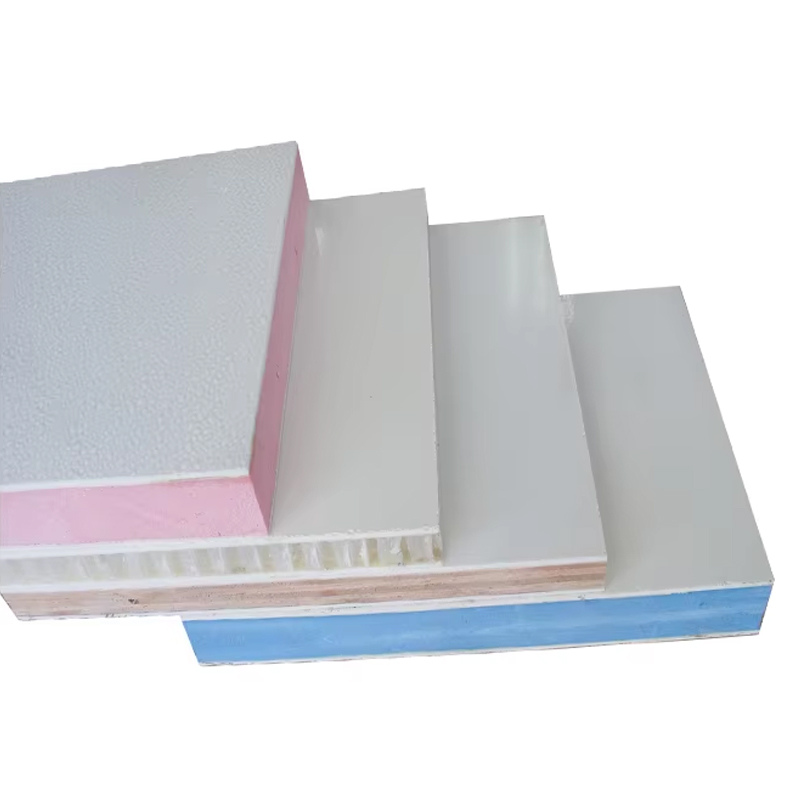
FRP Truck Body Panels: How to Calculate Panel Weight per Square Meter and Reduce Vehicle Weight
SEO Title: FRP Truck Body Panel Weight Calculation and Lightweight Design
Meta Description: Learn how to calculate FRP truck body panel weight per square meter. Compare core density, FRP skin weight and sandwich panel structures for lightweight truck bodies.
URL: /frp-truck-body-panel-weight-calculation/
Primary Keyword: FRP Truck Body Panel Weight
Secondary Keywords:
- FRP Sandwich Panel Weight Calculation
- Truck Body Panel Weight per Square Meter
- Lightweight Truck Body Panels
- PP Honeycomb Core Weight
- PET Foam Core Weight
- PVC Foam Core Weight
- FRP Composite Panel Weight
- Sandwich Panel Density
- Truck Trailer Panel Weight
- Lightweight Composite Core Materials
1. Introduction: Why Panel Weight Matters in Truck Body Manufacturing
Weight reduction is a major consideration in truck body and trailer manufacturing.
A lighter truck body can help reduce vehicle tare weight and potentially increase available payload within applicable vehicle weight limits. It may also improve energy efficiency, particularly in applications where vehicle weight has a significant influence on operating costs.
FRP sandwich panels are widely considered for lightweight truck body construction because they combine relatively lightweight core materials with structural face sheets.
However, when manufacturers compare different sandwich panel designs, one question frequently arises:
How much does an FRP sandwich panel weigh per square meter?
The answer depends on more than core density.
The total weight of a finished panel includes:
- Outer FRP skin
- Inner FRP skin
- Core material
- Adhesive or resin
- Reinforcement inserts
- Edge closures and other components
This article explains how to calculate FRP truck body panel weight, compare different core materials and identify practical opportunities for weight reduction.
2. Understanding the Weight Structure of an FRP Sandwich Panel
A typical FRP truck body sandwich panel consists of two FRP face sheets bonded to a lightweight core.
The panel weight can be divided into five main components.
| Component | Description |
|---|---|
| Outer FRP Skin | Exterior surface layer |
| Inner FRP Skin | Interior surface layer |
| Core Material | PP Honeycomb, PET Foam, PVC Foam or other core |
| Adhesive or Resin | Bonding material between skins and core |
| Additional Components | Reinforcement, edge closures and inserts |
The basic formula is:
Total Panel Weight = Outer Skin Weight + Inner Skin Weight + Core Weight + Adhesive Weight + Additional Component Weight
For purchasing and engineering calculations, the result is commonly expressed in kg/m².
This makes it easier to compare different panel constructions with the same surface area.
3. How to Calculate Core Material Weight per Square Meter
Core weight is one of the easiest parts of a sandwich panel to calculate when the material density and thickness are known.
For solid foam cores, use the following formula:
Core Weight (kg/m²) = Density (kg/m³) × Thickness (m)
Since thickness is often specified in millimeters, the formula can also be written as:
Core Weight (kg/m²) = Density × Thickness (mm) ÷ 1000
Example: 20mm Foam Core at Different Densities
| Foam Density | Core Thickness | Theoretical Core Weight |
|---|---|---|
| 45 kg/m³ | 20mm | 0.90 kg/m² |
| 60 kg/m³ | 20mm | 1.20 kg/m² |
| 80 kg/m³ | 20mm | 1.60 kg/m² |
| 100 kg/m³ | 20mm | 2.00 kg/m² |
| 130 kg/m³ | 20mm | 2.60 kg/m² |
| 200 kg/m³ | 20mm | 4.00 kg/m² |
These are theoretical calculation examples for solid foam cores. They are not specifications for a particular supplier’s products.
Example: Different Core Thicknesses at 60 kg/m³
| Core Thickness | Density | Core Weight |
|---|---|---|
| 10mm | 60 kg/m³ | 0.60 kg/m² |
| 15mm | 60 kg/m³ | 0.90 kg/m² |
| 20mm | 60 kg/m³ | 1.20 kg/m² |
| 25mm | 60 kg/m³ | 1.50 kg/m² |
| 30mm | 60 kg/m³ | 1.80 kg/m² |
This calculation shows that increasing foam core thickness or density increases the core’s mass per square meter.
However, a higher-density core may provide different structural performance. The correct design must balance weight and mechanical requirements.
4. How to Calculate PP Honeycomb Core Weight
PP Honeycomb Core has a cellular structure rather than a solid foam structure.
Therefore, its weight calculation requires a different consideration.
The recommended formula is:
PP Honeycomb Core Weight (kg/m²) = Measured Bulk Density (kg/m³) × Thickness (m)
The bulk density should represent the complete core configuration being supplied, including the cellular structure and any facing included in the stated product weight.
Do not use the solid density of polypropylene as the density of the honeycomb core.
Factors Affecting PP Honeycomb Weight
- Cell size
- Cell wall thickness
- Core thickness
- PP material formulation
- Core manufacturing process
- Nonwoven facing or other surface layers
- Additional reinforcement
Two PP honeycomb products with the same thickness may have different weights because their cell geometry and material consumption are different.
For accurate purchasing comparisons, buyers should request the actual weight per square meter or measured bulk density of the specified product configuration.
5. How to Calculate FRP Skin Weight
FRP skins can contribute significantly to the total panel weight.
The weight depends on the skin thickness, material density and manufacturing method.
For a uniform sheet, the theoretical weight can be calculated using:
Skin Weight (kg/m²) = Skin Density (kg/m³) × Skin Thickness (m)
For example, assume an illustrative FRP skin density of 1,800 kg/m³.
| FRP Skin Thickness | Assumed Density | Theoretical Weight |
|---|---|---|
| 0.8mm | 1,800 kg/m³ | 1.44 kg/m² |
| 1.0mm | 1,800 kg/m³ | 1.80 kg/m² |
| 1.2mm | 1,800 kg/m³ | 2.16 kg/m² |
| 1.5mm | 1,800 kg/m³ | 2.70 kg/m² |
| 2.0mm | 1,800 kg/m³ | 3.60 kg/m² |
These figures are illustrative. Actual FRP density varies with resin, reinforcement, fiber content and manufacturing process.
Why FRP Skin Thickness Matters
Increasing FRP skin thickness generally increases panel weight.
However, reducing skin thickness without checking structural performance may affect:
- Bending resistance
- Impact resistance
- Surface durability
- Local load capacity
- Long-term service performance
For truck body panels, the skin thickness should be determined by the application and complete sandwich panel design.
6. Complete FRP Sandwich Panel Weight Calculation
Now consider a simplified sandwich panel configuration.
Assume the following illustrative design:
- Outer FRP skin: 1.5mm
- Inner FRP skin: 1.5mm
- FRP skin density: 1,800 kg/m³
- Core: PET Foam
- Core density: 60 kg/m³
- Core thickness: 20mm
- Total adhesive weight: 0.40 kg/m²
- Additional reinforcement: excluded
Step 1: Calculate Outer Skin Weight
1,800 × 0.0015 = 2.70 kg/m²
Step 2: Calculate Inner Skin Weight
1,800 × 0.0015 = 2.70 kg/m²
Step 3: Calculate Core Weight
60 × 0.020 = 1.20 kg/m²
Step 4: Add Adhesive Weight
0.40 kg/m²
Step 5: Calculate Total Panel Weight
2.70 + 2.70 + 1.20 + 0.40 = 7.00 kg/m²
<text color=”secondary” size=”xs”>Illustrative calculation only. Actual adhesive consumption, FRP skin density and reinforcement weight must be measured or confirmed for the production design.</text>
Example Weight Breakdown
| Component | Weight |
|---|---|
| Outer FRP Skin | 2.70 kg/m² |
| Inner FRP Skin | 2.70 kg/m² |
| PET Foam Core | 1.20 kg/m² |
| Adhesive | 0.40 kg/m² |
| Total | 7.00 kg/m² |
This example demonstrates why core weight alone cannot represent the weight of a finished FRP sandwich panel.
7. Comparing PP Honeycomb, PET Foam and PVC Foam by Panel Weight
When comparing different core materials, manufacturers should use the actual density and thickness of each product.
For illustration, consider three hypothetical 20mm core configurations.
| Core Material | Assumed Bulk Density | Thickness | Core Weight |
|---|---|---|---|
| PP Honeycomb | 60 kg/m³ | 20mm | 1.20 kg/m² |
| PET Foam | 60 kg/m³ | 20mm | 1.20 kg/m² |
| PVC Foam | 80 kg/m³ | 20mm | 1.60 kg/m² |
The values are examples, not a claim that these materials normally have identical or directly comparable density grades.
Even when two materials have the same calculated core weight, their performance may be different.
Important comparison factors include:
- Compression strength
- Core shear strength
- Shear modulus
- Cell geometry
- Bonding compatibility
- Moisture behavior
- Thermal conductivity
- Processing requirements
A buyer should compare core weight together with the mechanical properties of the complete sandwich panel.
8. How to Reduce FRP Truck Body Panel Weight
Reducing panel weight is not simply a matter of choosing the lowest-density core.
A successful lightweight design must meet the required mechanical performance while reducing unnecessary material consumption.
8.1 Optimize Core Density
Core density has a direct influence on core weight.
A lower-density core may reduce panel mass, but it may also have lower compression or shear properties.
The best density should be selected according to the required load conditions and panel construction.
8.2 Optimize Core Thickness
Core thickness influences the separation between face sheets and therefore affects bending behavior.
Increasing thickness can improve bending stiffness in an appropriately designed sandwich structure, but it also increases core weight and total panel depth.
Manufacturers should evaluate several thickness options rather than automatically selecting the thickest core.
8.3 Optimize FRP Skin Thickness
FRP skins contribute substantially to panel weight.
The design should identify where skin thickness is structurally necessary and where material use can potentially be optimized.
Any reduction should be validated through bending, impact and other relevant tests.
8.4 Select the Right Core Material for Each Panel Position
Different truck body components have different requirements.
| Panel Position | Main Design Considerations |
|---|---|
| Side Wall | Weight, bending stiffness and impact resistance |
| Roof | Stiffness, environmental exposure and mounting details |
| Floor | Compression, point loads and repeated impact |
| Front Wall | Structural support and load resistance |
| Rear Door | Hardware attachment and repeated operation |
| Interior Partition | Low weight and dimensional stability |
Using one core material and one panel structure throughout the entire vehicle may not be the most efficient solution.
8.5 Reduce Unnecessary Adhesive Consumption
Excessive adhesive can increase panel weight and production cost.
However, reducing adhesive below the validated requirement can cause poor bonding or delamination.
The objective should be uniform and controlled adhesive application, not simply minimum adhesive consumption.
8.6 Optimize Reinforcement and Edge Design
Heavy reinforcement should be used where required by structural loads and connection details.
Manufacturers can evaluate insert locations, edge closures and local reinforcement to avoid unnecessary material throughout the panel.
9. Calculating Total Truck Body Weight Reduction
A small weight reduction per square meter can become significant when applied across a large truck body.
The basic calculation is:
Total Weight Saving (kg) = Panel Area (m²) × Weight Reduction per m² (kg/m²)
For example, assume:
- Total panel area: 60m²
- Original panel weight: 8.0 kg/m²
- New panel weight: 7.2 kg/m²
- Weight reduction: 0.8 kg/m²
Then:
60 × 0.8 = 48 kg
The illustrative truck body panel design reduces panel mass by 48 kg.
This calculation assumes the compared panels cover the same area and that the new design meets the same required performance.
Why Small Improvements Matter
For manufacturers producing large truck bodies or trailers, small improvements in panel weight can add up across:
- Side walls
- Roof panels
- Front walls
- Rear doors
- Interior partitions
However, the actual vehicle weight reduction must also account for frames, reinforcements, hardware, flooring, insulation and other components.
10. Weight Reduction Must Not Compromise Structural Performance
A lightweight panel must still meet the required performance throughout its service life.
Manufacturers should not reduce density, skin thickness or adhesive consumption without evaluating the complete structure.
Important validation areas include:
Compression Performance
Confirms whether the panel can withstand relevant compressive loads without unacceptable deformation.
Core Shear Performance
Evaluates the ability of the core to transfer shear forces between face sheets.
Bending Performance
Assesses panel behavior under bending loads and representative support conditions.
Bonding Strength
Checks the integrity of the skin-to-core interface.
Impact Resistance
Important for truck body panels exposed to cargo contact, handling and operating conditions.
Environmental Durability
Depending on the application, the panel may require evaluation under temperature, moisture, vibration or other service conditions.
A lighter panel is only a successful improvement when it maintains the required performance.
11. How to Compare Supplier Quotes for FRP Sandwich Panel Core Materials
When purchasing core materials, buyers should avoid comparing suppliers based only on price per sheet or nominal density.
A proper quotation comparison should include:
| Item | Information to Confirm |
|---|---|
| Material | PP Honeycomb / PET Foam / PVC Foam |
| Density | kg/m³ |
| Thickness | mm |
| Dimensions | Length × Width |
| Weight per sheet | kg/sheet |
| Weight per square meter | kg/m² |
| Facing | Bare / Nonwoven / Customized |
| Cell size | Required for PP honeycomb |
| Dimensional tolerance | Supplier-confirmed tolerance |
| Mechanical properties | Relevant technical data |
| Packaging | Export packaging requirements |
| Quantity | Trial and regular purchasing volume |
For foam cores, density and thickness provide a straightforward theoretical weight calculation.
For PP honeycomb, buyers should confirm the measured bulk density or actual weight per square meter of the specified configuration.
For complete sandwich panels, suppliers should distinguish between core weight and finished panel weight.
12. What Information Should Buyers Provide for Lightweight Core Material Selection?
To recommend suitable composite core materials, buyers should provide:
- Intended application: truck side wall, roof, floor or door
- Core material preference: PP honeycomb, PET foam or PVC foam
- Required thickness
- Required density or mechanical properties
- Panel dimensions
- FRP skin material and thickness
- Bonding process
- Target panel weight per square meter
- Estimated monthly or annual demand
- Applicable performance requirements
This information allows the supplier to evaluate the project more accurately.
13. ONEBOND Composite Core Materials for Lightweight Truck Body Panels
ONEBOND focuses on lightweight composite core materials for industrial sandwich panel applications.
Our product range includes:
- PP Honeycomb Core
- PET Foam Core
- PVC Foam Core
- XPS Foam Core
- PU Foam Core
- Aluminum Honeycomb Core
For truck body and trailer panel manufacturers, selecting the right core material is an important part of controlling finished panel weight.
ONEBOND can discuss customized material requirements according to project specifications, including:
- Core density
- Core thickness
- Sheet dimensions
- PP honeycomb cell size
- Facing configuration
- Cutting requirements
The final material selection should be confirmed according to the complete sandwich panel design and production process.
Whether you are developing lightweight FRP truck body panels, trailer sandwich panels or other composite structures, ONEBOND can support your core material evaluation.
Contact ONEBOND to discuss your lightweight composite core material requirements.
14. Frequently Asked Questions
Q1. How do you calculate FRP sandwich panel weight per square meter?
Add the weight of both FRP skins, the core material, adhesive and additional components. Each component should be calculated or measured separately.
Q2. How much does a 20mm foam core weigh per square meter?
A 20mm foam core with a density of 60 kg/m³ has a theoretical weight of 1.2 kg/m². Actual weight depends on measured density and product specifications.
Q3. How do you calculate PP honeycomb core weight?
Multiply the measured bulk density of the complete PP honeycomb configuration by its thickness in meters. Alternatively, use the supplier’s measured weight per square meter.
Q4. Does lower core density always mean a lighter truck body panel?
Not necessarily. Additional FRP skin thickness, adhesive and reinforcement may offset the weight reduction from a lower-density core.
Q5. Which core material is best for lightweight FRP truck body panels?
PP honeycomb, PET foam and PVC foam can all be considered. The best choice depends on complete panel weight, structural requirements, bonding and production conditions.
Q6. How much weight can be saved by using composite sandwich panels?
Weight savings depend on the original construction, panel area, face sheet design, core material and finished panel performance. A project-specific comparison is required.
Q7. Does a thicker sandwich panel weigh more?
At the same core density, a thicker core generally weighs more per square meter. However, the relationship between thickness and structural efficiency also needs to be considered.
Q8. How does FRP skin thickness affect sandwich panel weight?
Increasing skin thickness increases panel weight. However, the required thickness must be maintained to meet bending, impact and durability requirements.
Q9. What is the difference between core weight and total panel weight?
Core weight includes only the central material. Total panel weight also includes both face sheets, adhesive, reinforcement and other components.
Q10. Can ONEBOND provide lightweight customized core materials?
ONEBOND can discuss customized PP honeycomb, PET foam, PVC foam and other core material requirements according to project specifications and product availability.
Suggested Internal Links
- PP Honeycomb Core –
/pp-honeycomb-core/ - PET Foam Core –
/pet-foam-core/ - PVC Foam Core –
/pvc-foam-core/ - FRP Sandwich Panel –
/frp-sandwich-panel/ - Lightweight Truck Body Panels –
/lightweight-truck-body-panels/ - PP Honeycomb vs PET Foam vs PVC Foam –
/pp-honeycomb-vs-pet-foam-vs-pvc-foam-truck-body-panels/ - FRP Truck Body Panel Core Thickness –
/frp-truck-body-panel-core-thickness/ - FRP Truck Body Panel Manufacturing –
/how-to-manufacture-frp-truck-body-panels/
Suggested Image Alt Text
- FRP truck body sandwich panel weight calculation
- PP honeycomb core weight per square meter
- PET foam core density and thickness comparison
- PVC foam core for lightweight truck body panels
- FRP sandwich panel cross section with core and skins
- Lightweight composite truck body panel structure
- FRP truck body panel weight reduction comparison
